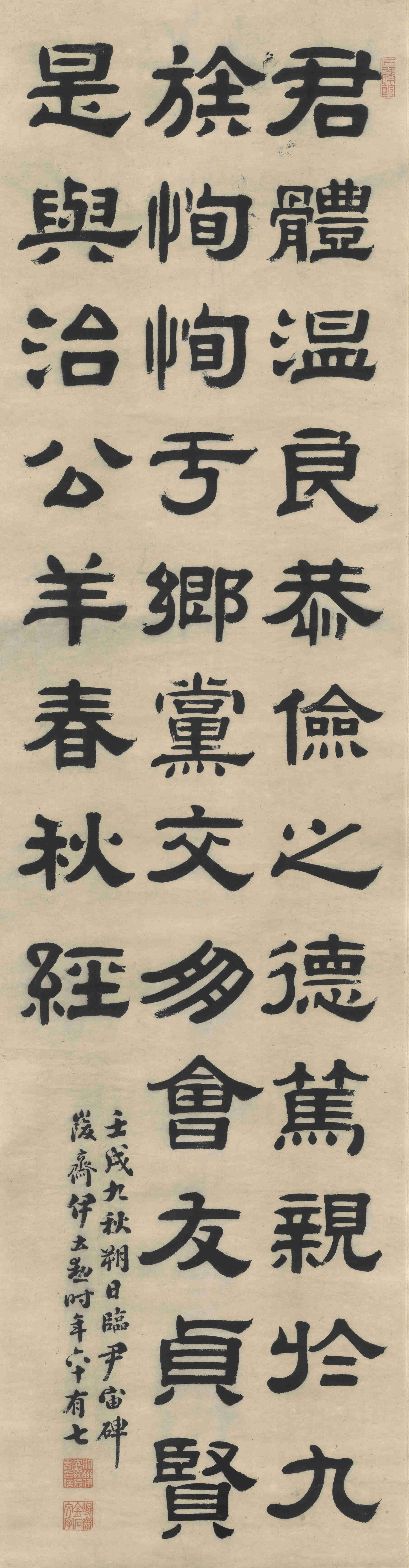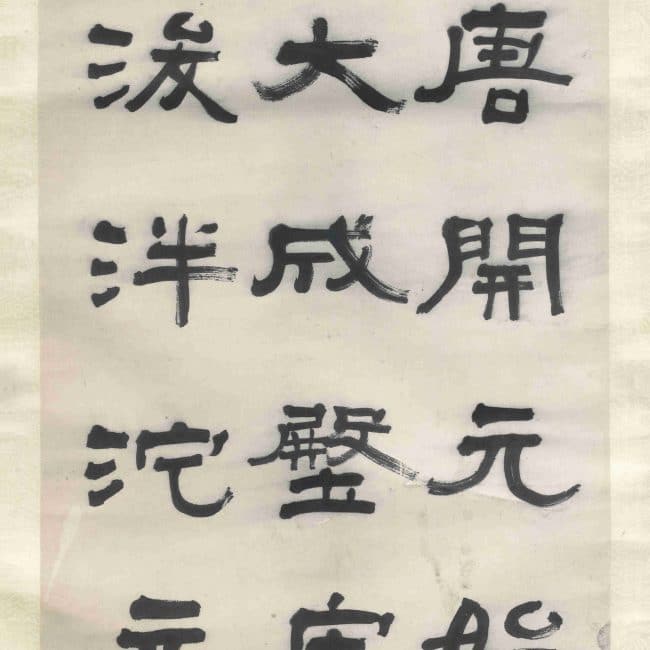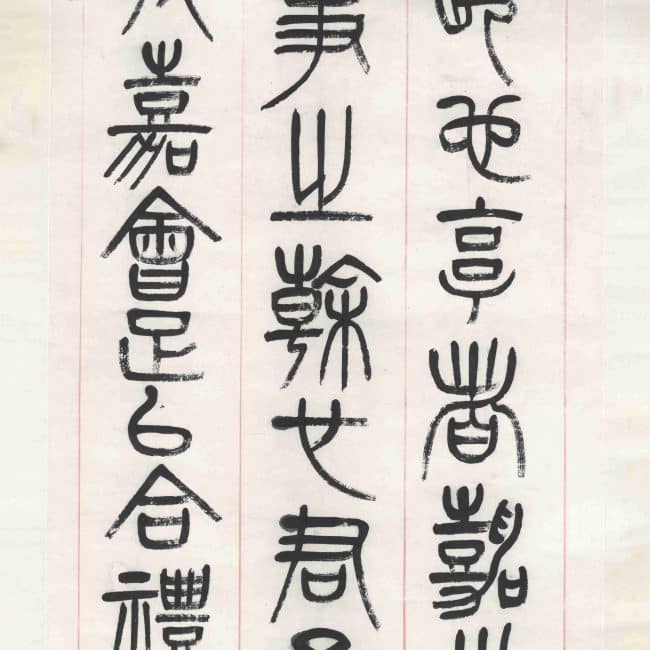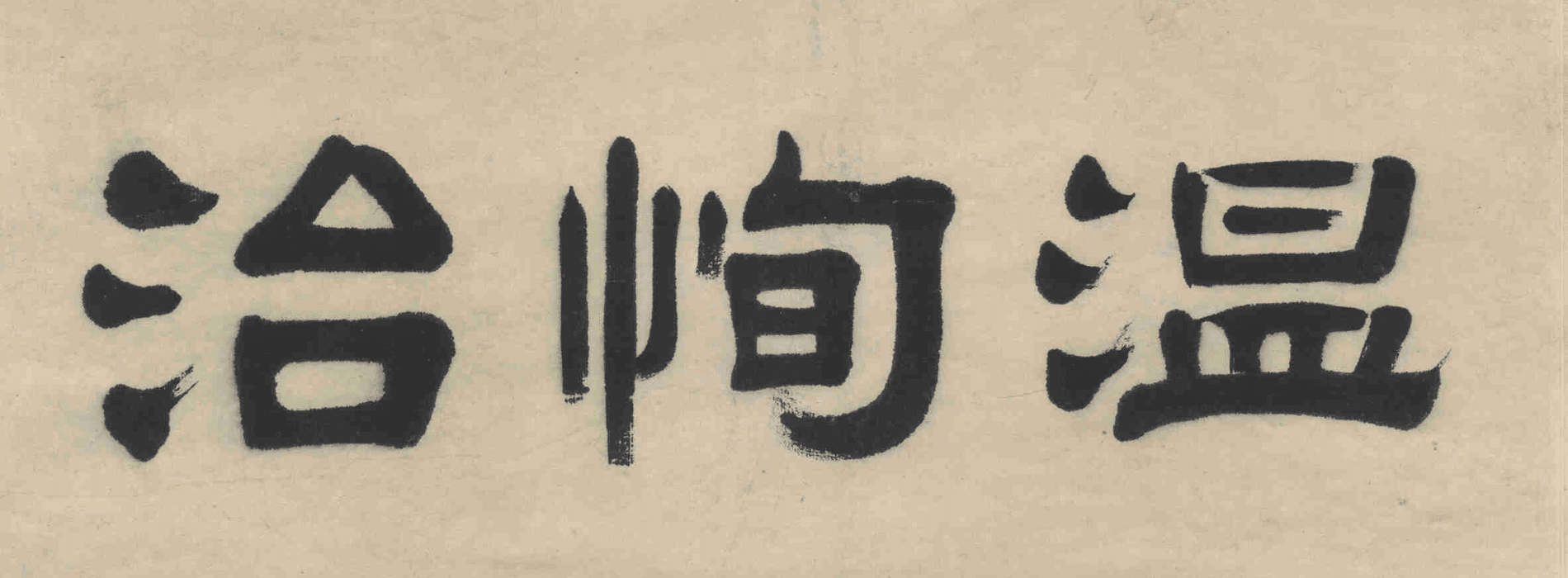
Replica of Yinzou Stele《节临尹宙碑轴》
Yi Lixun (伊立勋)
Yi Lixun (1856–1942)
Yi Lixun, courtesy name Xiji, pseudonym Junzhai and Shiqin, also known as Shiqin Laoren and Shiqin Guan Zhu, was a renowned calligrapher from Ninghua, Fujian, and the great-grandson of the famous Qing dynasty calligrapher Yi Bingshou. From a young age, he was influenced by his family’s scholarly environment and became highly knowledgeable, particularly excelling in calligraphy. Yi mastered various scripts, including regular, cursive, seal, and clerical, with profound skill. He served as the magistrate of Wuxi during the Guangxu reign and later lived in Shanghai during the Republic of China, making a living by selling his calligraphy.
Yi Lixun’s most accomplished work was in the clerical script of the Han dynasty. His clerical script inherited the refined and ancient style of his ancestor Yi Bingshou, with a composed and leisurely demeanor, displaying a sense of liveliness and charm within a strict and simple framework. In the aesthetic appeal of form, his brushwork conveyed a sense of depth and excellence. However, compared to Yi Bingshou, Yi Lixun’s work could be overly meticulous, sometimes exhibiting a sense of craftsmanship, and lacked the grandeur and depth of his ancestor. His work can be considered to be of the “competent grade.” The “Yin Zhou Stele” originally featured a tightened center and extended strokes, but Yi Lixun’s rendition contracted the originally extended strokes, resulting in a more solid and robust style, representing a unique interpretation.
The calligraphy displays a deliberate and powerful style, with heavy brush pressure lending an epitaph-like solidity to the strokes. The result is a vibrant and sonorous rhythm, evoking the imagery of “silver hooks and iron paintings.” The white seal, inscribed “Chen Qian Zhenxun,” beneath the signature, attests to the authenticity of the work. This piece not only demonstrates Qian’s technical proficiency but also reflects his profound literary sensibility and philosophical introspection, making it a significant example of his legacy.
伊立勋(1856—1942),字熙绩,号峻斋、石琴,别署石琴老人、石琴馆主,清代书法大家伊秉绶玄孙,福建宁化人。从小受家学熏陶,学识渊博,特擅书法,真草篆隶无所不能,功力深厚。曾任清光绪无锡知县,民国时期寓居上海以卖字为生。
伊立勋书法最为精湛是汉隶。他的隶书继承其祖伊秉绶的遗风,渊雅古朴,意态从容,于严整、简净中显机趣、活泼。在形式美感的意趣中,显现笔意的沉郁超拔。然由相对于伊秉绶来说,他过于工致,不免有些匠气,气度与意蕴皆不可比肩其祖,书可入“能品”。《尹宙碑》本是中宫收紧、长笔画舒展的,而伊立勋此临本则将本应舒展的笔画收缩,风格也更为敦厚,是一种意临。
Photo Gallery