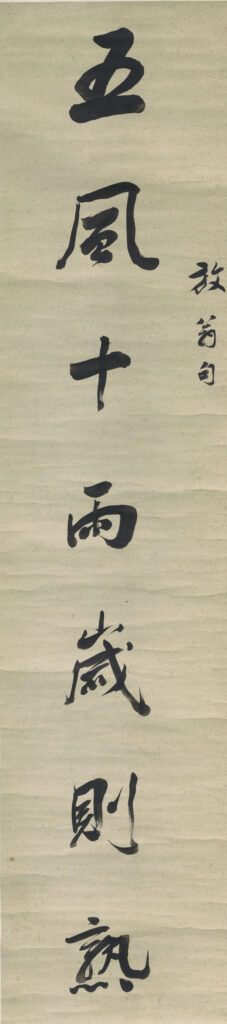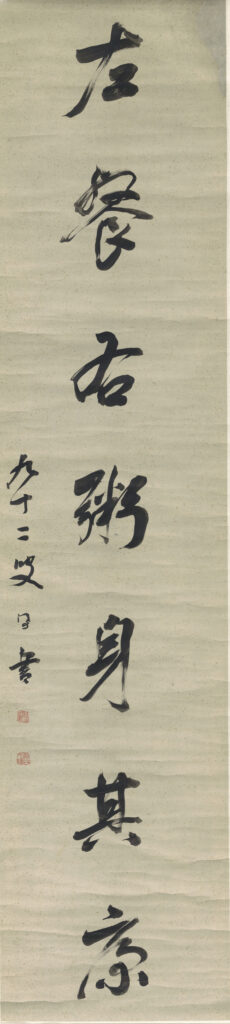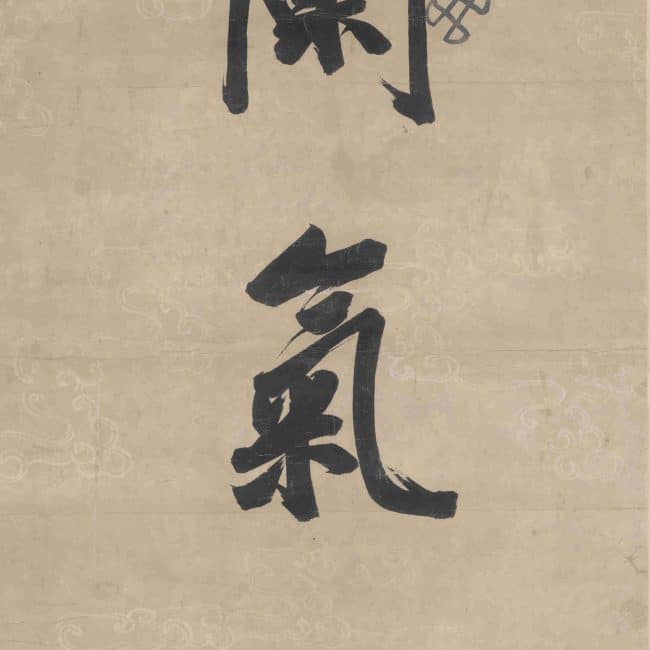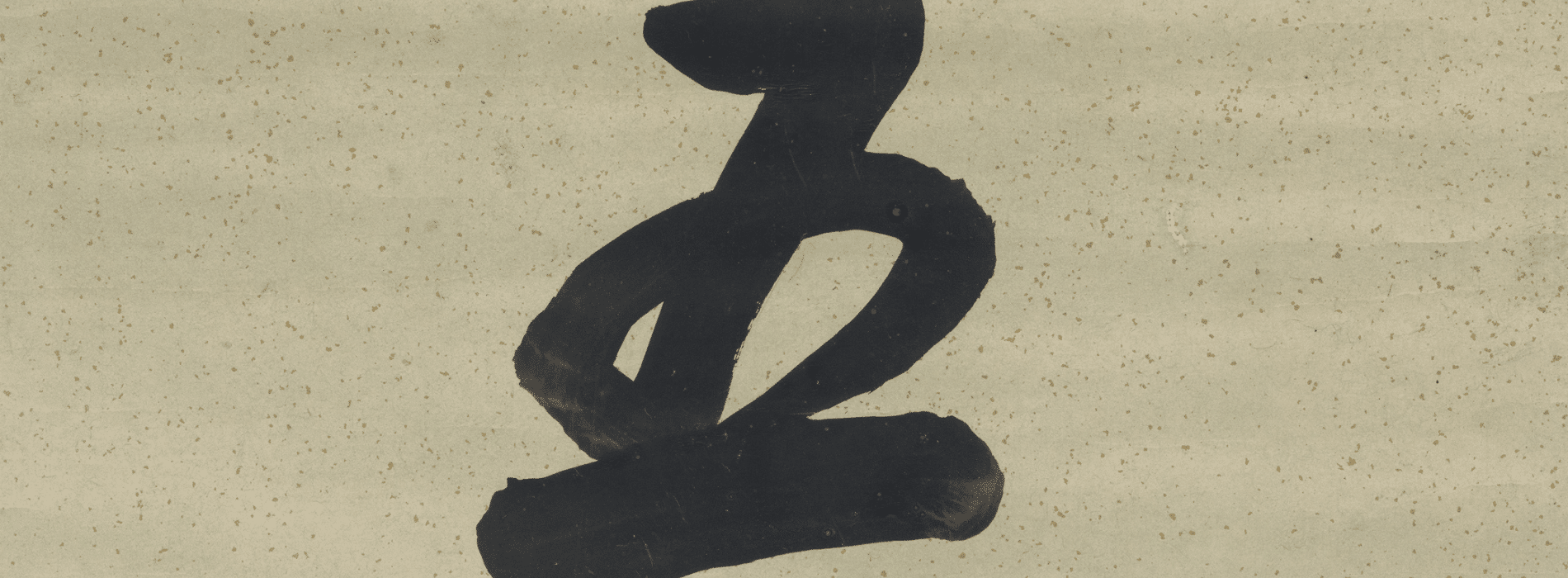
Seven Character Couplet in Running Script《行书七言联》
Liang Tongshu (梁同书)
Liang Tongshu (1723–1815)
Liang Tongshu, courtesy name Yuanying and pseudonym Shanzhou, later adopted the signature Buweng, and after turning 90, referred to himself as Xinv Changweng. His studio name was Pinluo’an. Liang hailed from Qiantang, Zhejiang (modern-day Hangzhou), and was the son of Grand Academician Liang Shizheng. Gifted and steady in disposition, he became a Jinshi in the 17th year of the Qianlong reign (1752) by passing the imperial examination. Liang excelled in regular and running scripts, starting with studies of Yan Zhenqing and Liu Gongquan. Later in life, he integrated styles from Mi Fu and Tang-dynasty sutra scripts, developing a unique approach. Renowned alongside Liu Yong, Weng Fanggang, and Wang Wenzhi, Liang also stood out with Liang Yan and Liang Guozhi as the “Three Liangs.”
Liang Tongshu was particularly skilled in semi-cursive and cursive scripts. His style bridged the elegance of Zhao Mengfu and Dong Qichang, blending artistic beauty from side strokes with solid structure from center strokes. His refined and natural brushwork achieved seamless transitions in turning and folding strokes, reflecting warmth and sophistication in the orthodox tradition of calligraphy.
Translation of text: “Five winds and ten rains bring prosperous harvests; dining left and porridge right ensures health and happiness.”
梁同书(1723—1815),字元颖,号山舟,晚署不翁,九十以后号新吾长翁,斋号频罗庵,浙江钱塘(今杭州)人。大学士梁诗正之子,天生颖异过人,端厚稳重,乾隆十七年(1752)中进士。工于楷、行书,初学颜真卿、柳公权,中年取法米芾、唐人写经,以后融汇贯通,自成一家。与刘墉、翁方纲、王文治并称,又与梁巘、梁国治并称“三梁”。
梁同书的书法诸体中最擅长行草书,风貌在赵孟頫、董其昌之间。侧锋取妍,中锋取质,方圆转折,都能得心应手,温润醇厚,一任自然,是帖学正派。
释文:五风十雨岁则熟,左餐右粥史身其康。
Photo Gallery