Liu Guojun’s Address at the First Changzhou CPPCC Conference
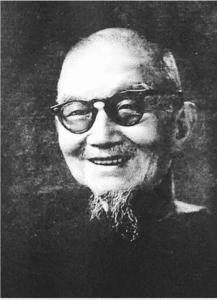
This article is the speech delivered by Liu Guojun at the First Session of the First Changzhou Municipal CPPCC Conference.
Liu Guojun once served as Vice Chairman of the First Changzhou CPPCC, Chairman of the Jiangsu Provincial Committee of the China Democratic National Construction Association, and Vice Governor of Jiangsu Province.
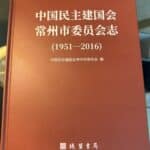
Excerpted from Changzhou Historical and Cultural Materials — Memorial Collection for Mr. Liu Guojun (1987). Compiled by: Jiang Tianrui (蒋天睿)
Chairman, fellow committee members, comrades:
We are meeting today at a pivotal moment, during the great surge of socialist transformation in agriculture, handicrafts, and capitalist industry and commerce. Under the leadership of the Party and the government, Changzhou has already entered the socialist stage. Our task now is to unite all forces, move from victory to victory, and build a socialist society ahead of schedule.
On behalf of the Changzhou branch of the China Democratic National Construction Association, I report that the term “private industry and commerce” has already become history in our city. This marks a profound change. Before discussing the transformation of industry and commerce, let me first speak about agriculture, because the wave of agricultural collectivization has had a tremendous impact and provided great encouragement to all sectors.
Chairman Mao, by grasping the laws of social development, foresaw this upsurge and decisively criticized conservative rightist thinking. As a result, the vast cooperative movement moved from possibility to reality. In this fervent atmosphere, handicrafts and private commerce were swept along like surging waves, breaking through all previous expectations.
The draft National Agricultural Development Program set forth by the Central Committee calls for full collectivization of agriculture between 1957 and 1958, abolishing land dividends and implementing a system of remuneration based on labor. This advance in agricultural reform has spurred industrial and commercial circles to move through the stage of public-private joint management, gradually transforming the means of production into public ownership, while individuals become self-reliant workers enjoying the happiness of socialist life alongside the entire nation. Chairman Mao has said: “In about three more years, the socialist revolution can basically be completed nationwide.” We are confident this goal can be achieved.
Our Association, as part of the united front, bears the special responsibility of educating private industrial and commercial people. In Changzhou, under Party and government leadership, our members have joined with other key figures in industry and commerce to assist in socialist transformation. Everywhere we hear drums, cheers, and firecrackers, and see scenes of joy — how glorious and inspiring this is!
Yet our work has not been sufficient. Changzhou has more than 5,000 industrial and commercial households, but our Association has only about 80 members, mostly from industry and very few from commerce. This limits our reach and prevents us from drawing on broader wisdom and strength. To meet current needs, we must expand membership at least twofold in the short term, and continue to grow if necessary.
We also recognize that joint management is not the end of the journey. Its purpose is to spark a production upsurge and realize Chairman Mao’s call for “more, faster, better, and more economical” results. Achieving this requires hard struggle, strengthened education, and the cultivation of key members. We must raise political and ideological levels, bring in more progressive people, and correct mistaken ideas — such as the belief that after joint management, there is no longer a need to follow the leadership of the working class. This is entirely wrong. Our nation is led by the working class, and only by following its leadership can enterprises truly become socialist undertakings.
These complex and important tasks require our own efforts, but also support from all sectors of society. I urge comrades from other democratic parties and groups to give us their help.
Looking ahead, our branch must help and educate members to carry out transformation within enterprises, manage socialist operations well, develop labor habits, and become self-reliant workers. We must also criticize capitalist thinking, establish socialist thought, and assist in the ideological transformation of industry and commerce. Through study and work, we must play a leading role in completing our tasks.
Comrades, as we enter socialism, some still question whether the united front is necessary. Chairman Mao has made it clear: “We must continue to consolidate and expand the people’s democratic united front, uniting all forces that can be united.” This dispels all doubts. This meeting itself is a powerful expression of unity. We must exert every effort to unite, for unity is an invincible force. In building socialism in Changzhou, it is an inexhaustible source of strength. Let us, in our strong and growing ranks, proclaim the victory of socialism!
According to public records, Ms. Liu Bieju was born in Changzhou and hailed from Jingjiang, Jiangsu. She held numerous leadership roles throughout her life, including Vice Chairwoman of the Jiangsu Provincial Political Consultative Conference, Vice Governor of Jiangsu Province, and Standing Committee Member of the CPPCC. She also served as Chairwoman of the Cha Foundation, Chairwoman of Hong Kong Mingli Group, Director of China Dyeing Factory Group, and held board positions with the Hong Kong Qiu Shi Science and Technology Foundation and the Liu Guojun Vocational Education Foundation.
Her early education began at age ten in the Liu family’s private school near Baijiaqiao, where she studied under disciples of renowned Confucian scholar Qian Mingshan, including the famous Changzhou poets Su Diechen and Qian Xiaosan. She immersed herself in classical Chinese literature and Confucian teachings, laying the foundation for a life steeped in cultural values.
In 1936, she married Mr. Cha Jiming, and together they devoted themselves to the development of China’s textile industry. During the Second Sino-Japanese War, the couple relocated to Chongqing, where they jointly managed the Daming Dyeing and Weaving Factory. In 1948, they moved to Hong Kong and founded the China Dyeing Factory, which played a vital role in sustaining and advancing the national textile sector.
Additional Notes:
This English version has been adapted for accessibility to English-speaking readers, with minor adjustments made for clarity. All images and captions are sourced from the original publication, with copyrights retained by their original creators, included to honor the spirit and details of the initial work. The original article in Chinese is available for viewing here.
Attribution & Credentials:
- Original Source | Posted by 常州政协, Changzhou CPPCC (short for Changzhou Municipal Committee of the Chinese People’s Political Consultative Conference) (April 3, 2025)