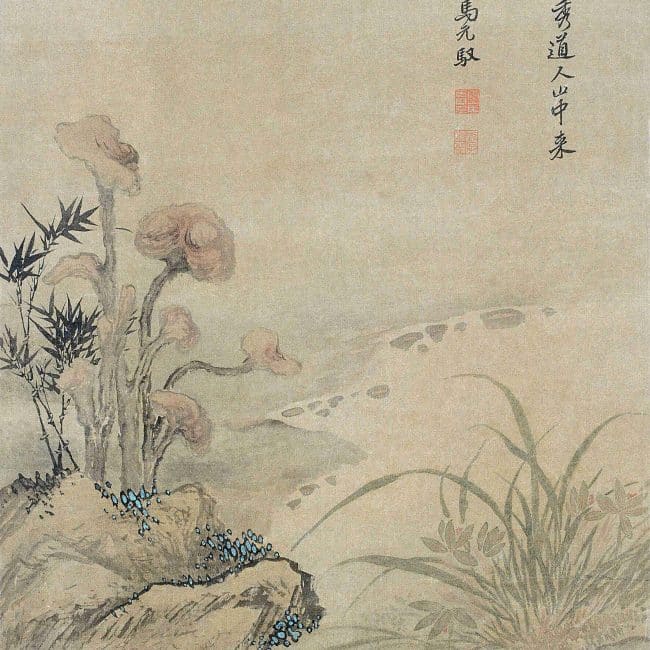
Ma Yuanyu (1669–1722)
Ma Yuanyu, also known as Fuxi and Tianyushanren, hailed from Changshu, Jiangsu Province. Renowned for his mastery of flower-and-bird painting, Ma inherited the Yun Shouping tradition and developed a distinctive style characterized by lively brushwork, elegance, and simplicity. His boneless technique, emphasizing soft and fluid forms, became a hallmark of his work, earning him a respected place among the Yun School's successors who carved their own artistic identities.
Cai Heting (1909–1976)
Cai Heting, courtesy name Yiyuan, also known by his pseudonyms Zhenshisanren and Diluzhu, was a native of Fuzhou, Fujian. He studied Chinese painting alongside his younger brother Hezhou from an early age, drawing inspiration from masters such as Ren Bonian and Wu Changshuo while tracing the styles of Bada Shanren and Wang Shigu. Cai Heting incorporated Western techniques of light and shadow into his work, alongside the innovative spirit of the Lingnan School, blending traditional brush and ink with modern approaches to light and color. Active in the Shanghai painting scene during the 1930s, he later moved to Xi’an in the 1950s. In his later years, he specialized in subjects like plum blossoms, bamboo, lions, tigers, and peacocks.
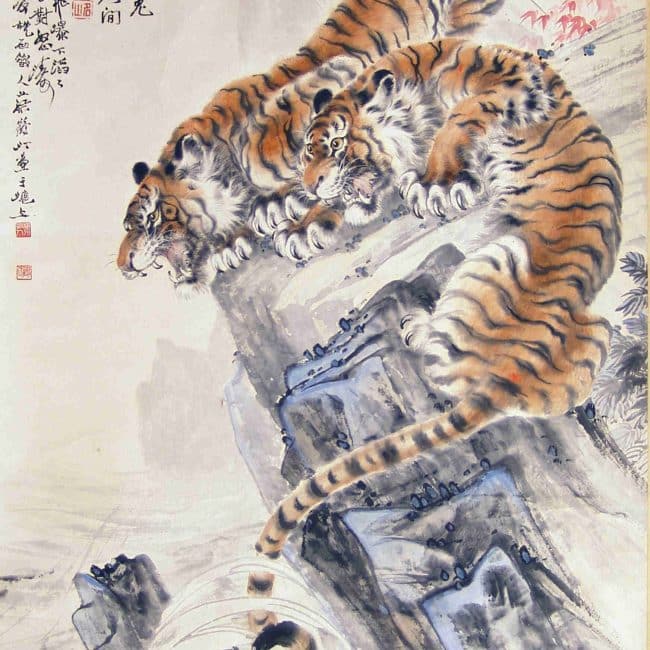
"Two Tigers Roaring at the Waves"
This early work by Cai Heting vividly depicts two fierce tigers roaring on the bank of a rocky torrent. The tigers are rendered with dynamic postures and majestic expressions, exuding both power and vitality. Beneath the rock, waves crash forcefully, creating a sense of drama and tension that evokes the imagery of "tigers roaring and dragons singing." Although no dragon is present, the turbulent waters suggest its looming presence, enhancing the painting's mythical atmosphere.
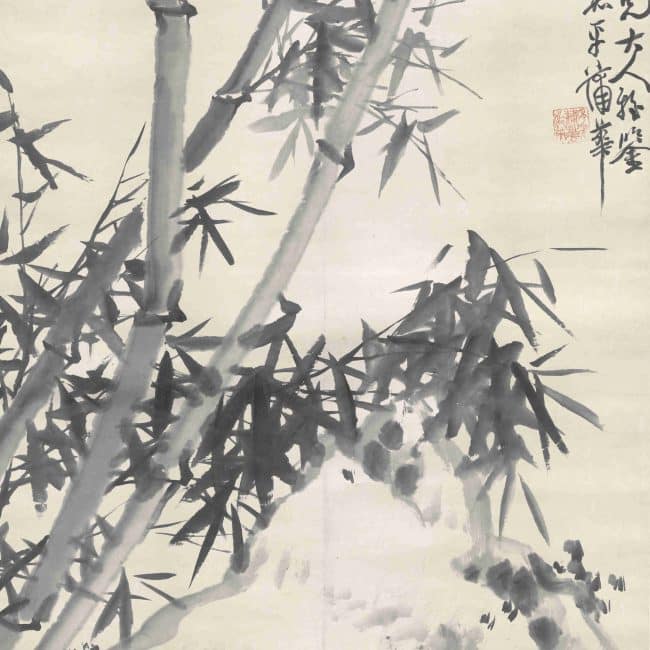
Pu Hua (1832–1911)
Pu Hua, originally named Cheng, with the courtesy name Zuoying and the pseudonym Xu Shanyeshi, was a native of Jiaxing, Zhejiang. Despite his humble origins, Pu Hua excelled in poetry, calligraphy, and painting from a young age. Though he initially pursued a scholarly path, his disinterest in fame and fortune led him to abandon official pursuits and dedicate himself entirely to art. In his later years, Pu Hua settled in Shanghai and, alongside Xu Gu, Wu Changshuo, and Ren Bonian, became one of the "Four Masters of the Shanghai School" during the late Qing Dynasty.
Renowned for his cursive calligraphy and paintings of landscapes and flowers, Pu Hua’s works are characterized by strong, uninhibited strokes. His mastery of wet-brush techniques produced pieces with bold, fluid inkwork that radiate vitality and power.
Huang Shanshou (1855–1919)
Huang Shanshou, originally named Yao, was known by the courtesy names Xuchu and Xuchu and the pseudonyms Lisheng, Xudaoren, and Hexi Waishi. Born in Wujin, Jiangsu (modern-day Changzhou), Huang came from a humble background but demonstrated remarkable artistic talent from a young age. By his early teens, he was already skilled in painting. Renowned for his versatility, he excelled in landscapes, flowers and birds, and figure painting. Early in his career, he worked as a guest artist, and later, after the Xinchou year, he gained international recognition, selling his works overseas and becoming a prominent figure in Shanghai's art scene.
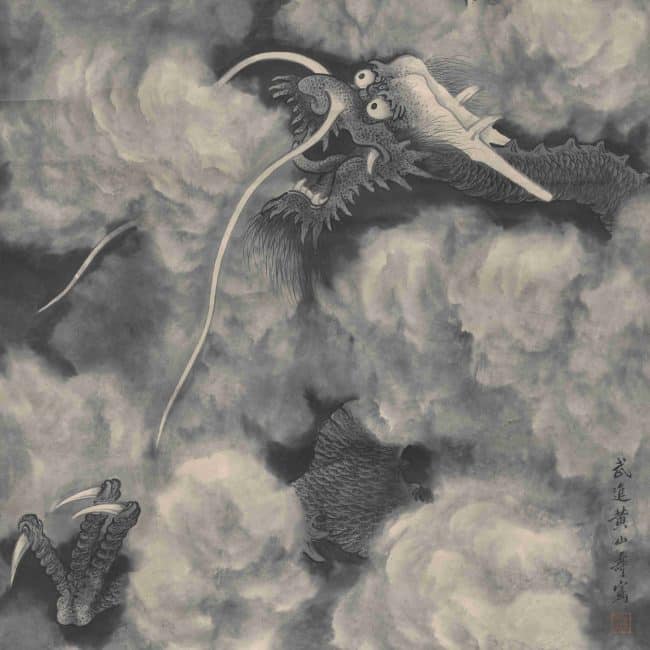
"Dragon Appearing in the Clouds"
This scroll showcases Huang Shanshou's exceptional skill in depicting ink dragons, a subject he mastered through both rigorous study and direct observation of nature. Inspired by Mi Zhun of Changzhou and informed by his practice of studying natural forms like clouds and mist at dawn, Huang developed a unique style that combined technical precision with dynamic expression.
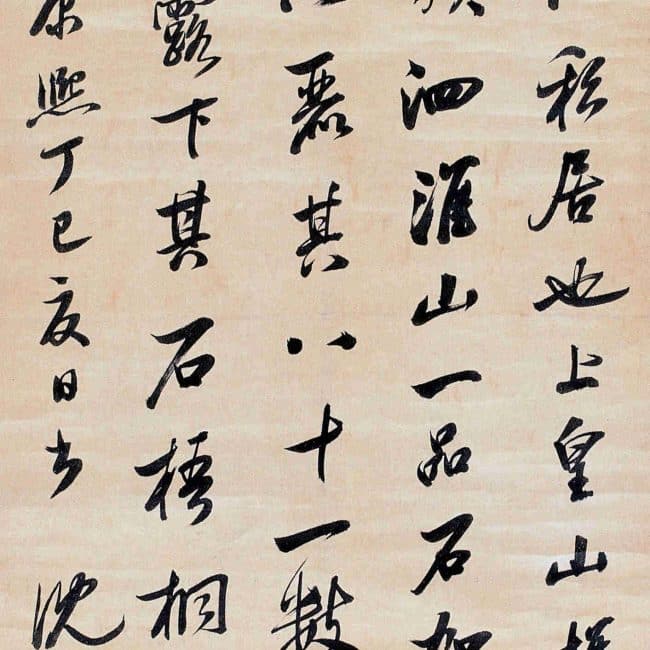
Shen Quan (1624–1684)
Shen Quan, courtesy name Zhenrui and nicknamed Yitang and Chongzhai, was a native of Huating (modern-day Shanghai). In 1652, during the ninth year of the Shunzhi reign, he was honored with the title of editor after a successful examination in Hua. Later, he served in the Hanlin Academy, ultimately becoming Minister of Rites in the Zhanshi Mansion, with the posthumous title "Wen Ke." Shen Quan's ancestry included the renowned Ming Dynasty calligrapher Shen Can, and he shared a hometown with Dong Qichang. This cultural legacy inspired Shen Quan’s early dedication to calligraphy. He drew heavily from Dong Qichang's elegance and Mi Fu’s structural integrity and composure, blending their influences into a distinctive style. Shen Quan enjoyed great favor from Emperor Kangxi and was one of the leading calligraphers of the Kangxi era.
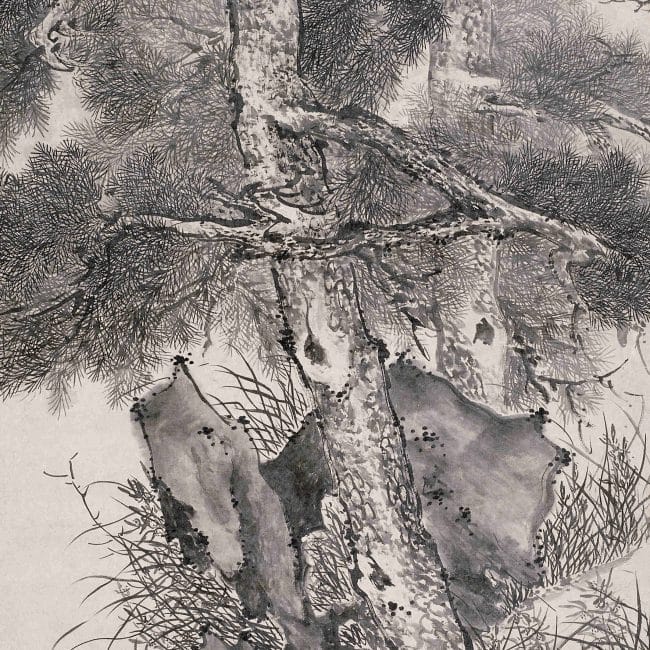
Hu Shikun (Dates Unknown)
Hu Shikun, courtesy name Yuanqing, was a painter active during the late Ming and early Qing dynasties. A native of Shangyuan (modern-day Nanjing, Jiangsu), he came from a family renowned for its expertise in calligraphy and painting. Hu was particularly skilled in landscapes and orchids, often capturing the natural beauty of Jinling (ancient Nanjing). As a painter associated with the "Jinling School of Painting," his works reflect the distinct characteristics of this regional tradition, though few of his paintings survive today.
"Tall Pines and Elegant Orchids" (1678)
Created in 1678, this scroll exemplifies Hu Shikun’s mastery of landscape painting. The composition is both unconventional and balanced, blending bold, fluid brushstrokes with a majestic and serene aesthetic. The painting reflects the hallmark features of the "Jinling School of Painting," characterized by dynamic brushwork and a strong connection to real-world scenery.
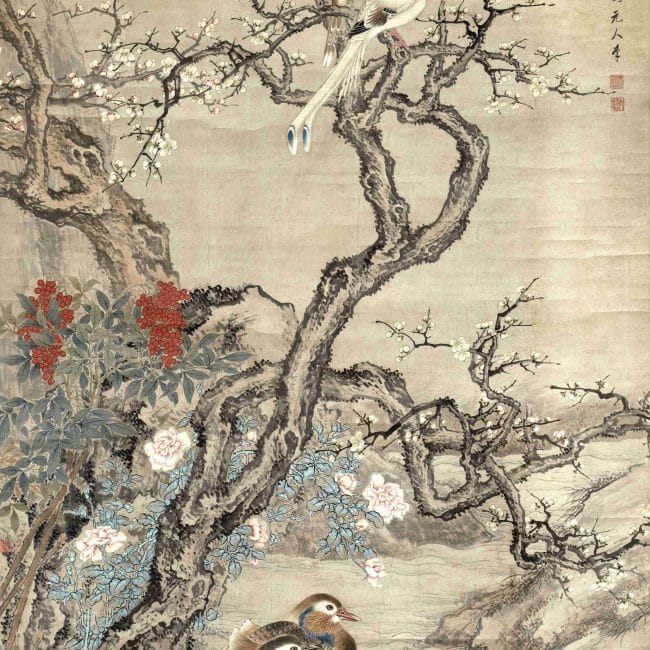
Shen Quan (1682–c. 1760)
Courtesy names Hengzhi and Hengzhai, and nicknamed Nanping, Shen Quan was a native of Deqing, Zhejiang. Born into a poor family, he initially learned to craft paper flowers under the guidance of his father, Shen Xinzhai. As a young boy, he accompanied his father on silk-selling trips to Pinghu. It was during these visits that his interest in painting was sparked by observing Hu Mei’s studio. Recognizing his talent and passion, Shen Quan’s father arranged for him to apprentice under the master, setting him on a path to becoming a professional artist.
In 1731, during the ninth year of the Yongzheng reign, Shen Quan was invited to Japan by the Japanese royal court to teach painting techniques. His influence there was profound, and he became the founder of the "Nanping School of Painting," earning him the title of "the number one imported painter" in Japan.
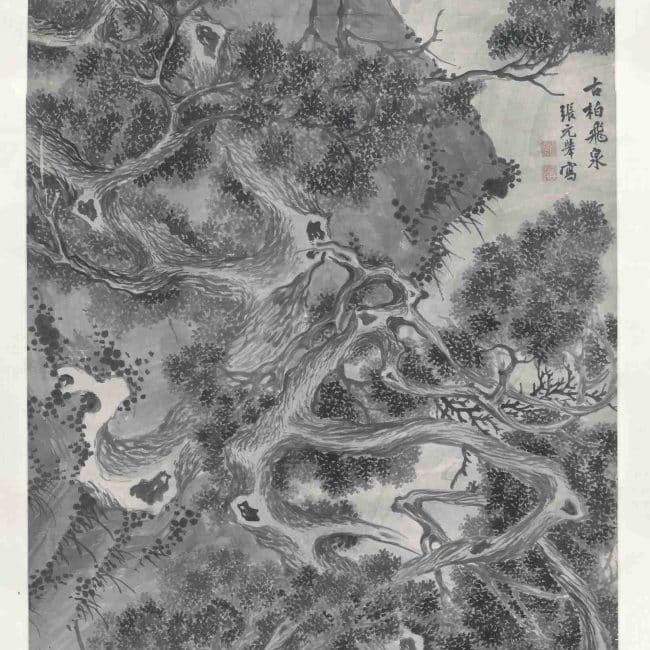
Zhang Yuanju (Dates Unknown)
Courtesy name Maoxian, Zhang Yuanju was a native of Wuxian County (modern-day Suzhou, Jiangsu Province) and the nephew of the renowned calligrapher and painter Chen Daofu. He was highly regarded for his skills in calligraphy and painting, inheriting the traditions of Zheng Ming in calligraphy and Chen Daofu in painting. Zhang excelled in depictions of flowers and birds, capturing their vivid essence with remarkable charm. Known for his selectivity, he often declined commissions, reserving his creativity for moments of inspiration and unrestrained expression, often influenced by the mood of wine.
"Ancient Cypress and Cascading Springs"
This large-scale painting showcases Zhang Yuanju’s mastery of composition and ink techniques. The intricate scene is meticulously structured, presenting a complex yet harmonious multi-layered layout. The atmosphere is imbued with an ancient, verdant serenity, highlighted by mountains, rocks, and ravines.
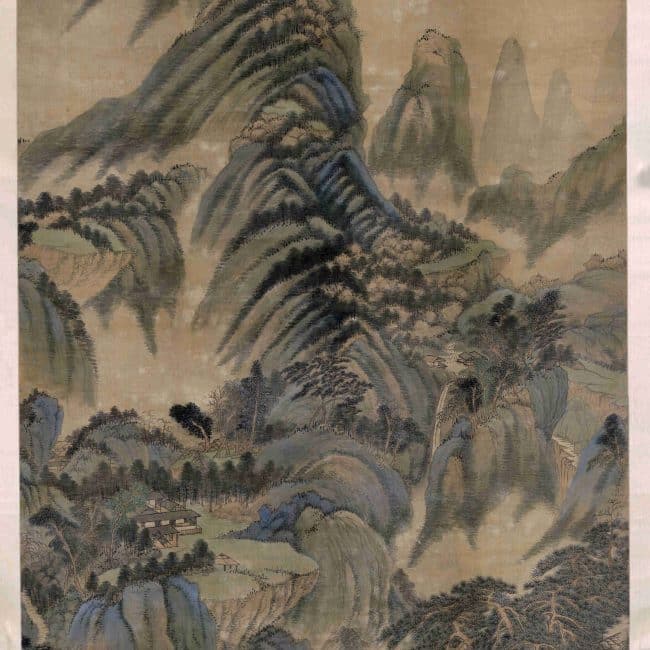
Wang Shimin (1592–1680)
Originally named Zanyu, with the courtesy name Xunzhi and pseudonyms Yanke and Xilu Laoren, Wang Shimin hailed from Taicang, Jiangsu. He came from a distinguished family: his grandfather, Wang Xijue, was chief minister of the Wanli Cabinet, and his father, Wang Heng, served as an editor in the Hanlin Academy. Benefiting from his family’s prominence, Wang Shimin was honored with the title Shaoqing of the Ministry of Rites, earning him the nickname "Wang Fengchang."
Wang demonstrated exceptional artistic talent from an early age, particularly in painting. His affluent background allowed him to receive direct instruction from Dong Qichang and Chen Jiru, with Dong Qichang’s teachings leaving a lasting influence. He dedicated himself to studying and emulating the great works of the Song and Yuan dynasties, achieving mastery in brushwork and ink techniques. Wang Shimin became the leader of the “Four Wangs” and the foremost figure of the orthodox school of landscape painting in the early Qing dynasty.
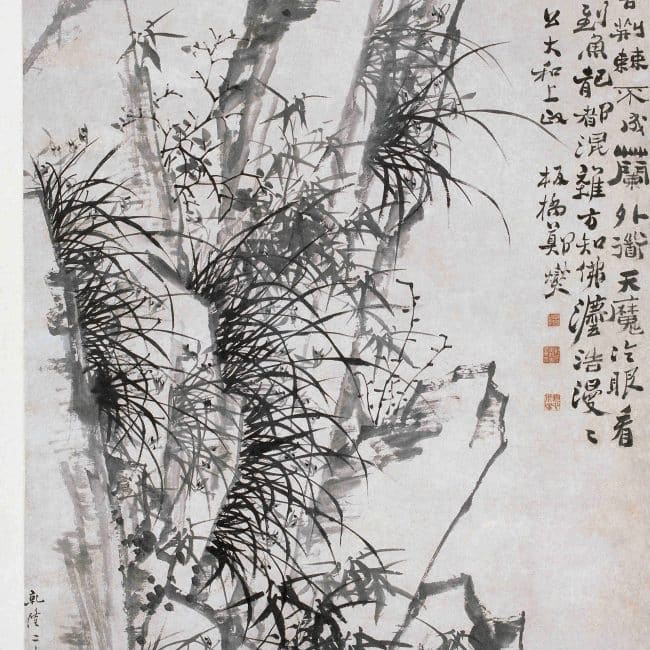
Zheng Xie (1693–1765)
Courtesy name Kerou and pseudonym Banqiao, Zheng Xie was born in Xinghua, Jiangsu. A celebrated scholar-official, he achieved the title of Jinshi in the first year of Emperor Qianlong’s reign (1736) and served as magistrate of Fan County and Wei County in Shandong Province. He is renowned as one of the "Eight Eccentrics of Yangzhou" and was admired for his mastery of poetry, calligraphy, and painting—earning the title “Three Perfections.”
Zheng Xie was particularly acclaimed for his paintings of bamboo and rocks, characterized by their simplicity and spontaneity. As a calligrapher, he developed a distinctive style that combined elements of Han dynasty clerical script with regular, running, and cursive scripts, a style he humorously described as “six and a half points of calligraphy.”