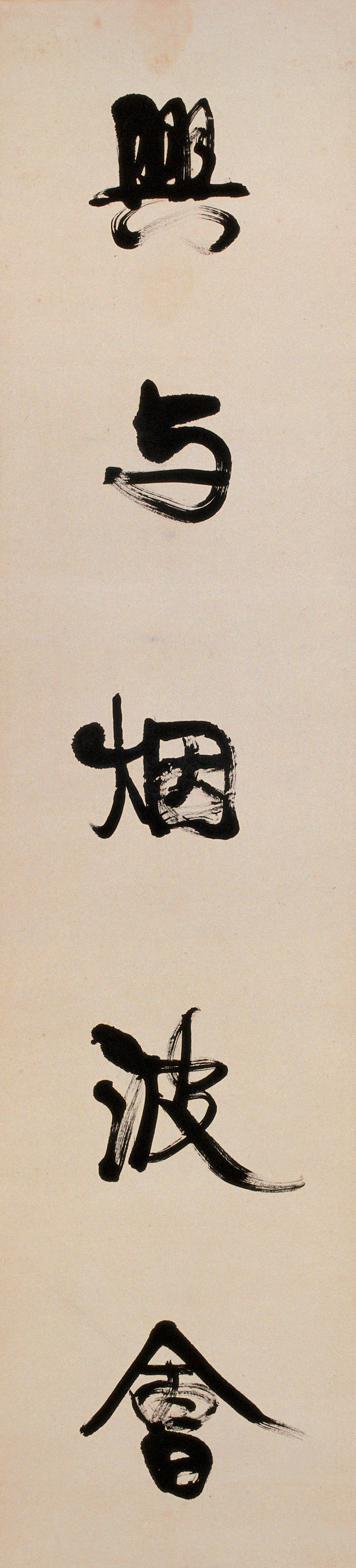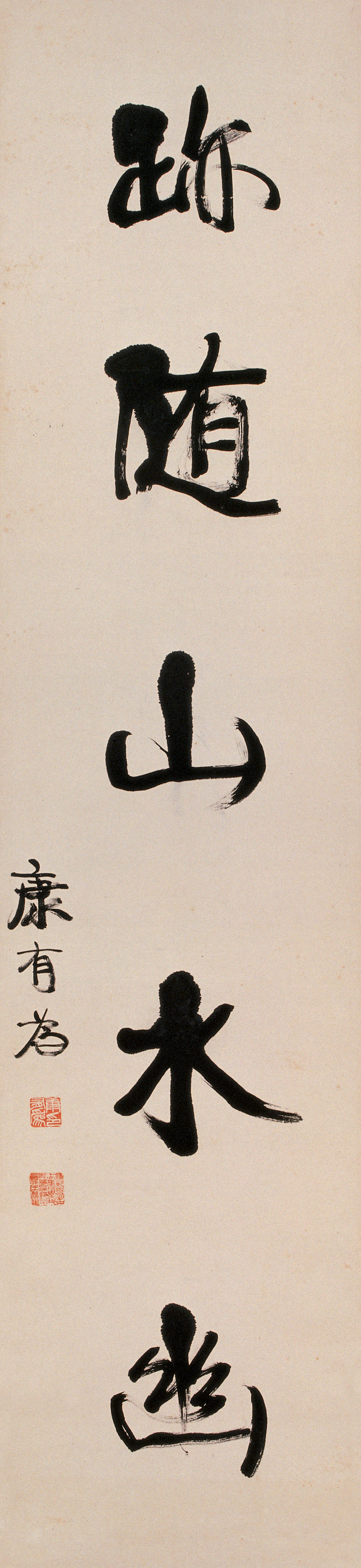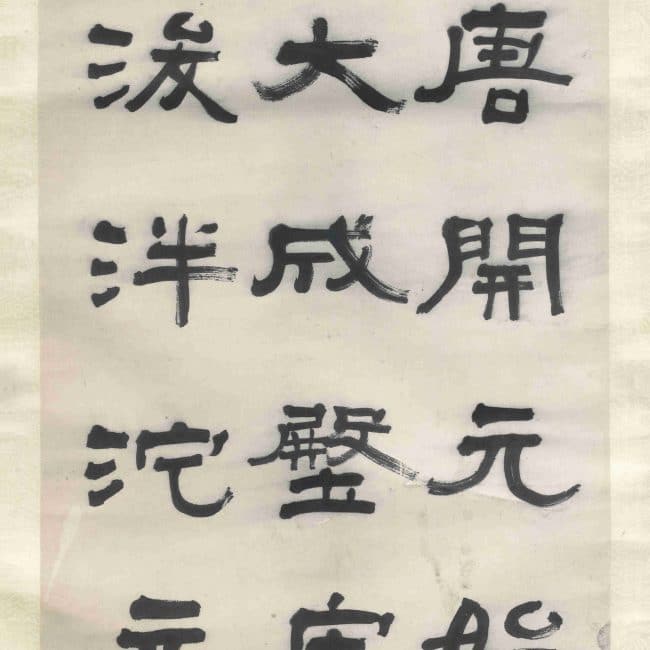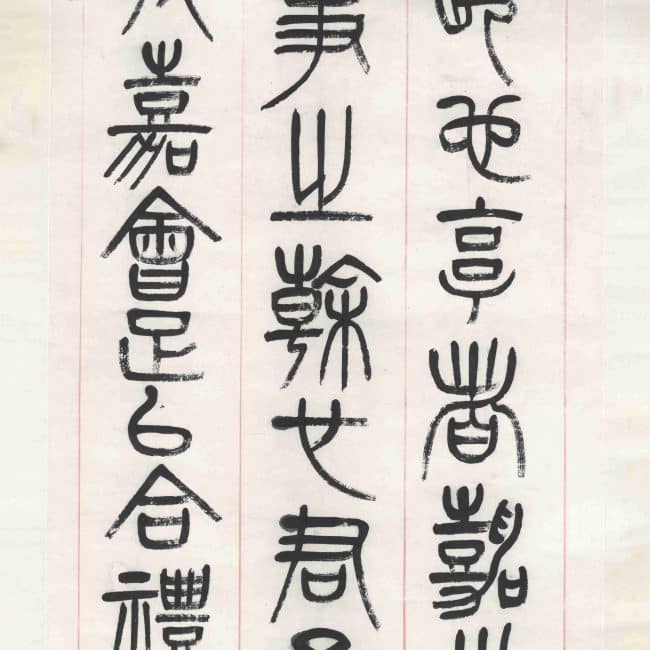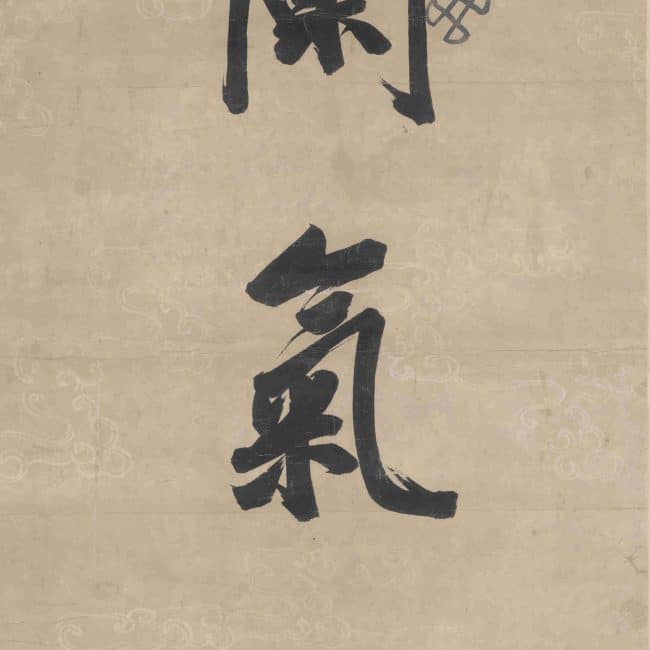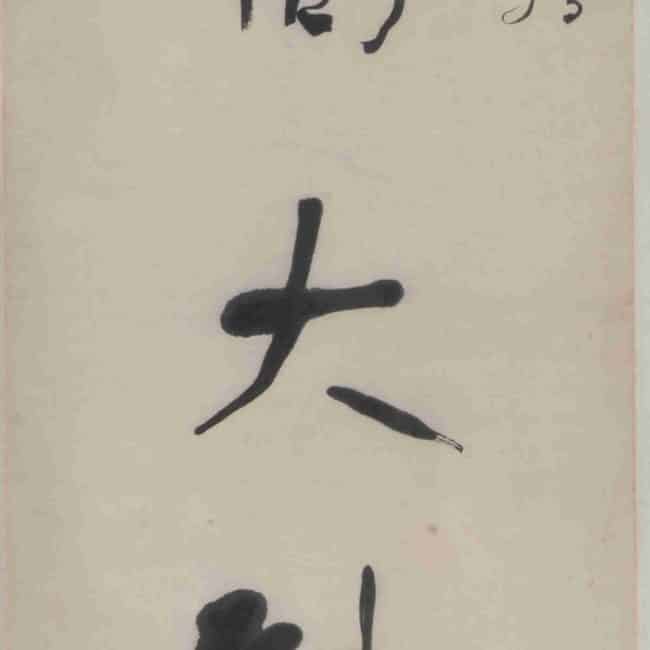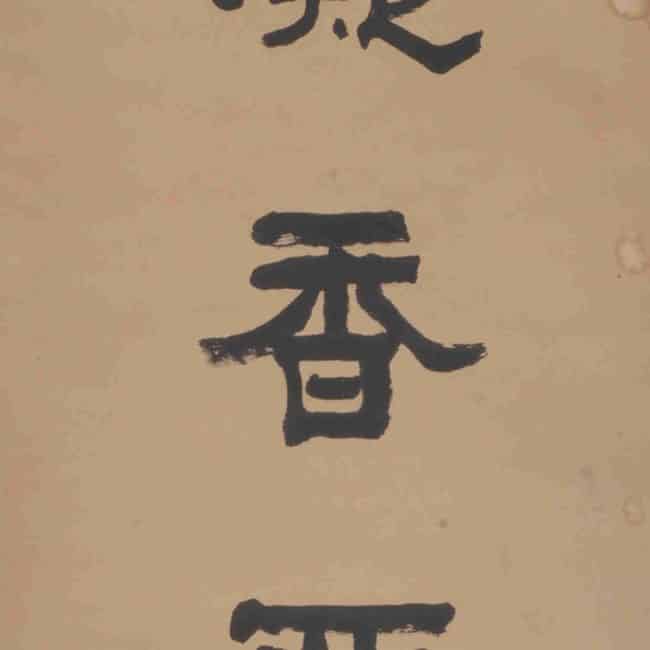
Five Character Couplet in Running Script 《行书五言联》
Kang Youwei (康有为)
Kang Youwei (1858–1927)
Originally named Zuoyi, with the courtesy name Guangxia and pseudonym Changsu, and alternative pseudonyms Yuxiao Shanin, Yucun Sou, and Tianyou Huaren, Kang Youwei was from Nanhai, Guangdong. He was a significant politician, thinker, and educator in the late Qing period and a representative of bourgeois reformism.
“Five Character Couplet in Running Script”
Kang Youwei strongly advocated for the Northern Stele School, introducing a comprehensive concept of “epigraphy” that had a profound impact on later generations. His calligraphy followed the path of the “Inscription on the Stone Gate” and “Stele of Prince Zheng,” developing his unique style. Though opinions on his calligraphic achievements vary, his contributions to calligraphy theory are undeniable. This couplet features concealed strokes and expansive energy, exuding a dignified and vigorous charm full of the spirit of epigraphy. Compared to his works that deliberately create an epigraphic atmosphere, this piece is more balanced and peaceful, with a distinct charm. The inscription reads: “Kang Youwei,” with seals “Kang Youwei Yin” and “Reform for a Hundred Days, Wander for Sixteen Years, Travel Around the World, Visit Four Continents, Through Thirty-One Countries, Walk Six Hundred Thousand Li.”
Translation of couplet:
“United with the mist and waves, one’s traces blend with the serenity of mountains and waters.”
康有为(1858—1927),原名祖诒,字广厦,号长素,别号有西樵山人、游存叟、天游化人等,广东南海人。中国晚清时期重要的政治家、思想家、教育家,资产阶级改良主义的代表人物。
康有为力倡北碑,提出完整的“碑学”概念,对后世影响极大。其书法宗法《石门铭》《郑文公》一路,自成一格。虽然后世书家对他的书法成就褒贬不一,但他在书法理论上的贡献还是不可磨灭的。此联逆笔藏锋,气势开张,浑穆大气,充满了金石之趣。相对于他刻意营造金石气的作品来说,此作更为中庸平和,别具意蕴。款署:“康有为。”款下钤白文“康有为印”、朱文“维新百日出亡十六年三周大地游徧四洲经三十一国行六十万里”二印。
释文:兴与烟波会,迹随山水幽。
Photo Gallery