_compressed_header.png)
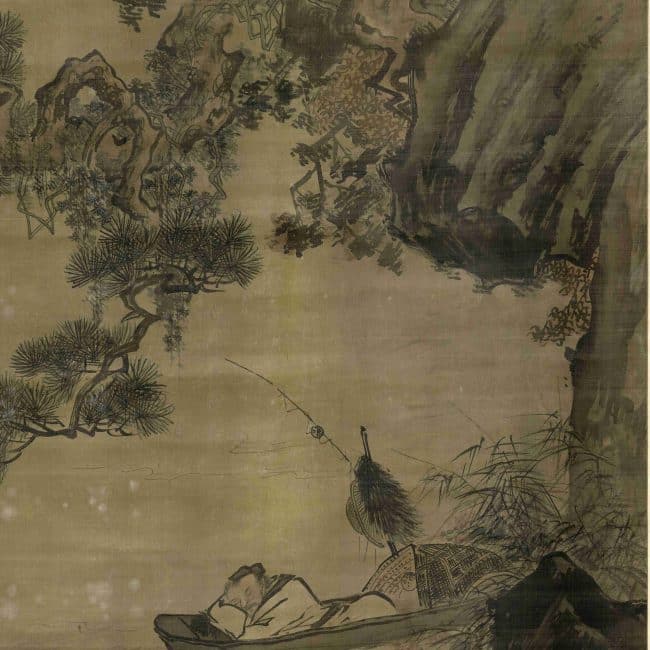
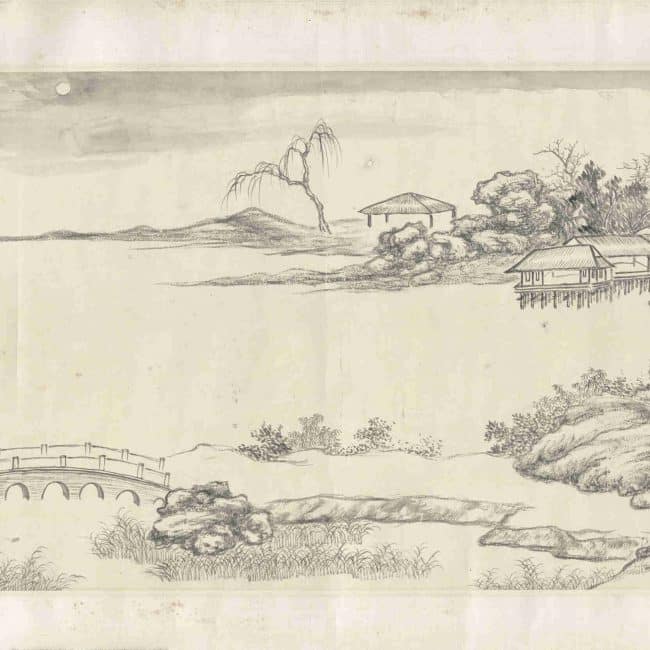
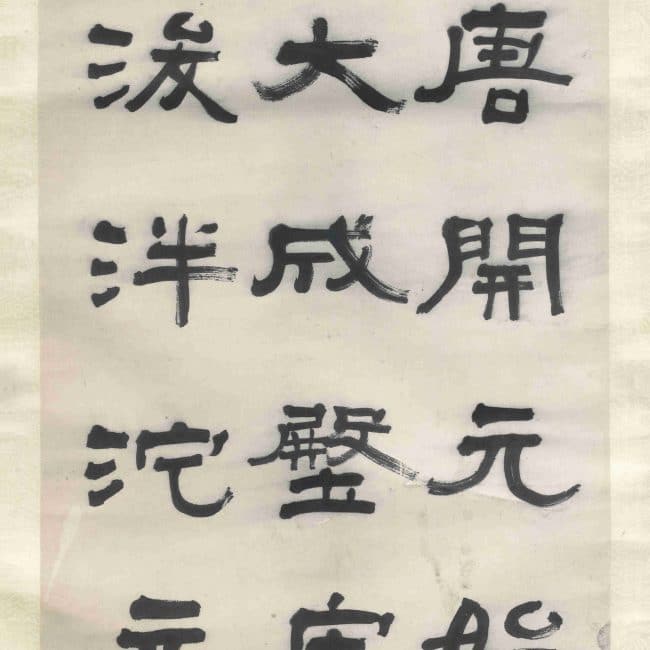
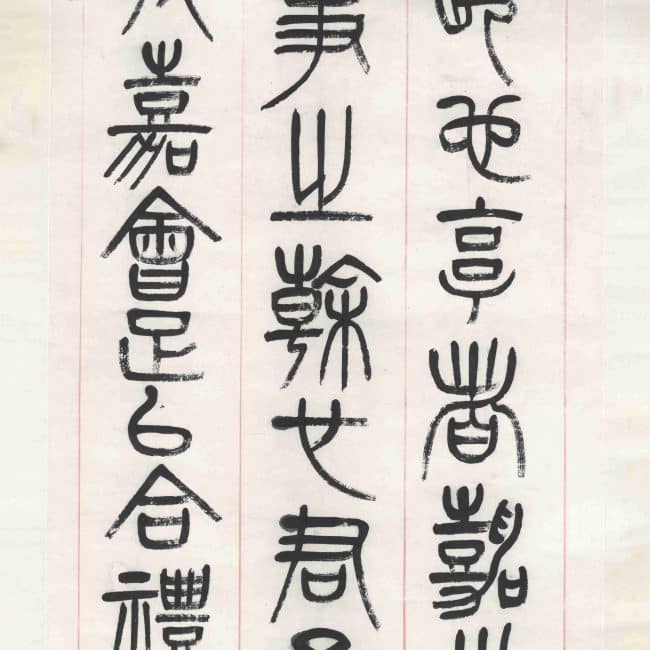
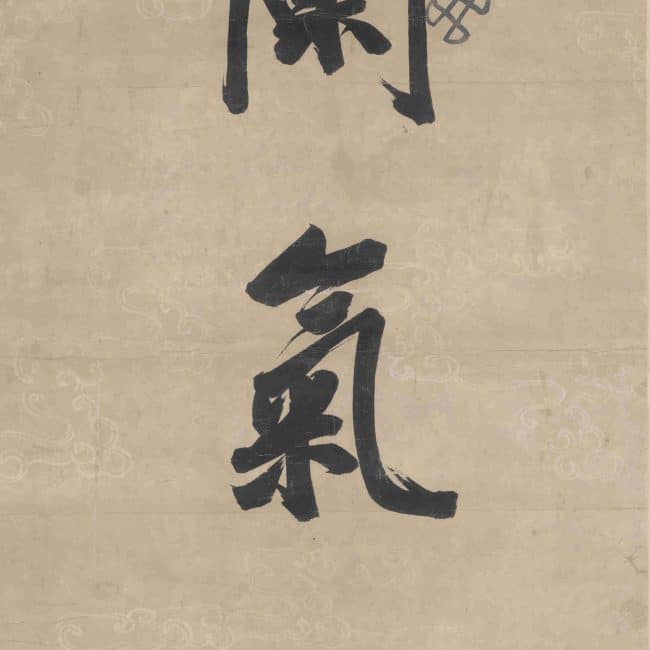
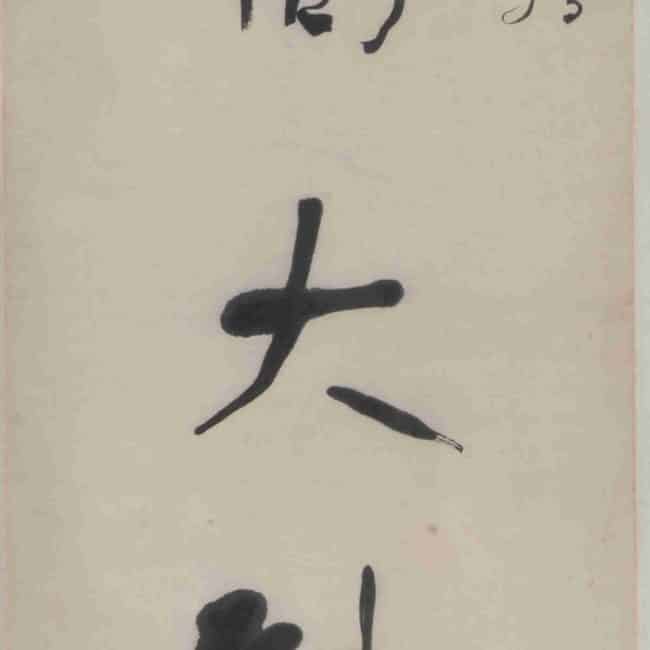
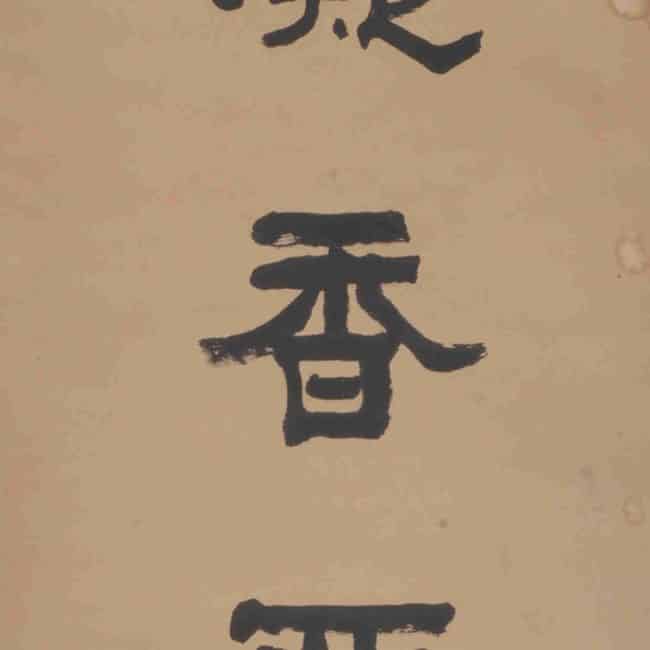
Handscroll of Meditation (Inscribed by Wang Wenzhi)《款书禅卷(王文治题)》
Dong Qichang (董其昌)
Dong Qichang (1555–1636)
Dong Qichang, courtesy name Xuanzai and pseudonym Sibai, also known as Xiangguang Jushi, was from Huating, Songjiang (now Shanghai). In the 17th year of the Wanli reign (1589), he passed the imperial examination and was appointed as a Hanlin Academy compiler, eventually serving as the Minister of Rites in Nanjing. He was posthumously honored with the title “Wenmin.” Dong was a master of both calligraphy and painting, establishing his own schools of art and having a profound influence on future generations.
Wang Wenzhi (1730–1802)
Wang Wenzhi, courtesy name Yuqing and pseudonym Menglou, was from Zhenjiang, Jiangsu. In the 25th year of the Qianlong reign (1760), he achieved the third-place honor in the imperial examination and served as a Hanlin Academy reader, later becoming the prefect of Yunnan. Wang was well-versed in Buddhism and excelled in calligraphy. Alongside Weng Fanggang, Liu Yong, and Liang Tongshu, he was one of the “Four Masters of the Qing Dynasty Stele School” and was also known for his use of light ink to convey an ethereal charm, earning him the nickname “Light Ink Exploring Flower.”
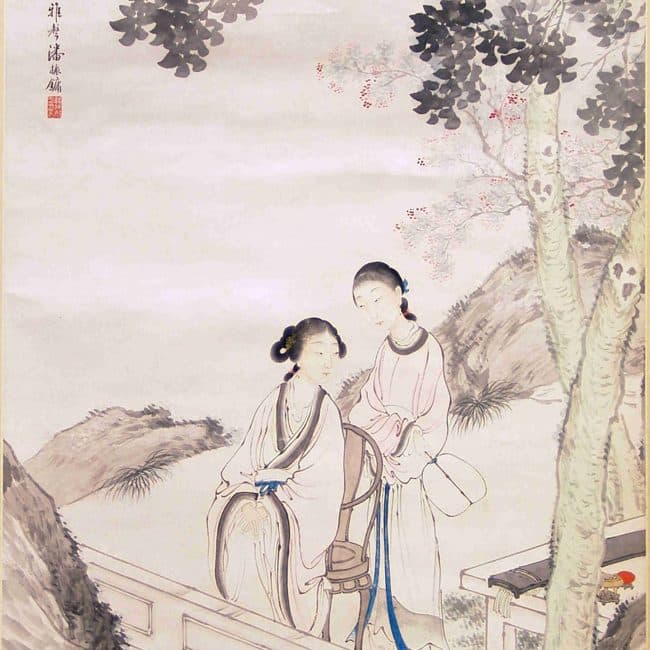
This scroll only contains the genuine introduction by Wang Wenzhi. Wang’s calligraphy is exceptionally brilliant and should not be disregarded even if the main painting is replaced with a forgery.
Translation of couplet:
“United with the mist and waves, one’s traces blend with the serenity of mountains and waters.”
董其昌(1555—1636),字玄宰,号思白,别号香光居士,松江华亭(今上海)人。万历十七年(1589)进士,授翰林院编修,官至南京礼部尚书,卒后谥“文敏”。书画皆是开宗立派的艺术巨匠,对后世影响极大。
王文治(1730-1802),字禹卿,号梦楼,江苏镇江人。乾隆二十五年(1760)探花,官翰林侍读,出为云南知府。精佛学,擅书法,与翁方纲、刘墉、梁同书齐名,称书坛“乾隆四大家”。他平时喜用淡墨,以表现潇疏秀逸之神韵,故时有“淡墨探花”之称。
此卷仅王文治引首为真迹,王题书法十分精彩,不可因画心被替代为伪作而弃王题。
Photo Gallery
_compressed.jpg)