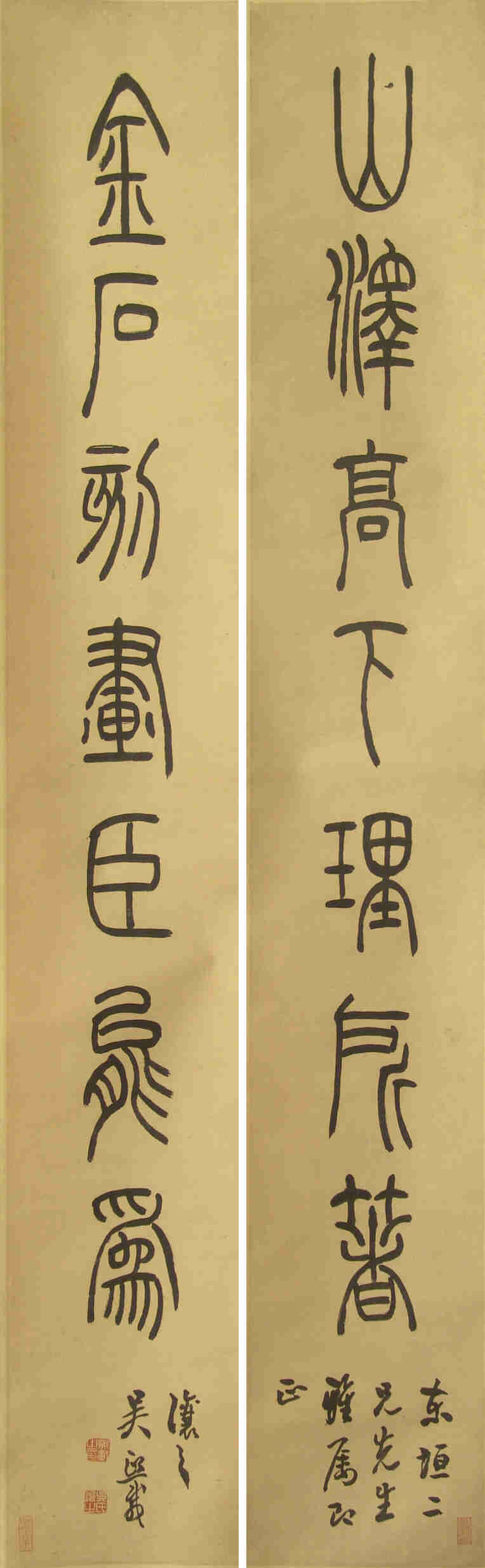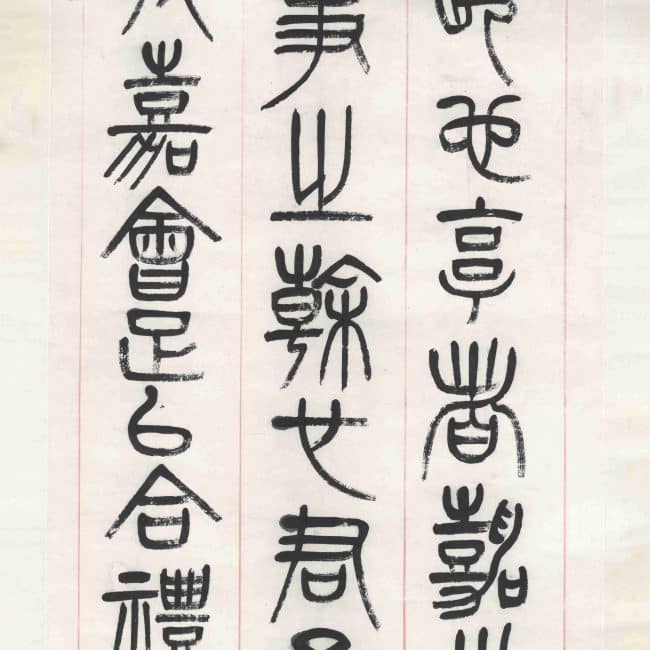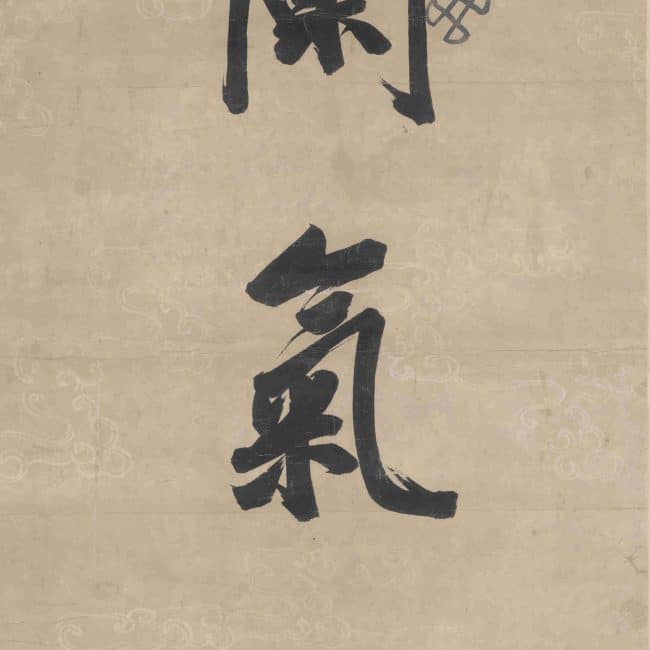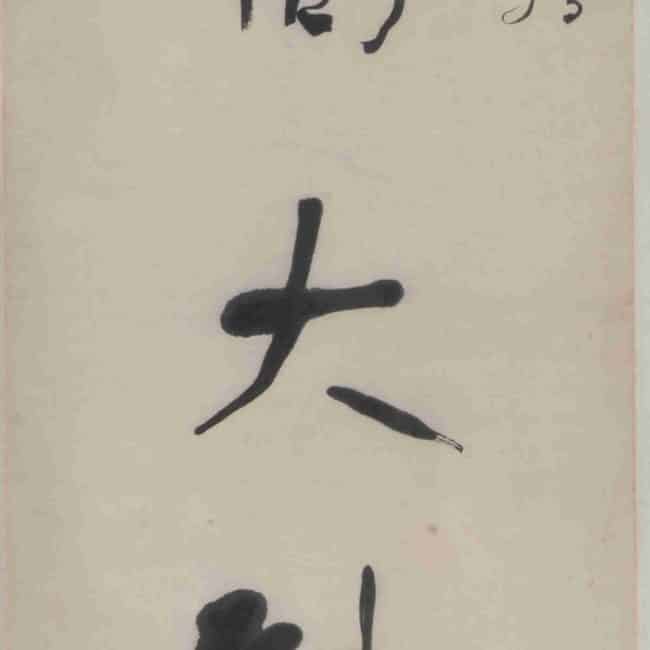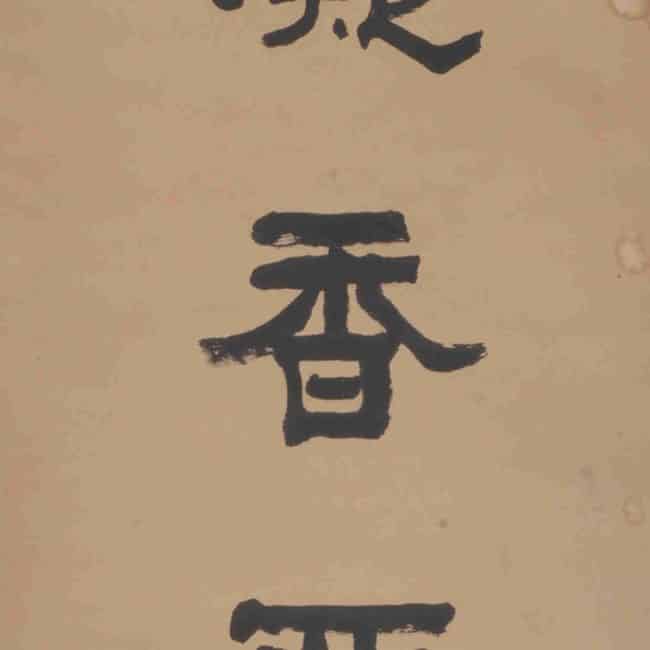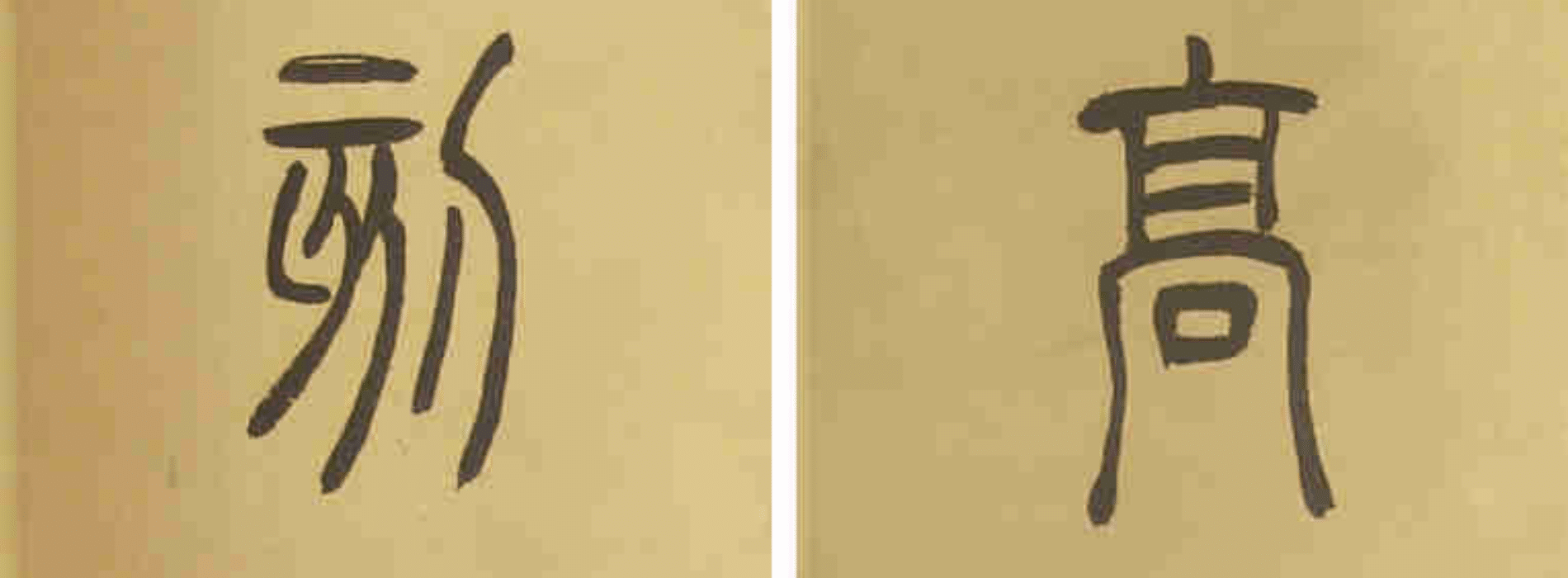
Seven Character Couplet in Seal Script《篆书七言联》
Wu Xizai (吴熙载)
Wu Xizai (1799–1870)
Wu Xizai, originally named Tingyang, courtesy name Xizai, later changed to Rangzhi and also known as Ranzhi to avoid the name taboo of Emperor Tongzhi, had the pseudonym Wanxue Jushi and his studio was called Shishenxuan. He was from Yizheng, Jiangsu. A student in his early years, he became a disciple of Bao Shichen. Wu excelled in philology, calligraphy, painting, and especially seal carving. He lived a life of poverty, earning his living by selling calligraphy and seal carvings, traveling between Yangzhou, Taizhou, and other places. His regular and running scripts followed Bao Shichen, who was a theorist rather than a skilled practitioner in calligraphy, so Wu’s regular and running scripts were less remarkable. However, his seal script and seal carving, influenced by Deng Shiru, transformed ancient simplicity into beauty, and his influence was far-reaching in later generations studying Deng.
“Seven Character Couplet in Seal Script”
The couplet features vigorous, flowing, and graceful lines, rooted in Deng Shiru but imbued with Wu’s unique elegant and fluid style. The brushwork is not yet fully mature, indicating an early work of Wu Xizai.
Translation of couplet: “The principles of mountains and lakes are evident, I can engrave the inscriptions on metal and stone.”
吴熙载(1799—1870),原名廷飏,字熙载,因避同治皇帝讳,更字让之,亦作攘之,号晚学居士,堂号师慎轩,江苏仪征人。诸生,为包世臣入室弟子。长于小学,善书画,尤精篆刻。一生清贫,以鬻书刻印为生,往来于扬州、泰州等地。真、行二体取法包世臣,因包氏为书法理论家,本不擅书,故吴之真、行不足为观。篆书与篆刻均法邓石如,变古朴为妍美,后之学邓者,多以吴为法,影响深远。
此篆书联体势劲健,舒展飘逸,婀娜多姿,虽植于邓石如,但精神气质是自家篆书婉转流畅的风采。此作个人面目已具,只是用笔尚未老练,当为其早期作品。
释文:山泽高下理所著,金石刻画臣能为。
Photo Gallery