Ou Garden: A Classical Garden Built in the Name of Love
Introduction:
The following is a translated article originally published by Liangcheng · Yangtze River Delta Observations on December 31, 2025. It introduces Ou Garden (耦园) in Suzhou, a unique classical garden themed around love and marriage.
Additional Notes:
This English version has been adapted for accessibility to English-speaking readers, with minor adjustments made for clarity. All images and captions are sourced from the original publication, with copyrights retained by their original creators, included to honor the spirit and details of the initial work. The original article in Chinese is available for viewing here.
Original: Liangcheng · Yangtze River Delta Observations
December 31, 2025 · Jiangsu
Among Suzhou’s classical gardens, Ou Garden (耦园) holds a unique place.
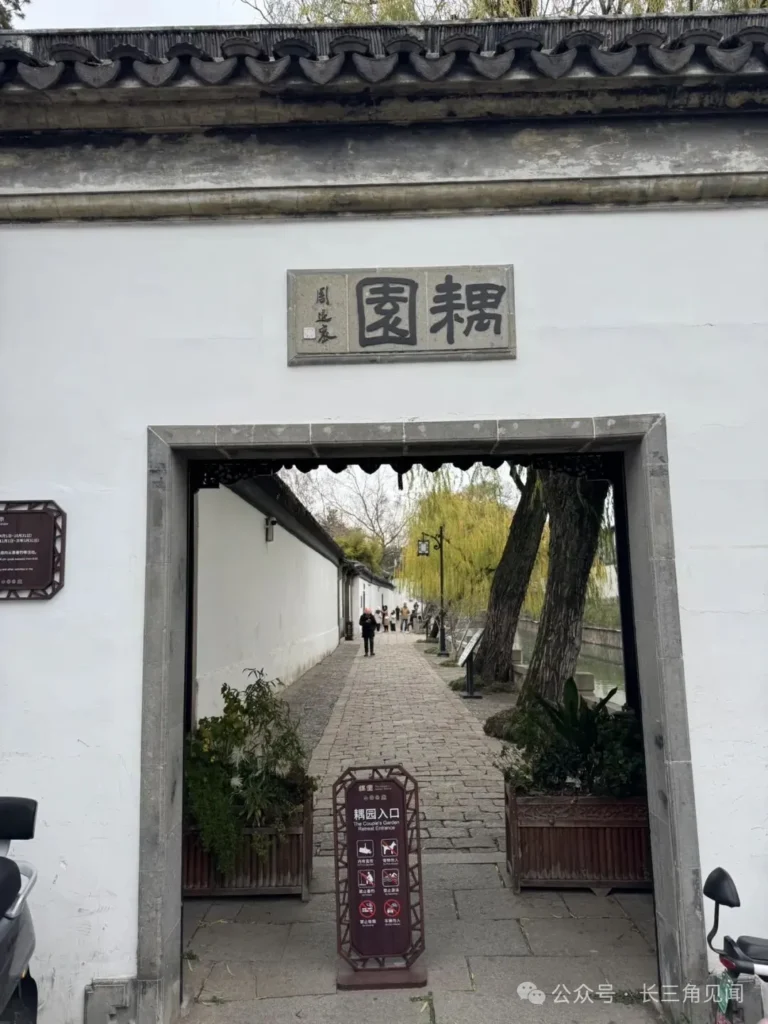
Ou Garden’s history dates back to the Yongzheng reign, when Lu Jin built She Garden, inspired by Tao Yuanming’s phrase “wandering daily in the garden brings delight.” During the Xianfeng era, She Garden was destroyed in war. In the Tongzhi reign, Shen Bingcheng of Huzhou, ill and residing in Suzhou, purchased the site and commissioned painter Gu Yun to design an expanded residence with two gardens. In 1876, Shen renamed it Ou Garden, symbolizing conjugal retreat. “Ou” (耦) is homophonous with “couple” (偶), also reflecting the east–west twin‑garden layout.
The residence, with four main halls, connects to east and west gardens via upper floors. It is divided into the central hall, West Flower Hall, and East Garden.
Ou Garden is Suzhou’s only classical garden themed around love and marriage, famed for Shen Bingcheng and his wife Yan Yonghua’s story.
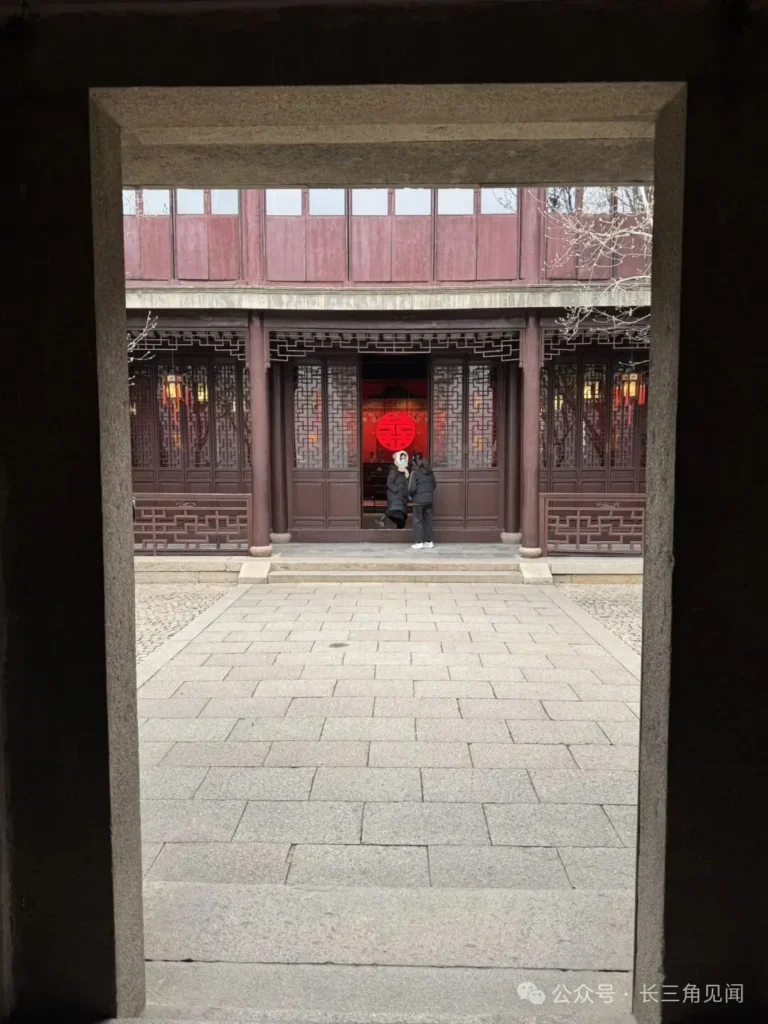
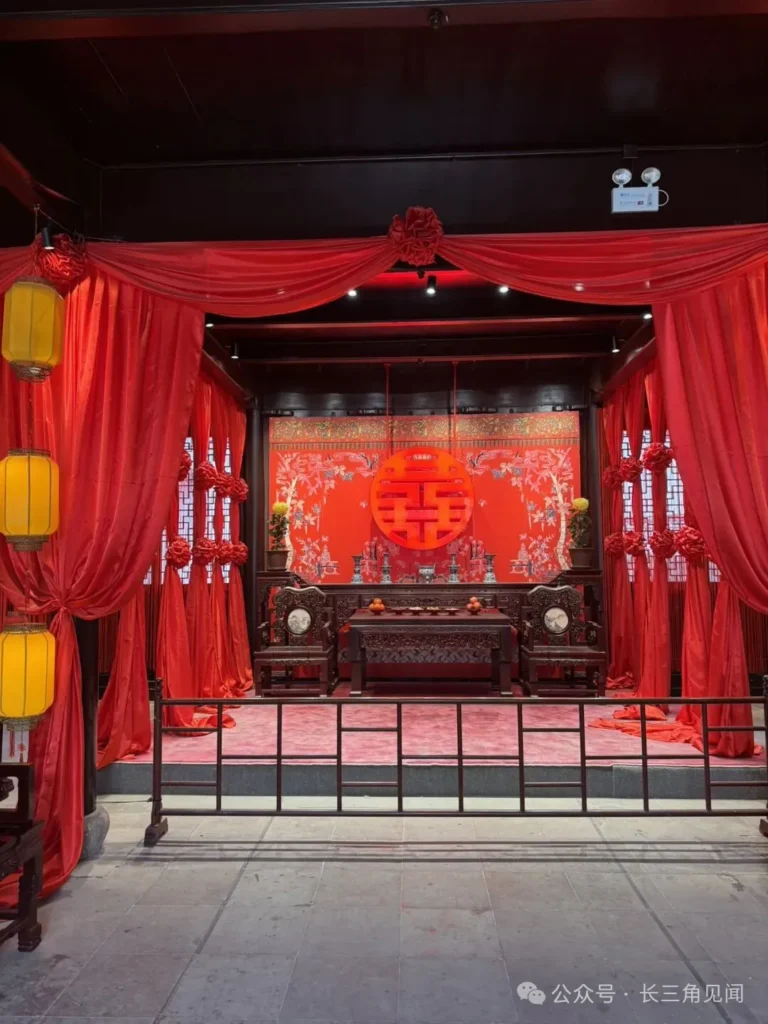
The main scene uses red as the dominant color, with “double happiness” characters, red drapery, and yellow lanterns. The central rosewood carved furniture reflects Suzhou craftsmanship, restoring the wedding setting of wealthy families.
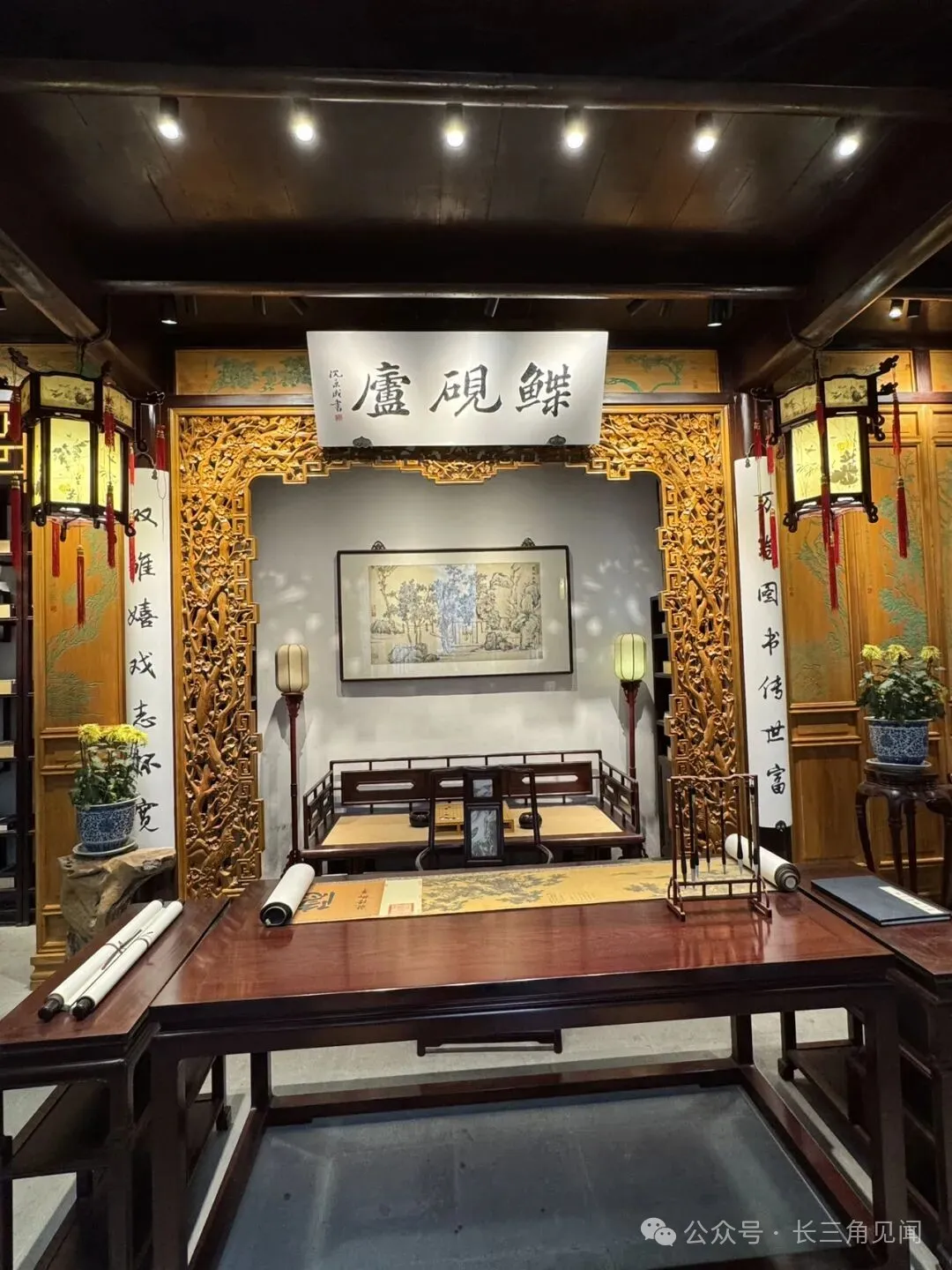
Located in the northwest corner of Ou Garden, the Die Yan Studio is a two‑story wooden L‑shaped pavilion. Its lattice windows and partition doors are simple yet elegant, with rockeries and flowers arranged in front. The layout follows the principle from The Craft of Gardens that “a study should be placed in a secluded spot.” To the north lies a pond, serving as “water suppressing fire” for disaster prevention. It is one of the best‑preserved private libraries still existing in Suzhou.
This library belonged to the garden’s owner, Shen Bingcheng, and his wife Yan Yonghua. It was named after the couple’s paired fish‑shaped inkstones, and once housed tens of thousands of volumes of ancient books, inscriptions, and paintings.
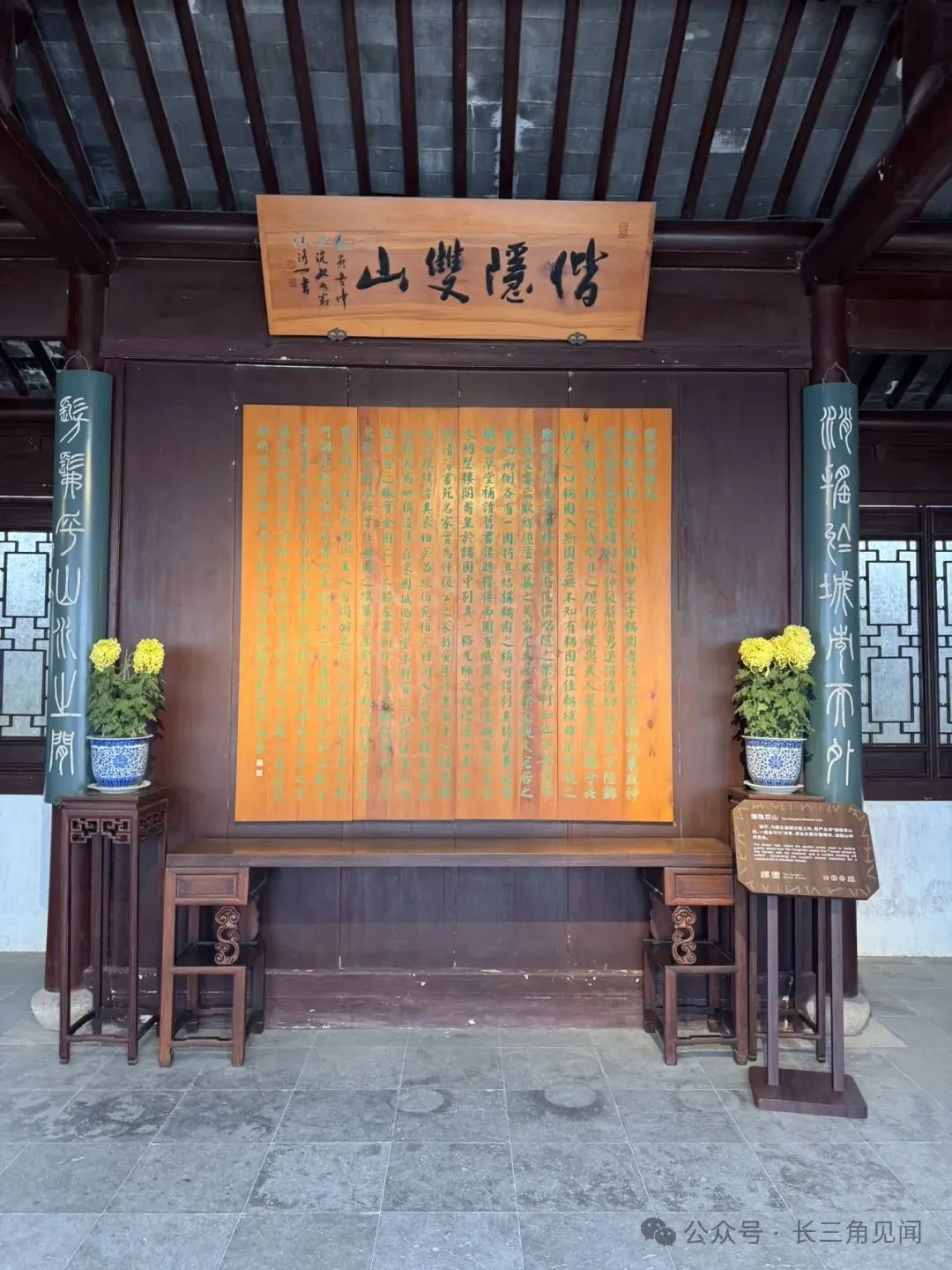
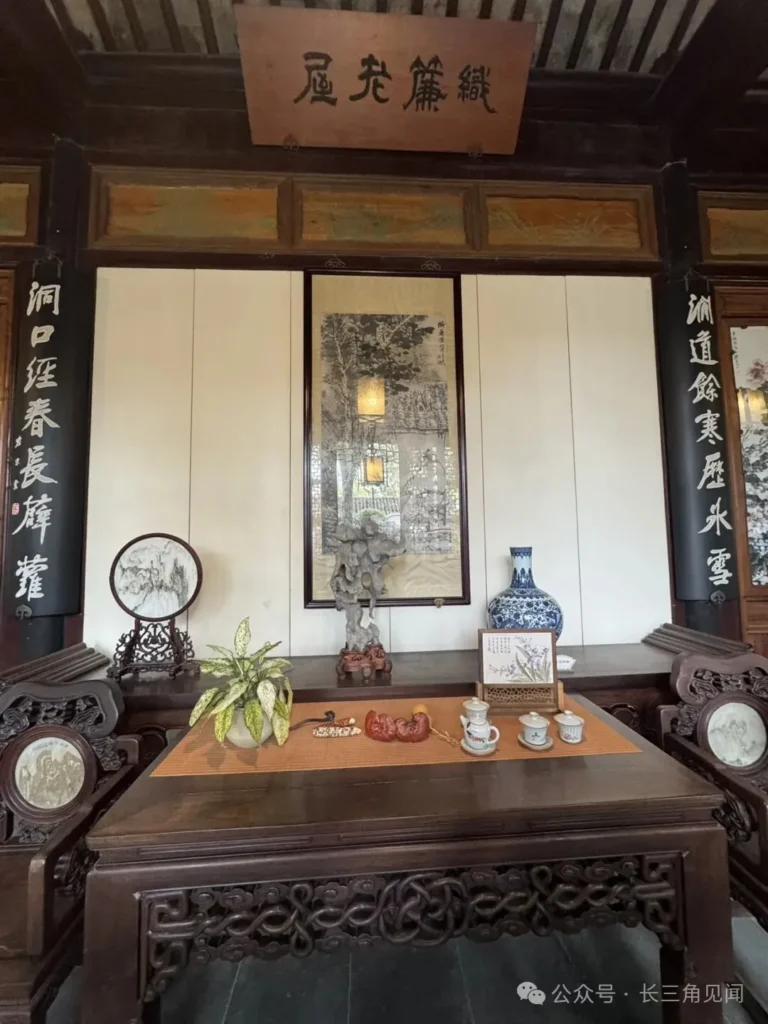
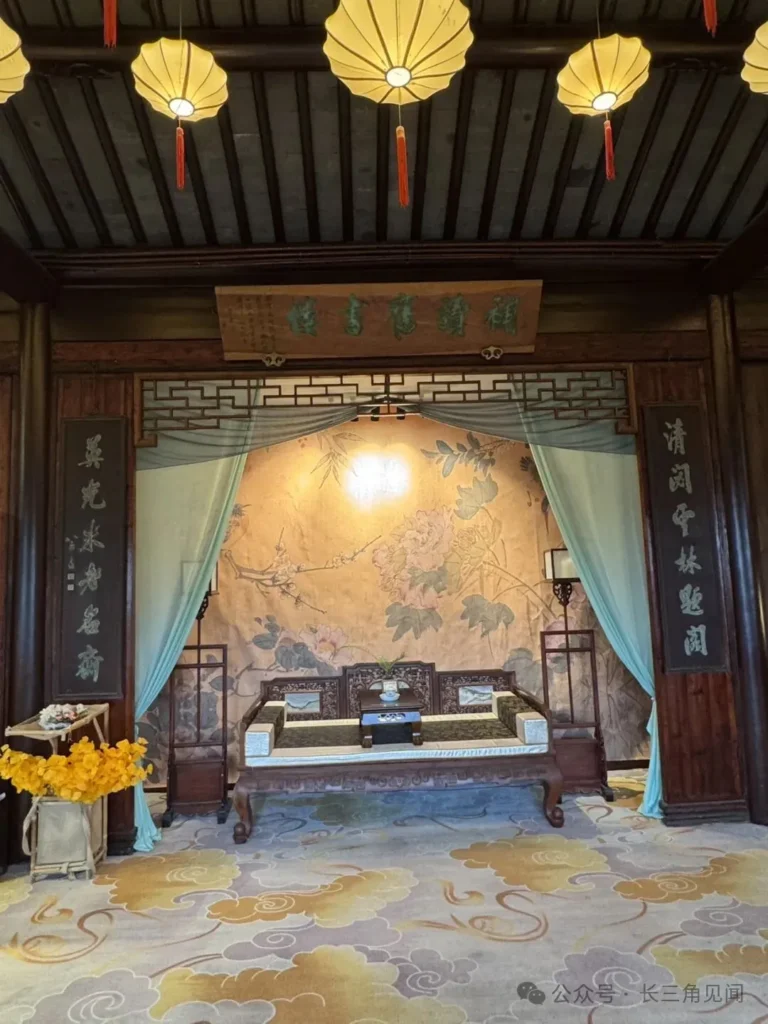
The name Zhi Lian Old House comes from the story of the ancient scholar Shen Linshi, who wove curtains to study in seclusion. The garden’s owner adopted this name to highlight his own aspiration for retreat, scholarship, and contentment in simplicity, while also echoing Ou Garden’s central theme of “conjugal reclusion.”
On either side of the hall are couplets that read: “Cold lingers in the brook through ice and snow; at the cave entrance, spring brings creeping vines.” These lines draw upon mountains, streams, and plants to depict the natural scenery around the garden. The imagery of “ice and snow” and “creeping vines” symbolizes the scholar’s noble character, blending with the rocks and greenery outside to create a harmony between interior and exterior.
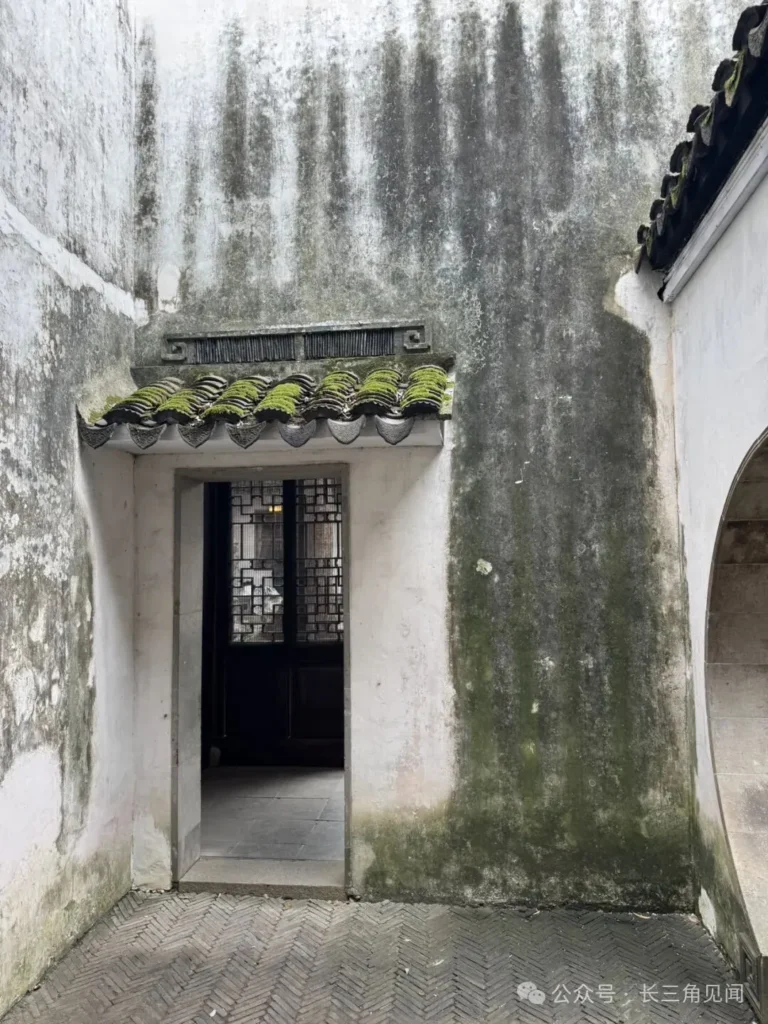
In the West Garden of Ou Garden, a small doorway is set against mottled white walls. The walls, eroded by time, bear ink‑like stains of varying depth. Moss‑covered green tiles rest on the lintel, paired with dark wooden lattice windows, forming a classic expression of Jiangnan architecture known as “whitewashed walls and black tiles.”
This weathered wall texture reflects the humid climate of Jiangnan while evoking an ancient sense of time. The framing effect of the doorway makes the inner space appear half‑hidden, adding to the garden’s subtle and restrained beauty.
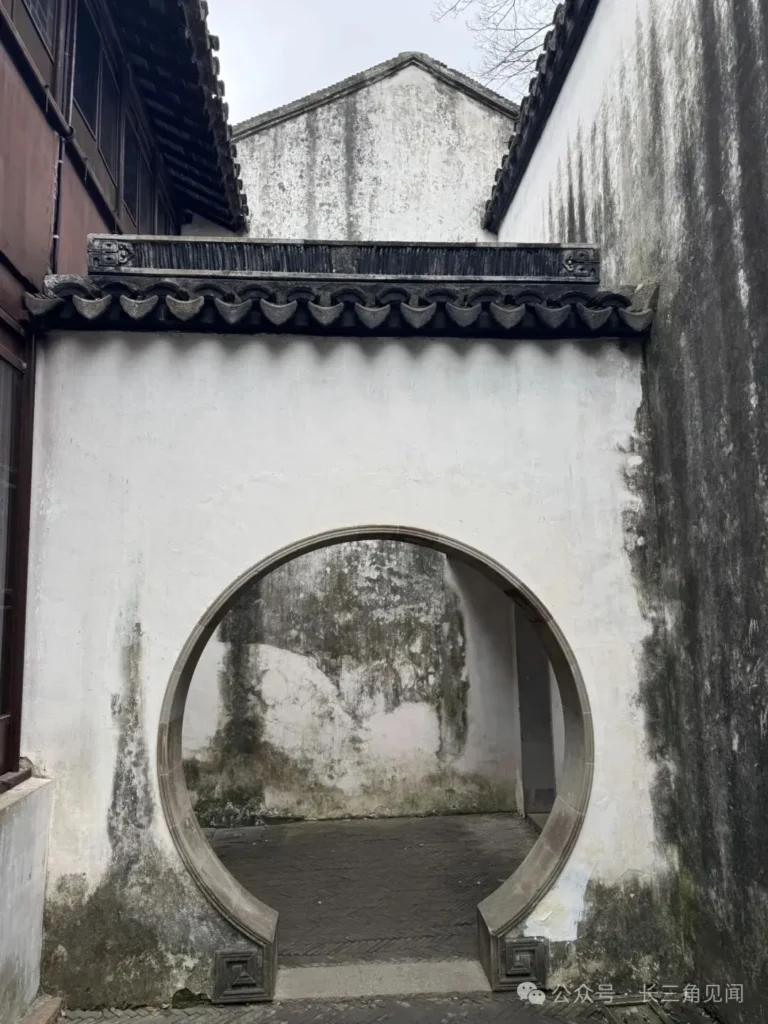
The circular moon gate is a classic design element in Suzhou‑style gardens. Set into a white wall, it is topped with a simple brick‑carved eave. The ink‑like stains on the wall contrast with the gate’s graceful curves, creating a balance of hardness and softness.
The moon gate is not only a passageway but also a “framed view” for the principle of “changing scenery with each step.” Through the opening, one can glimpse the space beyond, enriching the garden’s layers and embodying the traditional Chinese garden philosophy of “concealment and revelation.”
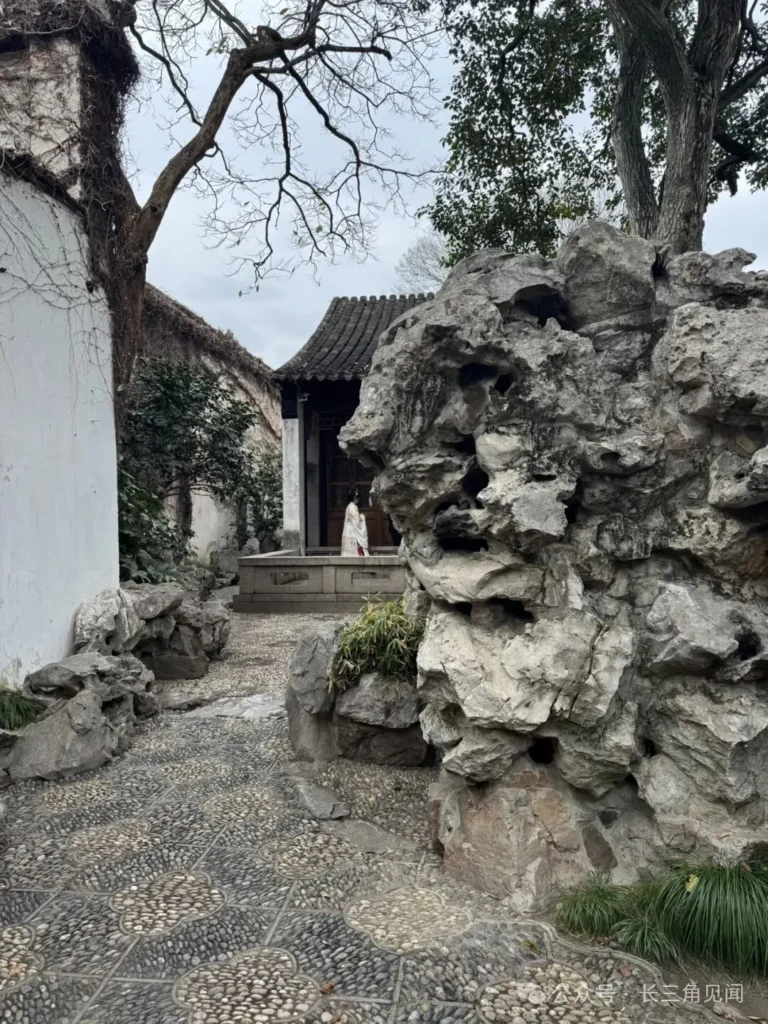
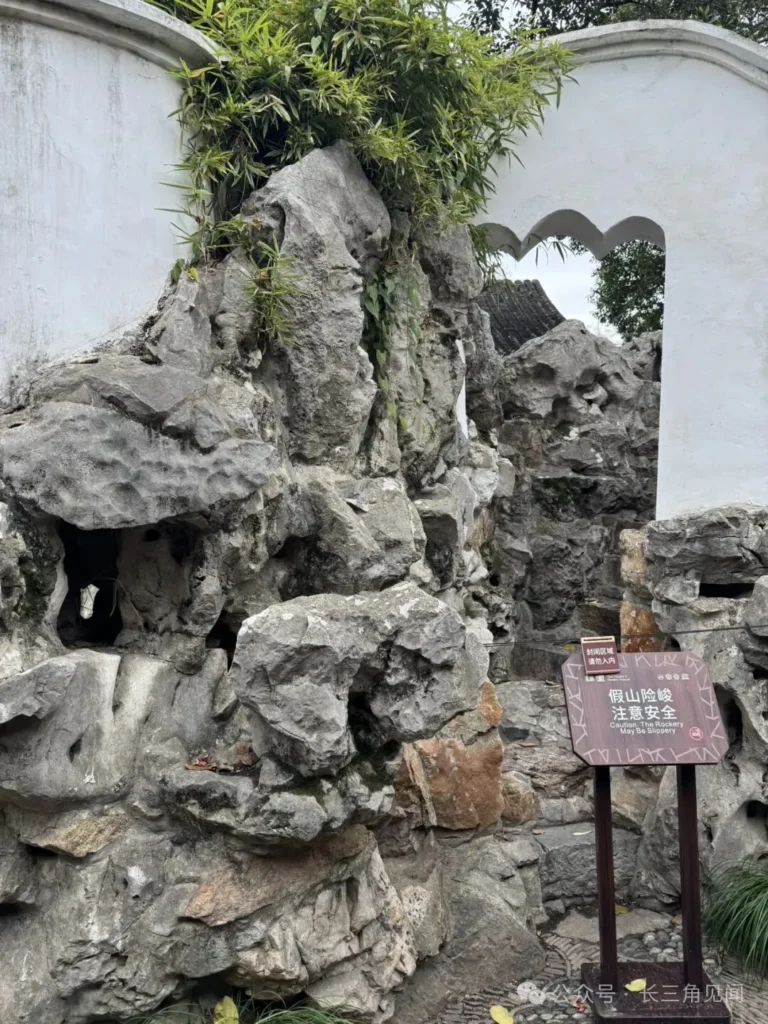
The West Garden showcases the combination of Suzhou‑style rockery landscaping and winding paths. In the foreground stand jagged Taihu rocks, with rugged textures and interlaced holes, exemplifying the Jiangnan garden aesthetic of “slender, wrinkled, perforated, and translucent.” Behind them lies a pebble‑paved winding path, accompanied by whitewashed walls, ancient trees, and distant pavilions, creating the poetic atmosphere of “a winding path leading to seclusion.”
The hardness of the Taihu rocks contrasts with the softness of plants and white walls, highlighting the Chinese garden philosophy of harmonizing the natural and the artificial.
Within Ou Garden, the landscaping of banana plants and stone bamboo creates a tranquil scene. Banana plants are a common ornamental feature in Jiangnan gardens, while the stone bamboo set against white walls enhances the serene and elegant atmosphere of the garden.
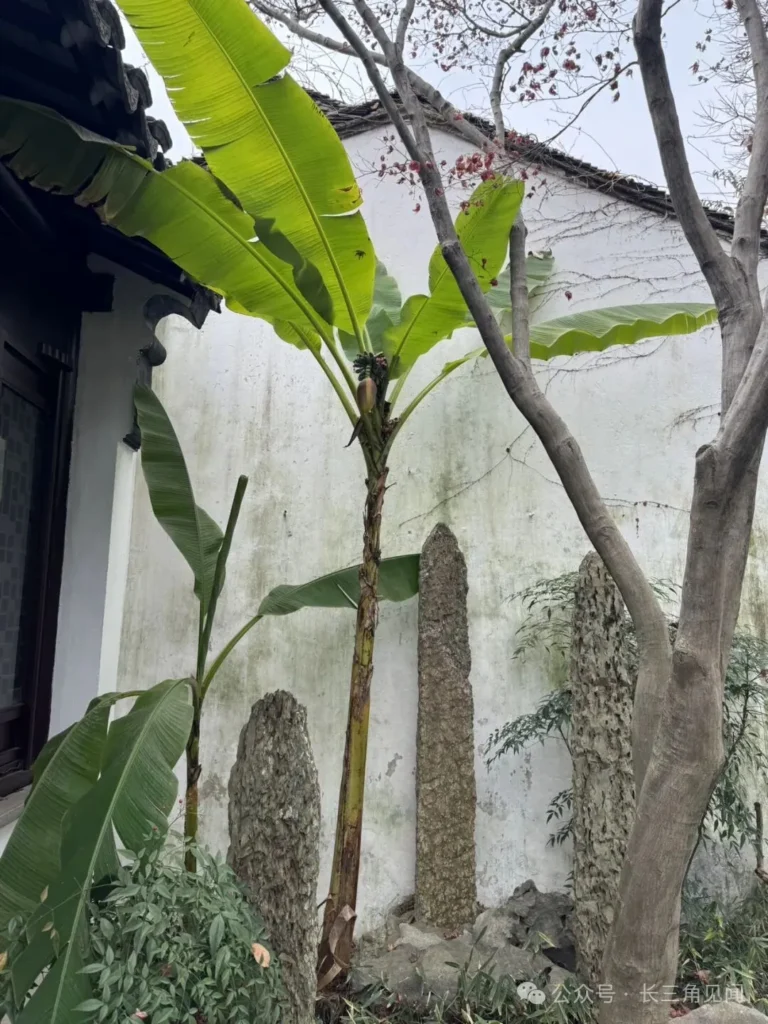
In the West Garden of Ou Garden, the holly tree is a signature fruit‑bearing plant of winter. Its red berries paired with evergreen foliage contrast beautifully with the whitewashed walls, dark roof tiles, and Taihu rockeries, creating an elegant vitality that characterizes Jiangnan gardens in the winter season.
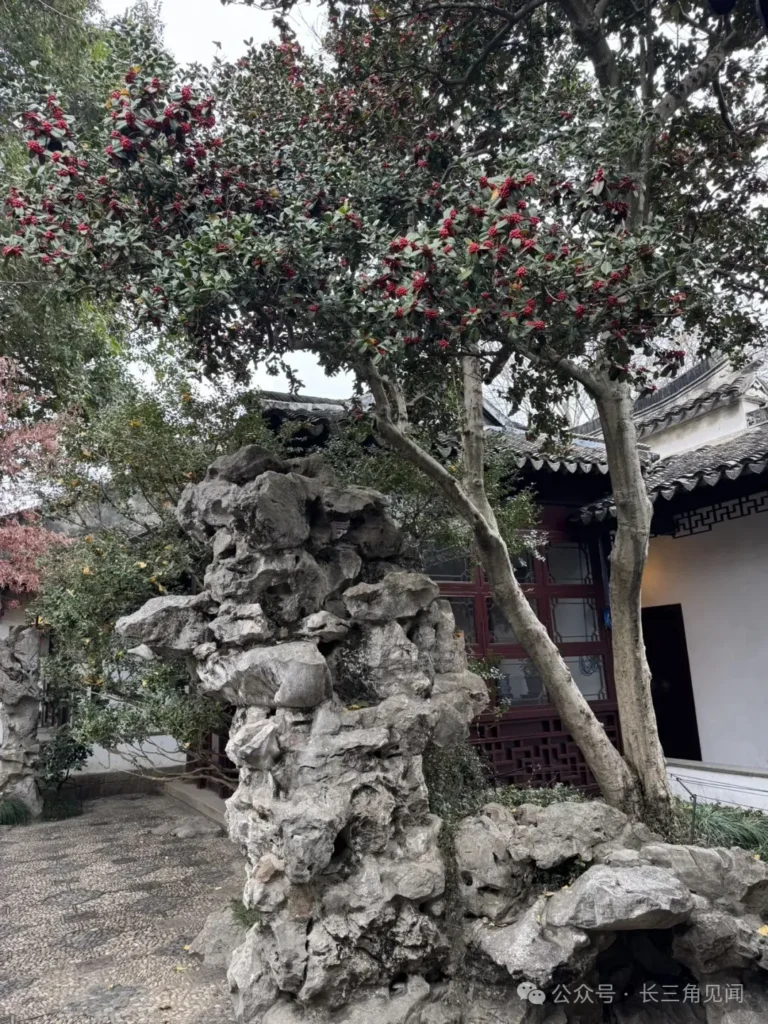
In the West Garden of Ou Garden grows nandina, a characteristic ornamental plant. The garden is not crowded with visitors; two tourists dressed in traditional‑style clothing are taking photos there.
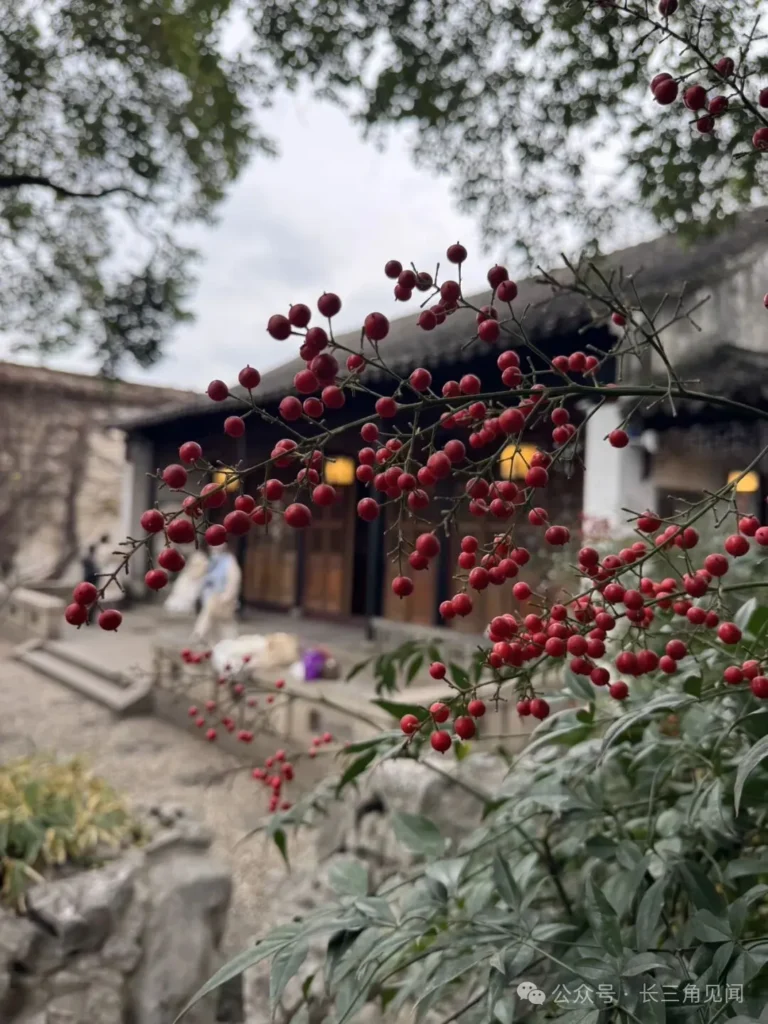
The Rockery in the West Garden of Ou Garden.
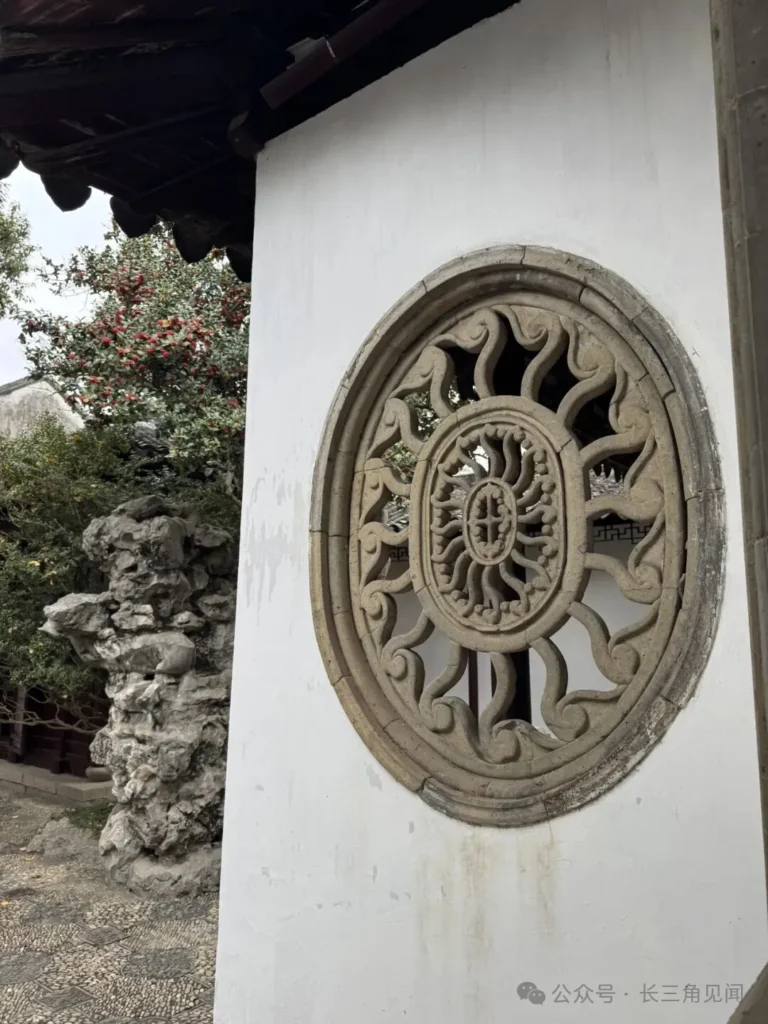
The circular carved stone window features floral and scrolling grass motifs. It is a typical leak window design in Suzhou gardens, serving both practical ventilation and ornamental landscaping purposes.
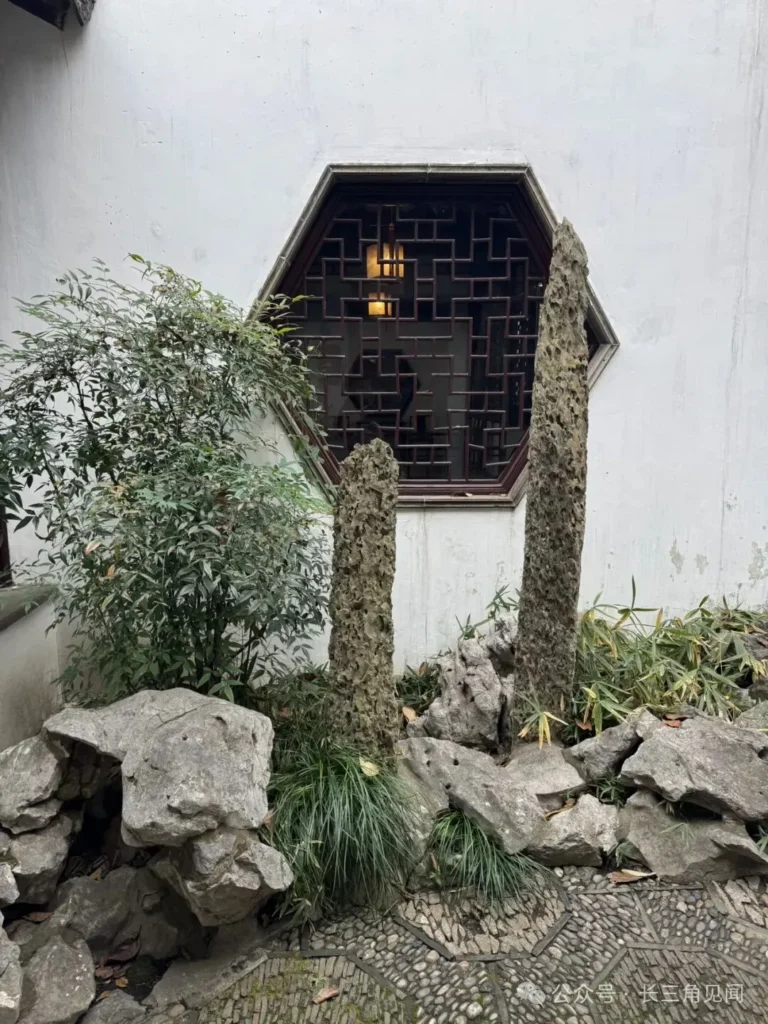
Ou Garden features an octagonal wooden lattice window decorated with an ice‑crack motif. Paired with Taihu rocks, stone bamboo, and bamboo groves, it exemplifies the Jiangnan garden technique of “framing the view,” where architectural elements are used to highlight and compose natural scenery.
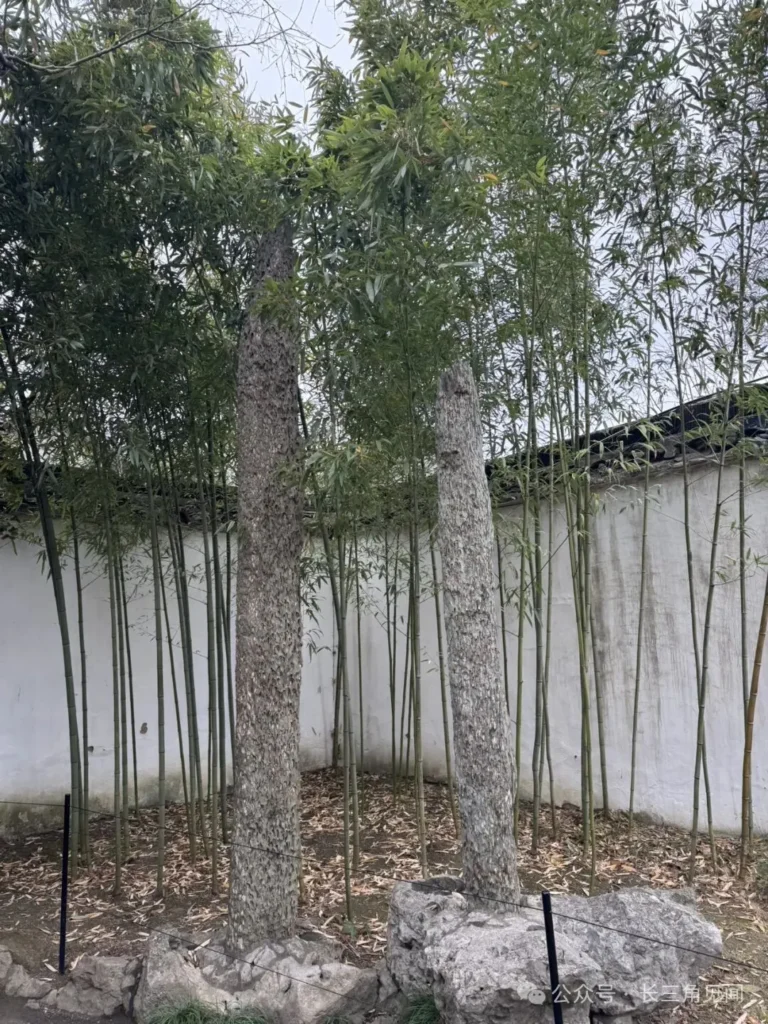
A natural composition of bamboo and rock embodies the literati ideal: “Better to go without meat than to live without bamboo.” In Ou Garden, bamboo is planted in many places. As a classic motif of Jiangnan gardens, bamboo symbolizes the noble integrity of scholars. Set against rocks, it adds an air of purity and elegance to the landscape.
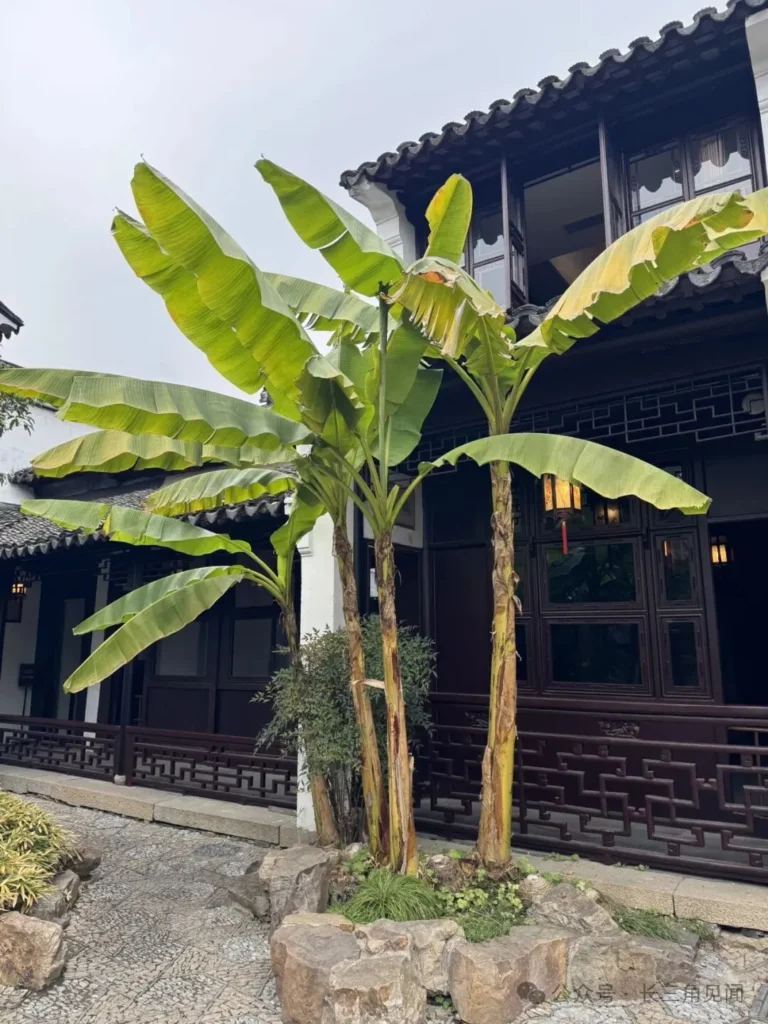
In the East Garden’s Chengqu Caotang, broad banana leaves spread open with an air of elegance and detachment from the mundane. This cluster of banana trees directly echoes the hall’s couplet: “Open the door and watch the rain, a chorus of banana leaves.” On rainy days, the sound of raindrops striking the leaves perfectly matches the auditory imagery described in the couplet. It exemplifies Ou Garden’s design method of “using scenery to complement literature.”
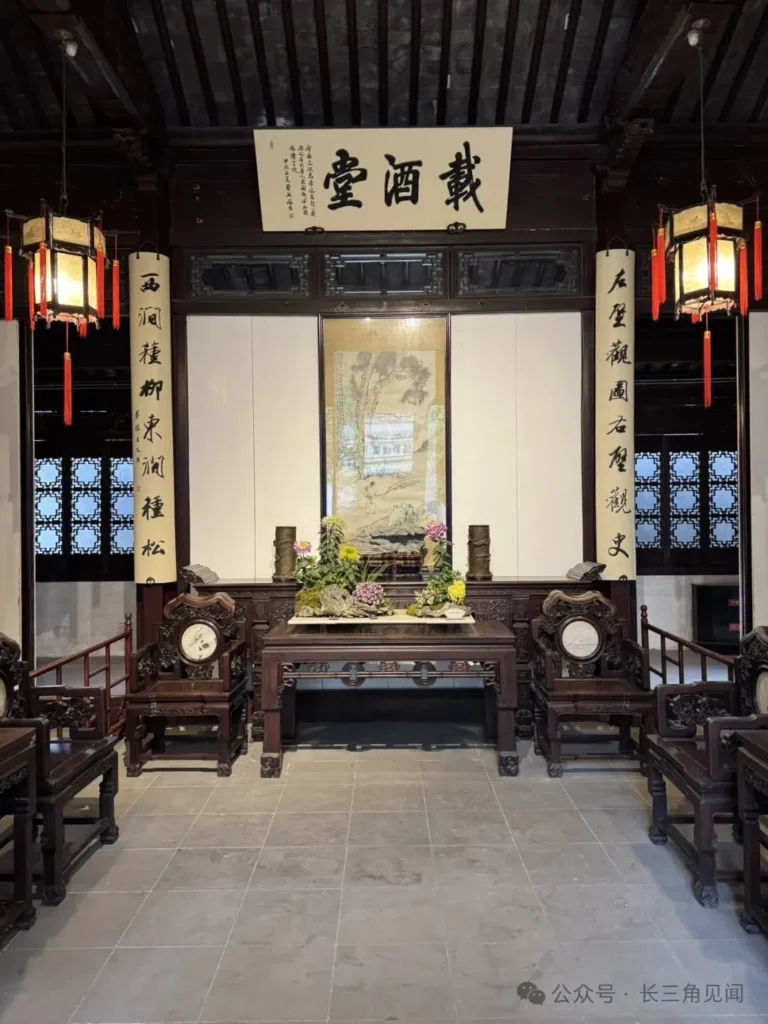
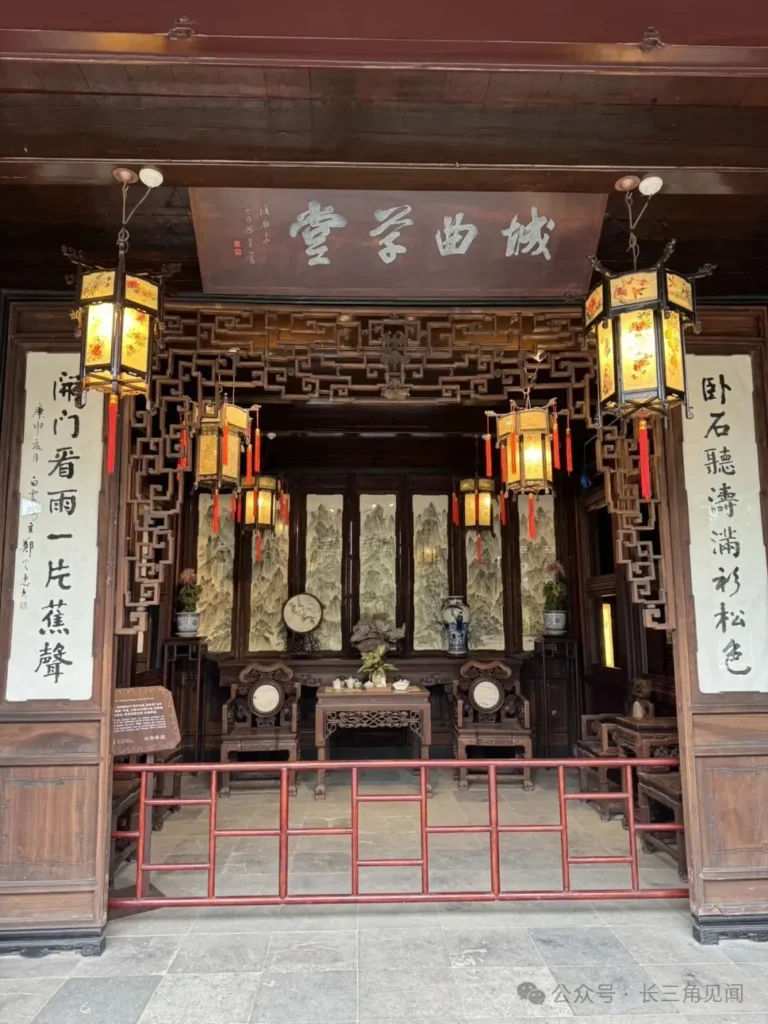
The plaque of Chengqu Caotang highlights its setting at the edge of the city, secluded within a rustic hall. On either side are couplets that read: “Reclining on rocks, listening to waves, robes filled with pine hues; open the door to watch the rain, a chorus of banana leaves.” These lines sketch an elegant scene where the garden blends the sights and sounds of mountains, water, and plants into one.
The Bu Du Old Library in Ou Garden served as a place for storing and reading books. Its name reflects the garden owner’s aspiration to “make up for missed reading of poetry and classics.” The interior is elegantly arranged, adorned with paintings, calligraphy, and furnishings, creating a tranquil atmosphere for study. It stands as a representative space in Ou Garden that embodies the scholarly spirit of the literati.
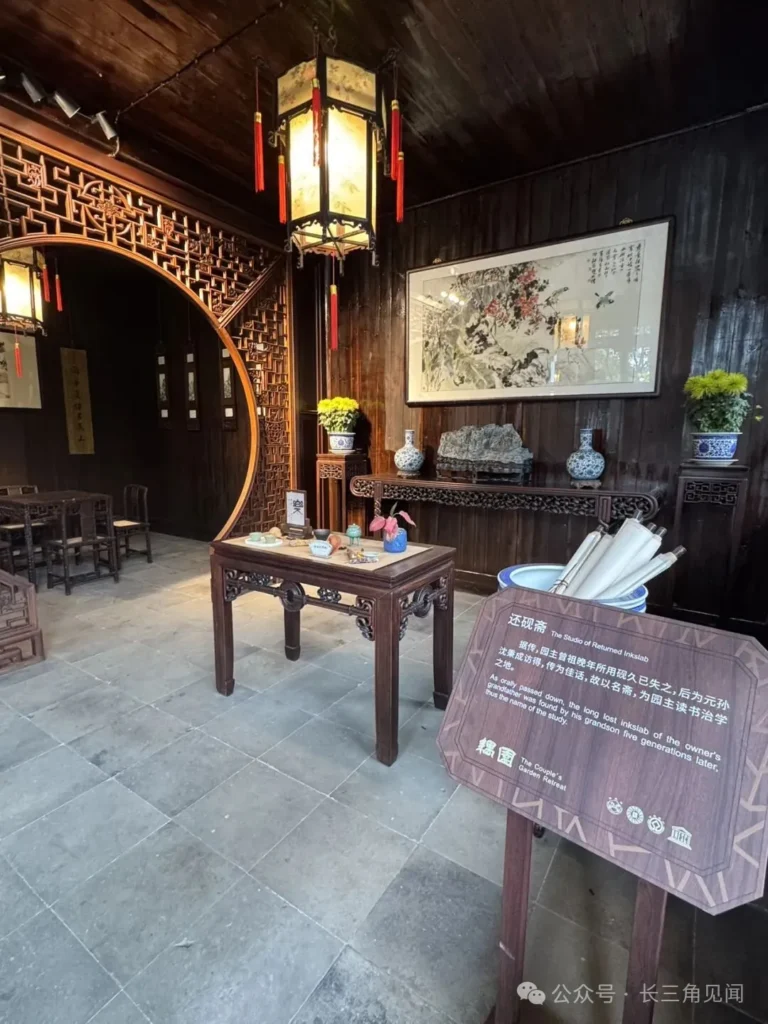
Huan Yan Studio was also the garden owner’s study, named after a charming family story. According to the inscription, an inkstone once lost by the owner’s ancestor was recovered generations later by his fifth‑generation descendant. In commemoration, the study was named “Huan Yan Studio” (“Studio of the Returned Inkstone”), becoming the owner’s place for reading and scholarship.
Inside, the study is furnished with the Four Treasures of the Scholar’s Studio, along with calligraphy, paintings, and antiques. It is a refined, intimate space within Ou Garden that carries the family’s literary heritage.
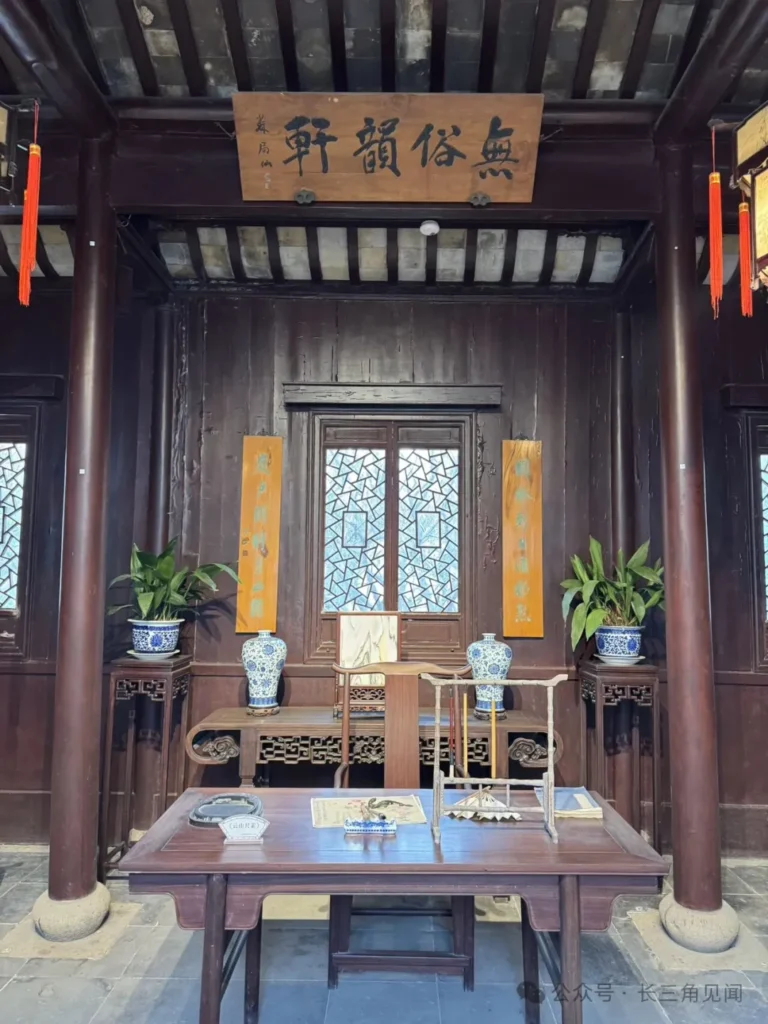
The Wu Su Yun Pavilion in Ou Garden was a place for literati gatherings, appreciating scenery, and enjoying tea. The name “Wu Su Yun” conveys the idea of distancing oneself from worldly noise while preserving the integrity of the scholar’s spirit. Inside, the furnishings are simple and rustic, accented with blue‑and‑white porcelain and greenery. Through its windows, one borrows views of rocks, bamboo, and trees from the garden, making it a serene retreat where the owner and friends once discussed poetry and painting.
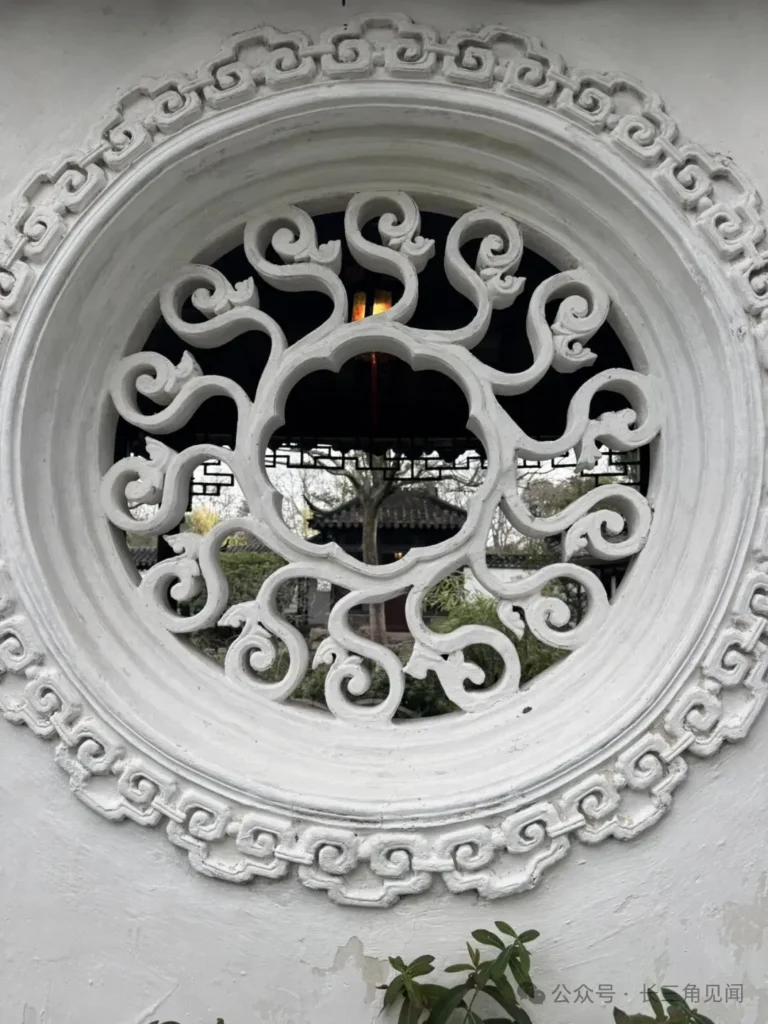
The Sunflower Window in Ou Garden is a circular stone‑carved leak window. Its center is composed of curved lines forming a turbine‑like pattern, symbolizing rays of sunlight. The outer rim is decorated with ruyi motif borders. It is one of the signature ornamental windows of the East Garden.
The East Garden is the essence of Ou Garden. Its pond connects with the outer city moat, forming a system of “living water.” Yellow stone rockeries imitate the texture of natural cliffs, while an arched bridge stretches across the water. Together, they create the charm of a Jiangnan water town with “small bridges and flowing streams,” while the varied heights of the rockeries add a sense of depth and expansiveness, evoking the atmosphere of mountain forests.
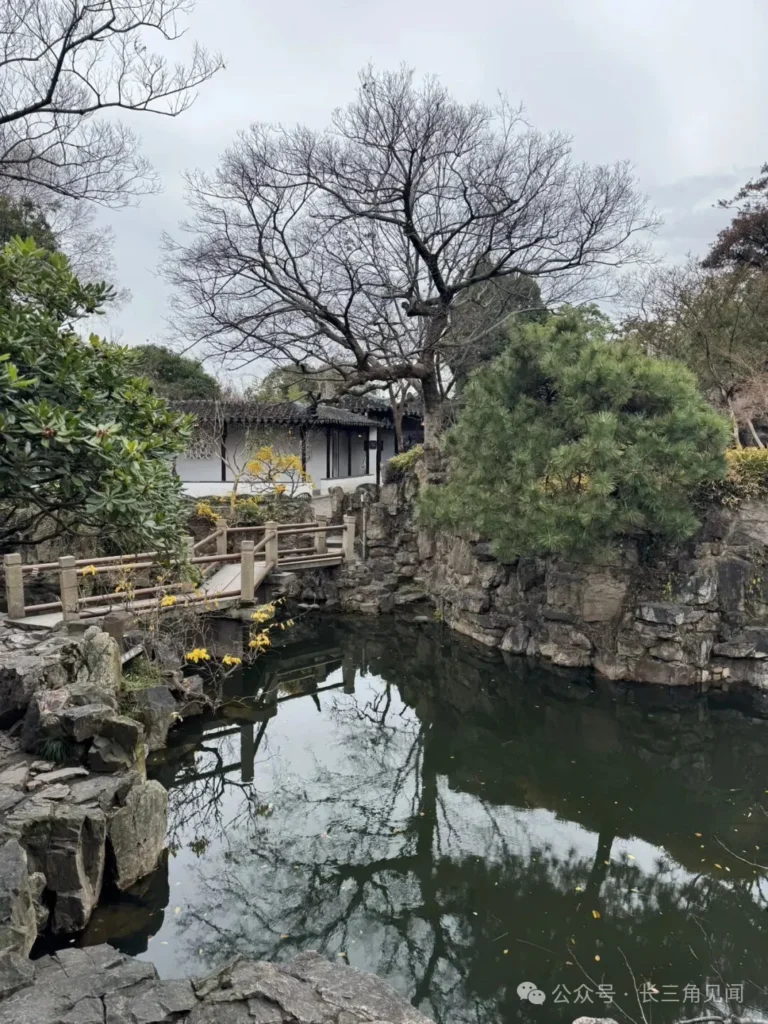
The gnarled branches of withered trees contrast with evergreen pines and holly, creating a seasonal interplay. Even in autumn and winter, the scene retains a sparse yet painterly quality, echoing Ou Garden’s tranquil theme of “seclusion at the city’s edge.”
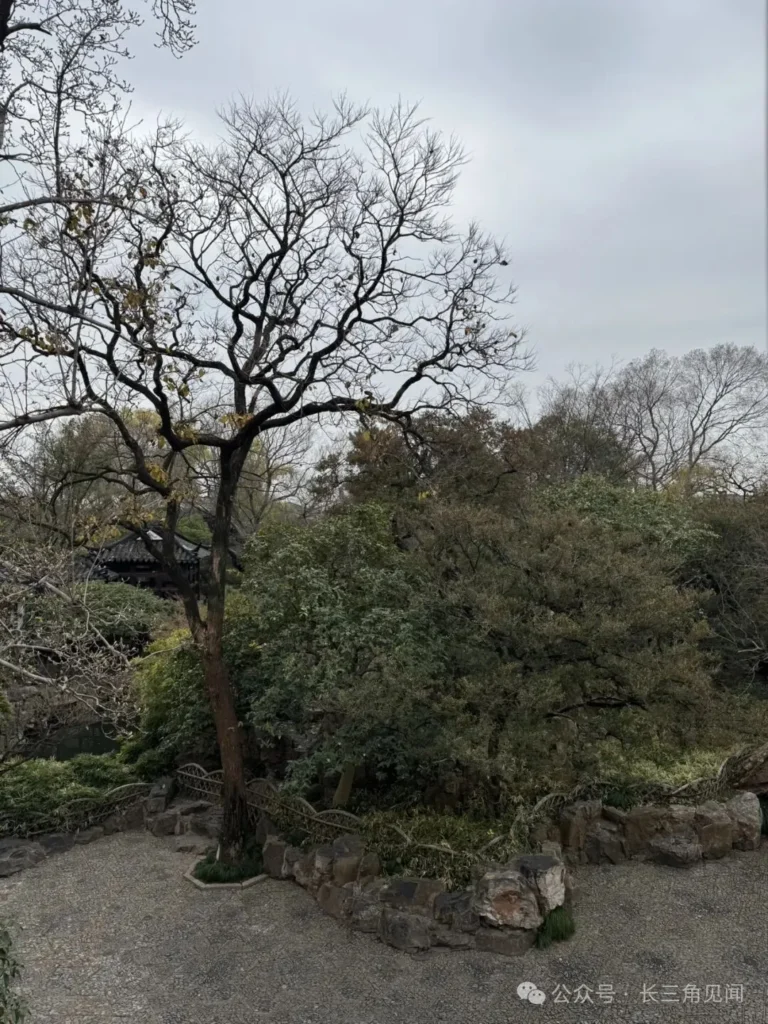
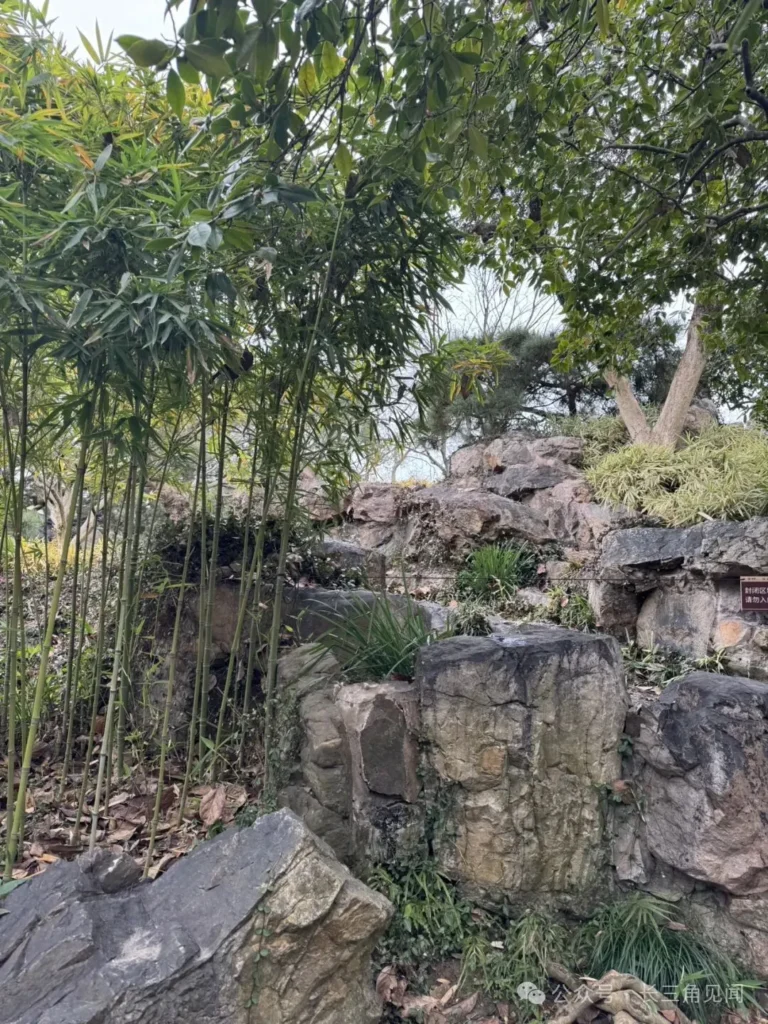
Spotted bamboo is planted atop a massive yellow rock ledge, which serves as a natural flower terrace. Complemented by pebble‑paved paths and withered vines around it, the scene recreates the rustic charm of the countryside, evoking the wild beauty of “bamboo growing upon stone.”
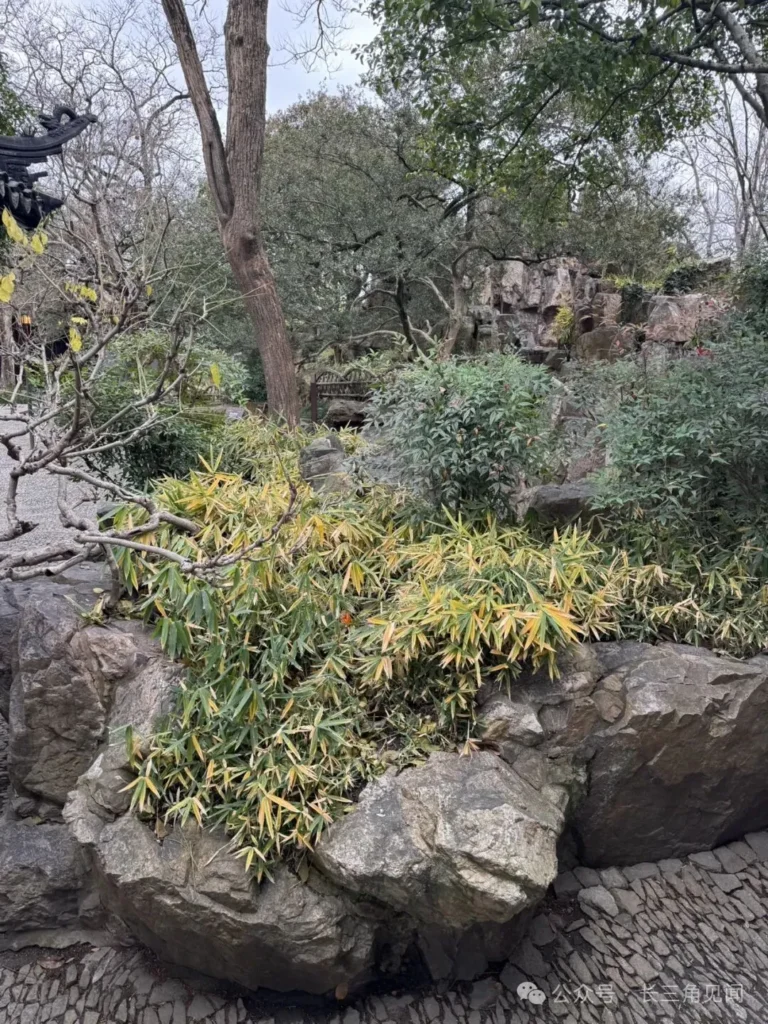
Bamboo is planted within the crevices formed by encircling yellow rocks, its softness set against the rocks’ hardness. This recreates the natural mountain scene of “bamboo and stone thriving together.” It exemplifies the Jiangnan garden technique of “condensing grandeur into small scale” in rockery construction.