Why Do Century‑Old Factories Still Surge with Vitality?
Introduction:
The following is a translated article originally published by Changzhou Publicity on December 9, 2025. It reflects on the enduring vitality of three century‑old factories along the Grand Canal including Qiji, Daming, and Qidian, and explores how industrial heritage continues to shape the city’s future.
Additional Notes:
This English version has been adapted for accessibility to English-speaking readers, with minor adjustments made for clarity. All images and captions are sourced from the original publication, with copyrights retained by their original creators, included to honor the spirit and details of the initial work. The original article in Chinese is available for viewing here.
By Huang Hui & Li Jiawei · Changzhou Publicity
December 9, 2025 · Jiangsu
At dawn along the Grand Canal in Changzhou, mist rises around an industrial monument carved by time—this is the nation’s only provincial development zone that still houses three century‑old factories (Qiji Factory, Daming Factory, and Qidian Factory), all of which remain in production today.
These three factories, like pearls set beside the canal, roar with machinery that beats like the canal’s century‑long heartbeat, quietly telling the story of industrial heritage renewing itself through the ages.
Living Industry Classics: A City’s Century‑Long Breath
Each workshop stands as a monument on the riverbed of time, inscribed with the glory and resilience of national industry.
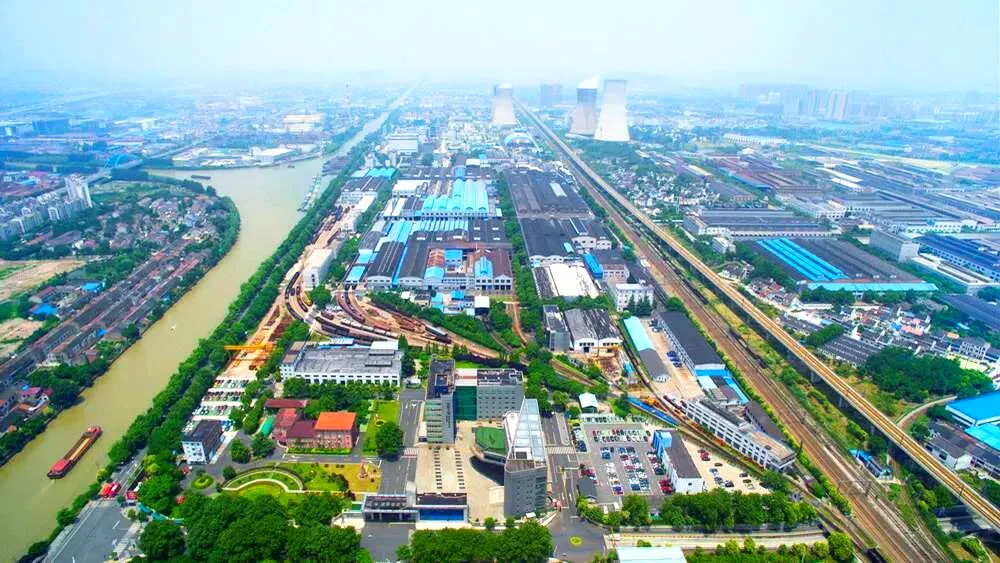
Entering Qiji Factory feels like stepping into a heavy chronicle of China’s railway history. Founded in 1898 on the banks of Shanghai’s Wusong River, it relocated to Changzhou in 1936 to escape wartime flames. From repairing locomotives damaged in the War of Resistance, to producing New China’s first diesel locomotive, to forging precision components for the “Harmony” high‑speed trains, this factory has cast the backbone of a strong industrial nation. Its vast workshops and gantry cranes are silent historians, witnessing China’s wheels progress from faltering steps to racing across the world.
Beside the canal, Daming Factory is a “living fossil” of textiles, continuously weaving for over a century. Founded in 1921 by two Suzhou industrialists, its shuttle sounds have never ceased, its spindles never stopped, weaving not only cloth but also the resilient story of modern Chinese textile industry from its infancy to maturity. Even after merging into Tianhong International in 2006, the spirit of industry rooted in the canal still breathes through the warp and weft of its fabrics.
Neighboring Qidian Factory bears witness to China’s energy industry, from faint glimmers to brilliance. Its predecessor, Zhenhua Electrical Machinery General Factory, lit the first lamp by the canal in 1921. From illuminating Changzhou’s streets to becoming a vital node in the nation’s energy arteries under China Huadian Group, it has always been the surging heart driving the times forward.
The Secret of Keeping “Old Relics” Running
History is not a specimen; true protection means keeping heritage alive in the present. It is not only about preserving red‑brick walls and old machine tools, but carefully safeguarding the city’s memory and future vitality.
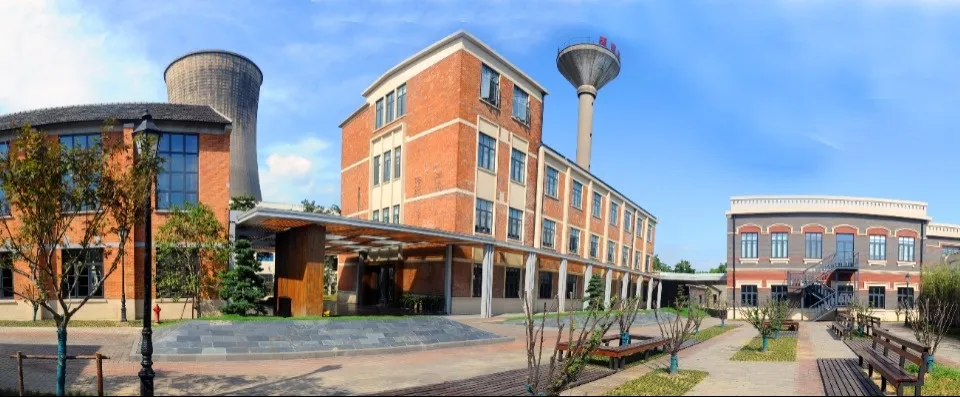
Restoration follows the principle of minimal intervention. The weathered walls of Qiji’s workshops, the original trusses of Daming’s textile halls, and the industrial silhouette of Qidian’s cooling tower—all key elements carrying history are preserved to the greatest extent. Restoration is not about repainting anew, but letting the marks of time become a unique narrative language, allowing every brick and beam to continue telling its story.
Living inheritance refuses to be sealed away. The greatest value of industrial heritage lies in its ongoing vitality. Qiji Factory produces precision parts while opening a railway culture park; Daming Factory integrates creative design into modern production; Qidian Factory ensures energy supply while turning coal yards into classrooms and cooling towers into landmarks. This coexistence of production and exhibition allows heritage to truly live in the present, pulsing with the city.
Systematic protection requires institutional support and social consensus. Changzhou actively promotes listing important relics as historic buildings or cultural heritage, giving them legal “armor.” Government, enterprises, experts, and the public all participate, forming a full‑process system from survey and evaluation to protection and utilization.
Public participation ensures shared memory. Through open days, study tours, creative markets, and themed exhibitions, citizens, tourists, and especially youth enter heritage sites and feel history’s warmth. When children assemble locomotive models at Qiji Factory, or visitors experience textile art at Daming, industrial memory steps out of archives and into the city’s cultural DNA.
Renewal in Action: The Canal’s Treasure Metamorphosis
How do old factories become trendy landmarks? The answer lies in this magnificent transformation. Changzhou responds with innovation, giving industrial heritage new rhythms of life.
- Qiji Factory: An immersive “Railway Museum.” Industrial “hardcore” charm becomes close‑up experience. The railway culture park blends roaring workshops, weathered relics, vivid exhibitions, and engaging science education. In the Grand Canal Industrial Heritage Exhibition Hall, historical artifacts and digital light interplay to create an immersive world. Study groups wander, youths touch lathes and rails, and seeds of industry quietly sprout. By 2025, nearly ten thousand students had visited in batches to experience industrial culture and inherit craftsmanship spirit.
- Daming Factory: A trendy cultural‑creative “Dream Factory.” Tianhong International’s “Tianhong Daming 1921 Creative Park” is a symphony of “industry + culture + tourism.” Former textile workshops transform into fashion design incubators, cultural‑creative hubs, textile science stations, and tourist destinations. Old looms become art installations, warehouses turn into designer studios, where history and trend spark together.
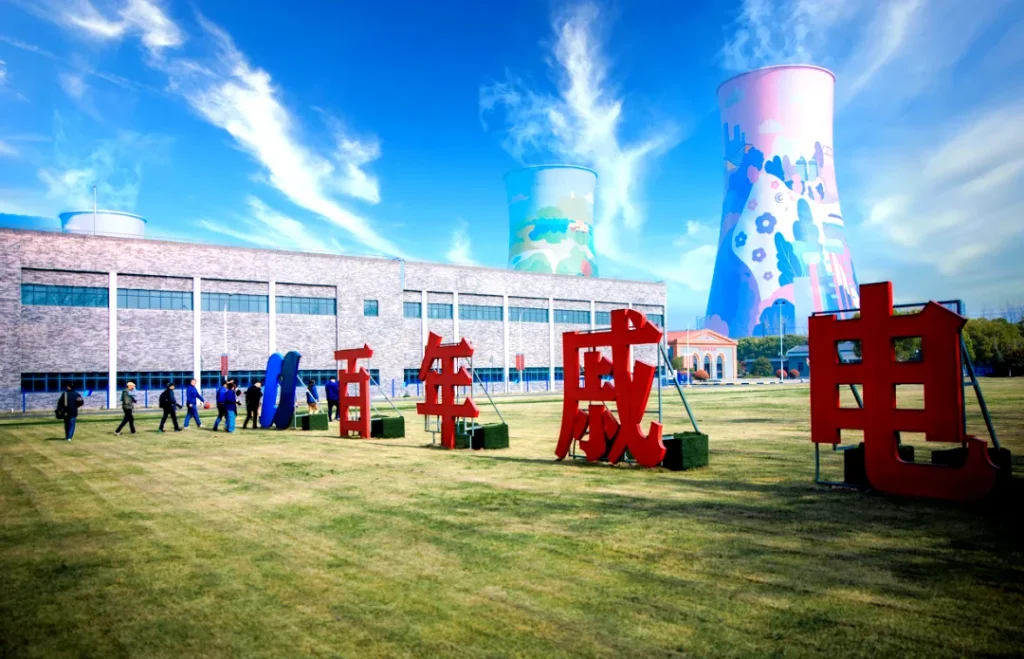
- Qidian Factory: A sci‑fi “Energy Lighthouse.” The vast coal yard of the steam‑era plant is reborn as a solemn red education base, narrating China’s energy industry struggles. Most striking is the fully renewed cooling tower—once an industrial giant, now clad in modern art and light technology, towering as a new landmark on Changzhou’s skyline.
Today, Changzhou takes industrial heritage as its foundation and canal culture as its soul. It has systematically built 14 industrial‑cultural exhibition halls, including the Grand Canal Industrial Heritage Museum, and created more than ten new cultural‑commercial‑tourism landmarks such as Tianhong Daming 1921 Creative Park. Thus, “old factories by the ancient canal” have transformed into “new cultural piers of Changzhou.”
Infused with rich themed activities and youthful energy, industrial heritage continues to radiate vitality. Its “Century Industry and Commerce” heritage trail and Canal Industrial Corridor projects have been selected as national and international exemplary cases, showcasing the “Changzhou Path” of revitalizing industrial relics.
On the banks of the Grand Canal, history has never slept. Dressed in new attire, it now beats with a stronger rhythm, joining the city and the river in a symphony facing the future. Are you ready to listen?
Attribution & Credentials:
- Image Source: Changzhou Economic Development Zone
- Contributor: Dingyan Subdistrict
- Art Design: Yao Ning
- Editor: Xie Miao
- Review: Policy and Regulations Research Office