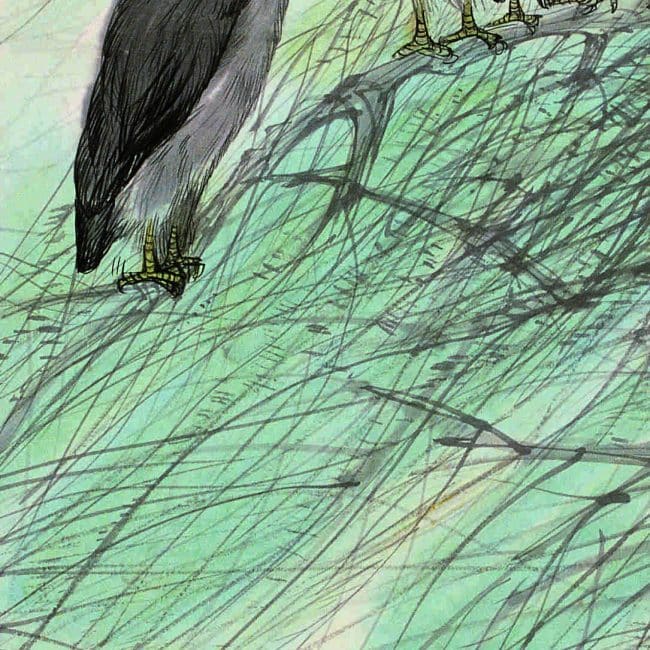
Lin Fengmian (1900–1991)
Originally named Fengming, Lin Fengmian was a distinguished painter and educator, recognized both in China and internationally. Born in Meixian, Guangdong, he embarked on his artistic journey in 1919, traveling to France to study alongside Xu Beihong and Zhang Daofan. During his time in Europe, Lin pursued his studies in Western painting, furthering his education in both France and Germany. His early works were primarily in oil painting, although he also explored traditional Chinese subjects such as landscapes, flowers, birds, and figures, using ink and wash techniques.
In the 1930s, Lin turned his focus toward the reform of traditional Chinese painting, seeking to merge Western techniques with Chinese artistic forms. His works, such as those depicting autumn ducks, white cranes, maple forests, water lilies, and ladies, are known for their uniqueness and have played a pivotal role in the evolution of modern Chinese art. His integration of Western and Chinese styles marked a milestone in the history of Chinese painting.
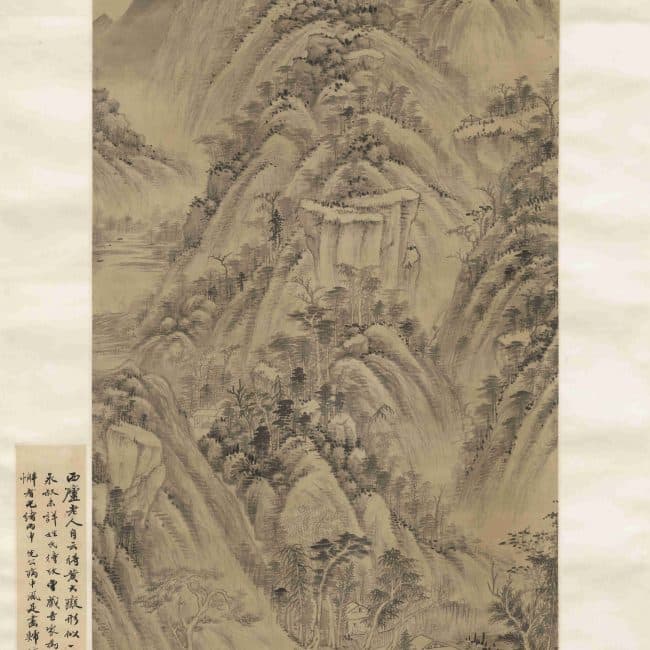
Wang Shimin (1592–1680)
Originally named Zanyu, with the courtesy name Xunzhi and pseudonyms Yanke and Xilu Laoren, Wang Shimin was born in Taicang, Jiangsu. He came from a distinguished family: his grandfather, Wang Xijue, served as chief minister of the Wanli Cabinet, and his father, Wang Hua, was an editor at the Hanlin Academy. Due to his family's prominence, Wang Shimin was appointed as Shaoqing at Taichang Temple, earning the title "Wang Fengchang."
Wang Shimin demonstrated extraordinary artistic talent from a young age, particularly in landscape painting. His well-off upbringing allowed him to study under renowned masters such as Dong Qichang, whose influence greatly shaped his artistic development. He was deeply committed to studying the great works of the Song and Yuan dynasties, dedicating himself to mastering their brushwork and ink techniques. Wang Shimin emerged as the leader of the "Four Wangs" of the early Qing dynasty and became the central figure of the orthodox school of landscape painting, establishing a lasting legacy in Chinese art history.
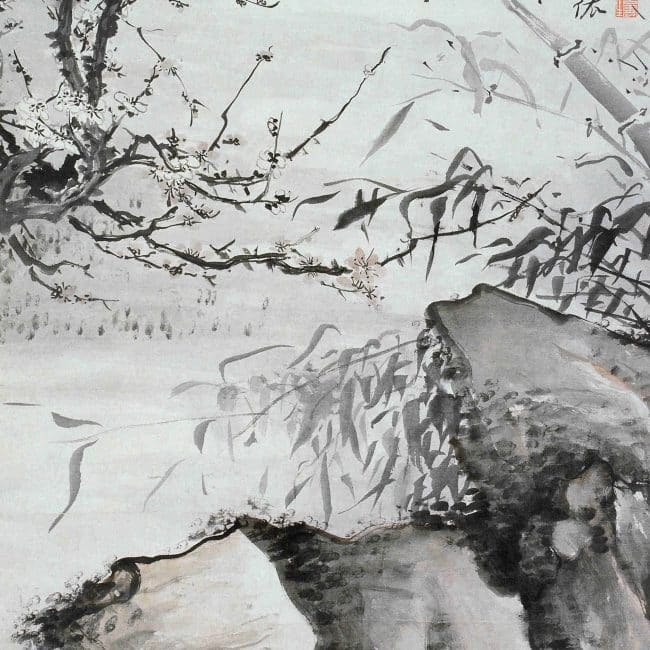
Gao Fenghan (1683–1749)
Gao Fenghan, courtesy name Xiyuan and pseudonym Nancun, also known as Nanfushanren, was a native of Jiaozhou, Shandong. He served as the magistrate of She County in Anhui Province and later retired to Yangzhou. At the age of 55, he suffered a debilitating illness that rendered his right hand unusable, leading him to begin painting and writing with his left hand. This pivotal moment marked a dramatic transformation in his artistic style, which became unrestrained, bold, and profoundly innovative. His left-handed works had a significant influence on later painters, many of whom sought to emulate his unique approach. Gao was especially skilled in landscapes and flower paintings, drawing inspiration from Song and Yuan traditions but infusing them with a distinctly personal and expressive style.
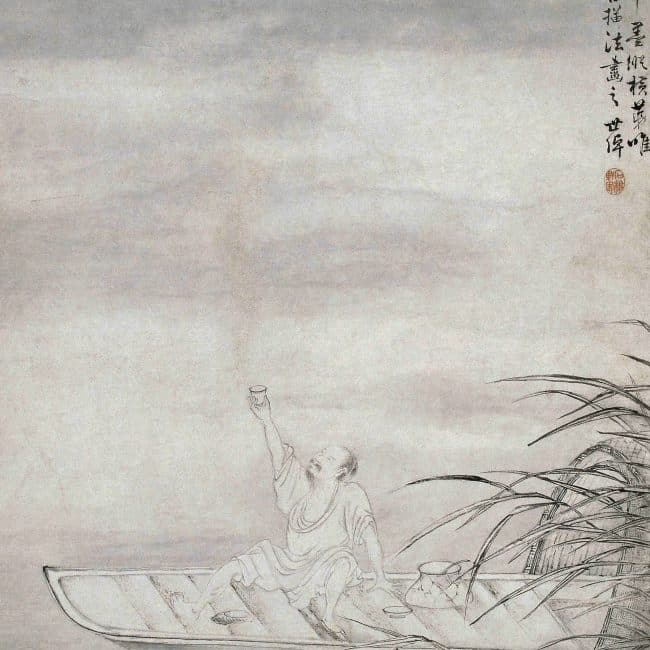
Li Shizhuo (1687–1770)
Li Shizhuo, courtesy names Tianzhang and Hanzhang, and nicknamed Guzhai and Xingya, was a native of Fengtian (modern-day Shenyang, Liaoning) and of Sanhan (now Harqin Banner, Inner Mongolia). A member of the Han Army's Zhenghuang Banner, he was the son of Li Rulong, the governor of Guangdong and Guangxi, and a nephew of the renowned painter Gao Qipei. Li held the title of Taichang and served as deputy censor of the capital, earning him the moniker "Li Taichang." He was highly skilled in painting landscapes, figures, flowers, birds, and fruits, with a refined and elegant style.
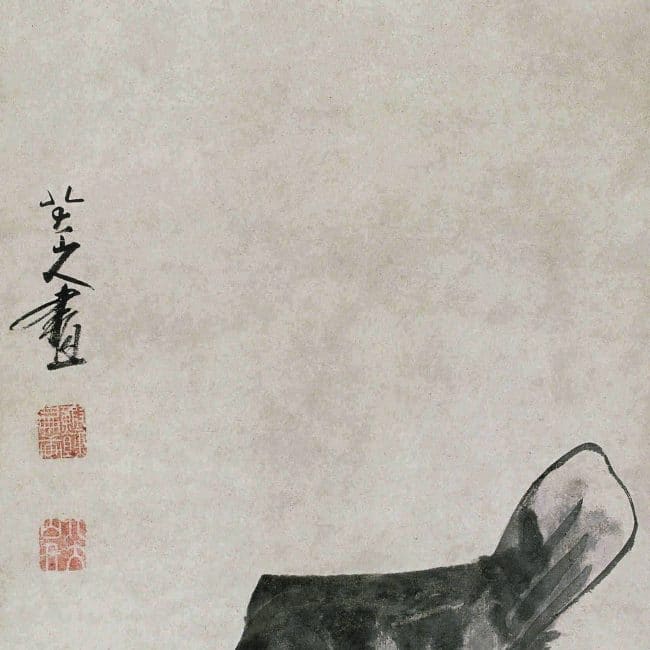
Zhu Da (1626–c.1705)
Zhu Da, originally named Ben’an, was a descendant of Zhu Quan, the Prince of Ning from the Ming Dynasty. Born in Nanchang, Jiangxi Province, he became a monk after the fall of the Ming Dynasty, taking the monastic name Chuanxi. Later, he transitioned to Taoism and adopted various pseudonyms, the most famous being Bada Shanren. One of the "Four Monks" of the early Qing Dynasty, Zhu Da was a master of calligraphy and painting. His bold and austere brushwork conveyed a sense of desolation and isolation, while his unique bald-pen technique in cursive calligraphy set him apart. Zhu Da is widely regarded as the most elegant freehand flower-and-bird painter after Chen Chun and Xu Wei, influencing countless artists in later generations.
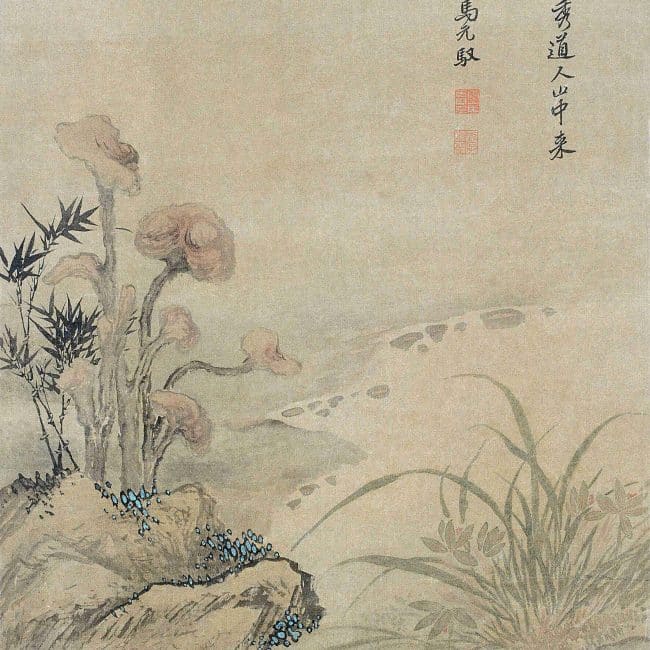
Ma Yuanyu (1669–1722)
Ma Yuanyu, also known as Fuxi and Tianyushanren, hailed from Changshu, Jiangsu Province. Renowned for his mastery of flower-and-bird painting, Ma inherited the Yun Shouping tradition and developed a distinctive style characterized by lively brushwork, elegance, and simplicity. His boneless technique, emphasizing soft and fluid forms, became a hallmark of his work, earning him a respected place among the Yun School's successors who carved their own artistic identities.
Cai Heting (1909–1976)
Cai Heting, courtesy name Yiyuan, also known by his pseudonyms Zhenshisanren and Diluzhu, was a native of Fuzhou, Fujian. He studied Chinese painting alongside his younger brother Hezhou from an early age, drawing inspiration from masters such as Ren Bonian and Wu Changshuo while tracing the styles of Bada Shanren and Wang Shigu. Cai Heting incorporated Western techniques of light and shadow into his work, alongside the innovative spirit of the Lingnan School, blending traditional brush and ink with modern approaches to light and color. Active in the Shanghai painting scene during the 1930s, he later moved to Xi’an in the 1950s. In his later years, he specialized in subjects like plum blossoms, bamboo, lions, tigers, and peacocks.
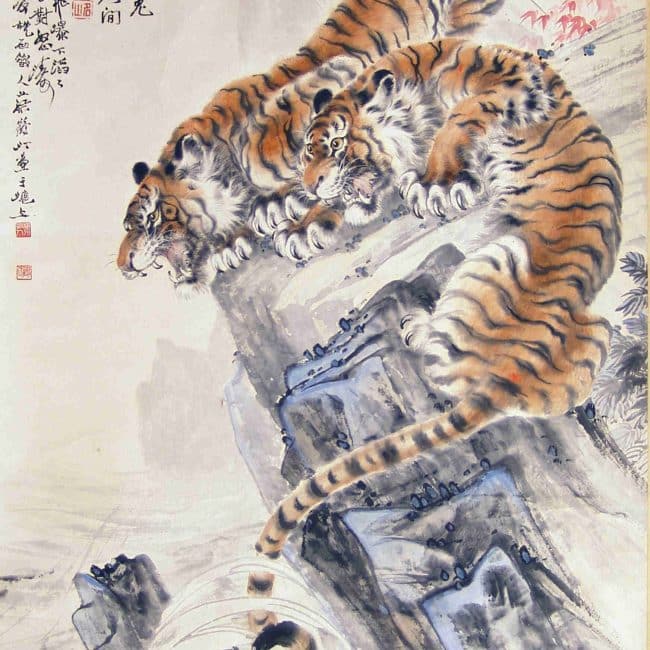
"Two Tigers Roaring at the Waves"
This early work by Cai Heting vividly depicts two fierce tigers roaring on the bank of a rocky torrent. The tigers are rendered with dynamic postures and majestic expressions, exuding both power and vitality. Beneath the rock, waves crash forcefully, creating a sense of drama and tension that evokes the imagery of "tigers roaring and dragons singing." Although no dragon is present, the turbulent waters suggest its looming presence, enhancing the painting's mythical atmosphere.
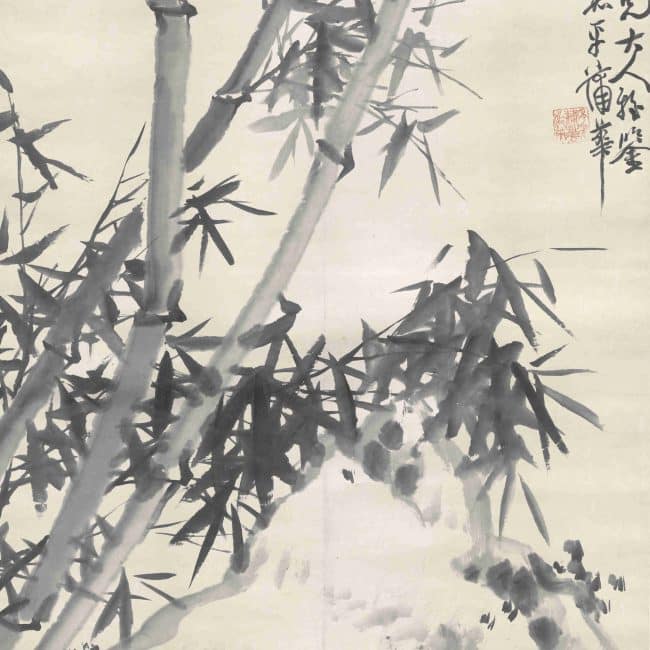
Pu Hua (1832–1911)
Pu Hua, originally named Cheng, with the courtesy name Zuoying and the pseudonym Xu Shanyeshi, was a native of Jiaxing, Zhejiang. Despite his humble origins, Pu Hua excelled in poetry, calligraphy, and painting from a young age. Though he initially pursued a scholarly path, his disinterest in fame and fortune led him to abandon official pursuits and dedicate himself entirely to art. In his later years, Pu Hua settled in Shanghai and, alongside Xu Gu, Wu Changshuo, and Ren Bonian, became one of the "Four Masters of the Shanghai School" during the late Qing Dynasty.
Renowned for his cursive calligraphy and paintings of landscapes and flowers, Pu Hua’s works are characterized by strong, uninhibited strokes. His mastery of wet-brush techniques produced pieces with bold, fluid inkwork that radiate vitality and power.
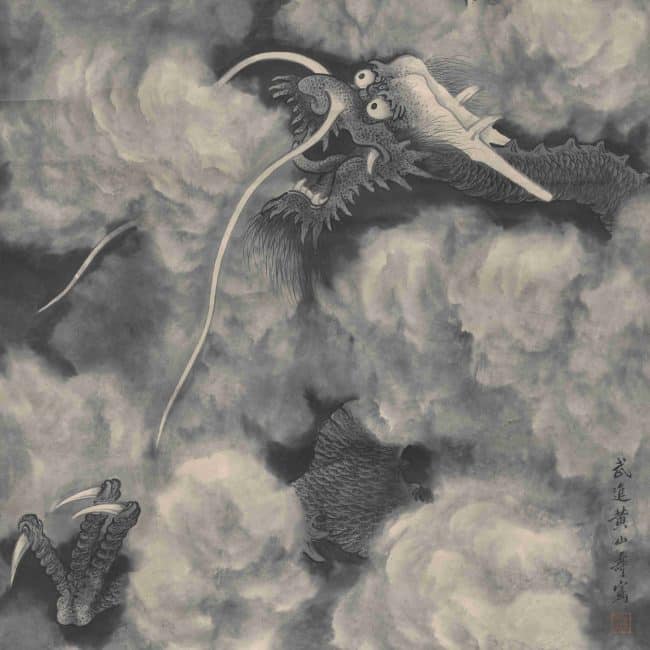
Huang Shanshou (1855–1919)
Huang Shanshou, originally named Yao, was known by the courtesy names Xuchu and Xuchu and the pseudonyms Lisheng, Xudaoren, and Hexi Waishi. Born in Wujin, Jiangsu (modern-day Changzhou), Huang came from a humble background but demonstrated remarkable artistic talent from a young age. By his early teens, he was already skilled in painting. Renowned for his versatility, he excelled in landscapes, flowers and birds, and figure painting. Early in his career, he worked as a guest artist, and later, after the Xinchou year, he gained international recognition, selling his works overseas and becoming a prominent figure in Shanghai's art scene.
"Dragon Appearing in the Clouds"
This scroll showcases Huang Shanshou's exceptional skill in depicting ink dragons, a subject he mastered through both rigorous study and direct observation of nature. Inspired by Mi Zhun of Changzhou and informed by his practice of studying natural forms like clouds and mist at dawn, Huang developed a unique style that combined technical precision with dynamic expression.
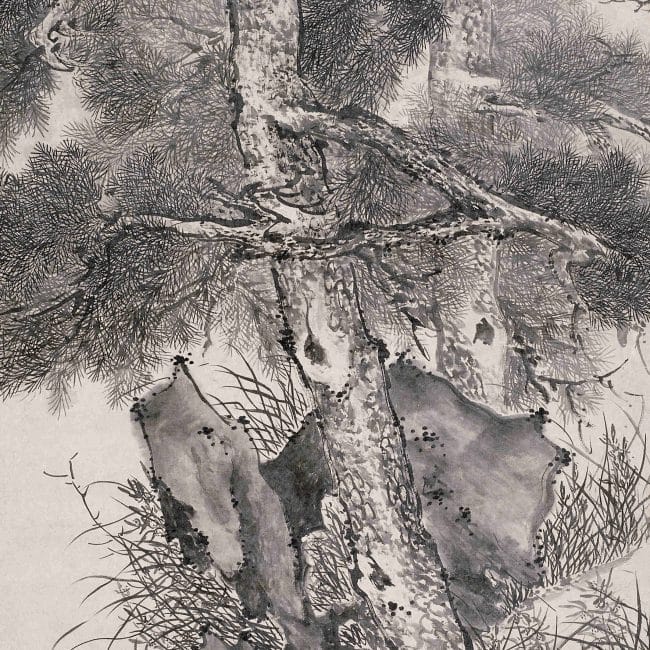
Hu Shikun (Dates Unknown)
Hu Shikun, courtesy name Yuanqing, was a painter active during the late Ming and early Qing dynasties. A native of Shangyuan (modern-day Nanjing, Jiangsu), he came from a family renowned for its expertise in calligraphy and painting. Hu was particularly skilled in landscapes and orchids, often capturing the natural beauty of Jinling (ancient Nanjing). As a painter associated with the "Jinling School of Painting," his works reflect the distinct characteristics of this regional tradition, though few of his paintings survive today.
"Tall Pines and Elegant Orchids" (1678)
Created in 1678, this scroll exemplifies Hu Shikun’s mastery of landscape painting. The composition is both unconventional and balanced, blending bold, fluid brushstrokes with a majestic and serene aesthetic. The painting reflects the hallmark features of the "Jinling School of Painting," characterized by dynamic brushwork and a strong connection to real-world scenery.