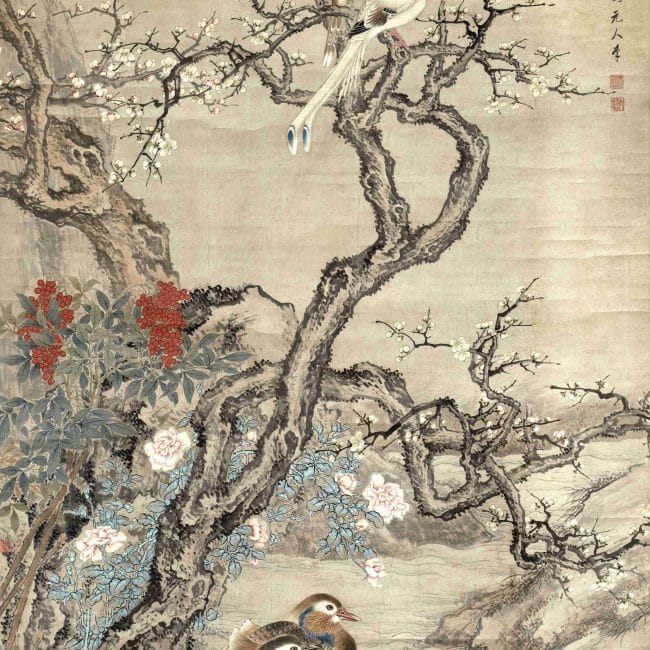
Shen Quan (1682–c. 1760)
Courtesy names Hengzhi and Hengzhai, and nicknamed Nanping, Shen Quan was a native of Deqing, Zhejiang. Born into a poor family, he initially learned to craft paper flowers under the guidance of his father, Shen Xinzhai. As a young boy, he accompanied his father on silk-selling trips to Pinghu. It was during these visits that his interest in painting was sparked by observing Hu Mei’s studio. Recognizing his talent and passion, Shen Quan’s father arranged for him to apprentice under the master, setting him on a path to becoming a professional artist.
In 1731, during the ninth year of the Yongzheng reign, Shen Quan was invited to Japan by the Japanese royal court to teach painting techniques. His influence there was profound, and he became the founder of the "Nanping School of Painting," earning him the title of "the number one imported painter" in Japan.
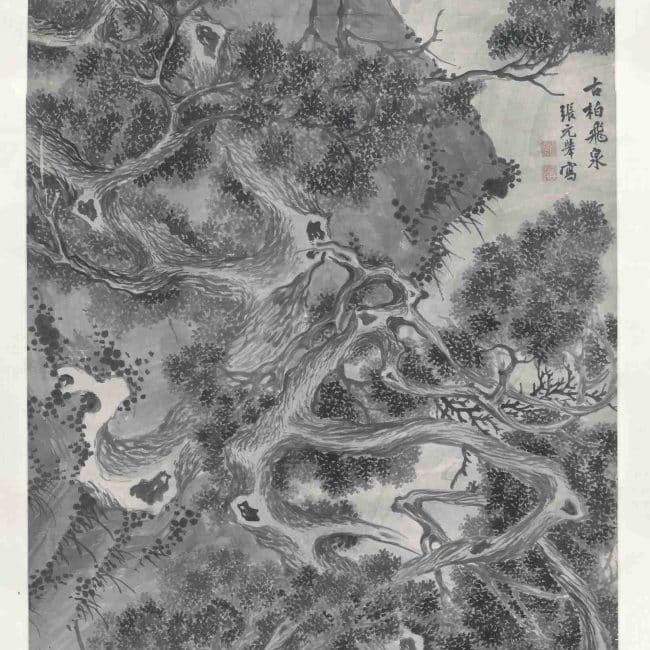
Zhang Yuanju (Dates Unknown)
Courtesy name Maoxian, Zhang Yuanju was a native of Wuxian County (modern-day Suzhou, Jiangsu Province) and the nephew of the renowned calligrapher and painter Chen Daofu. He was highly regarded for his skills in calligraphy and painting, inheriting the traditions of Zheng Ming in calligraphy and Chen Daofu in painting. Zhang excelled in depictions of flowers and birds, capturing their vivid essence with remarkable charm. Known for his selectivity, he often declined commissions, reserving his creativity for moments of inspiration and unrestrained expression, often influenced by the mood of wine.
"Ancient Cypress and Cascading Springs"
This large-scale painting showcases Zhang Yuanju’s mastery of composition and ink techniques. The intricate scene is meticulously structured, presenting a complex yet harmonious multi-layered layout. The atmosphere is imbued with an ancient, verdant serenity, highlighted by mountains, rocks, and ravines.
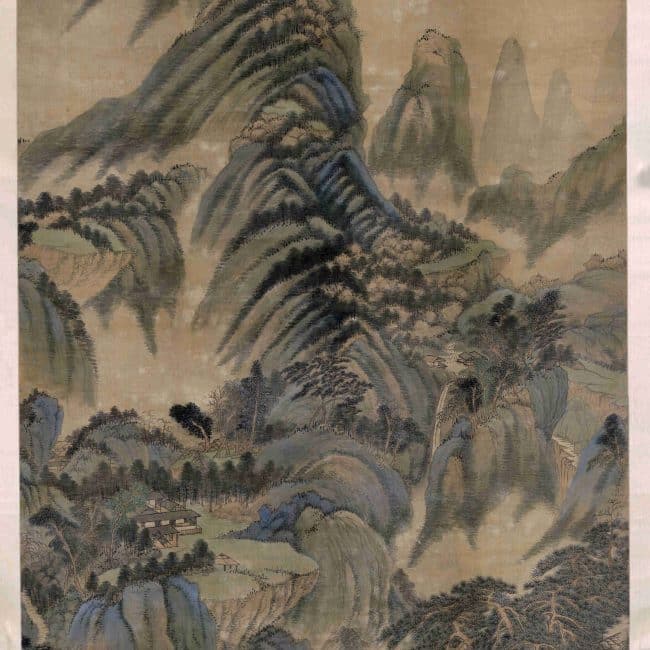
Wang Shimin (1592–1680)
Originally named Zanyu, with the courtesy name Xunzhi and pseudonyms Yanke and Xilu Laoren, Wang Shimin hailed from Taicang, Jiangsu. He came from a distinguished family: his grandfather, Wang Xijue, was chief minister of the Wanli Cabinet, and his father, Wang Heng, served as an editor in the Hanlin Academy. Benefiting from his family’s prominence, Wang Shimin was honored with the title Shaoqing of the Ministry of Rites, earning him the nickname "Wang Fengchang."
Wang demonstrated exceptional artistic talent from an early age, particularly in painting. His affluent background allowed him to receive direct instruction from Dong Qichang and Chen Jiru, with Dong Qichang’s teachings leaving a lasting influence. He dedicated himself to studying and emulating the great works of the Song and Yuan dynasties, achieving mastery in brushwork and ink techniques. Wang Shimin became the leader of the “Four Wangs” and the foremost figure of the orthodox school of landscape painting in the early Qing dynasty.
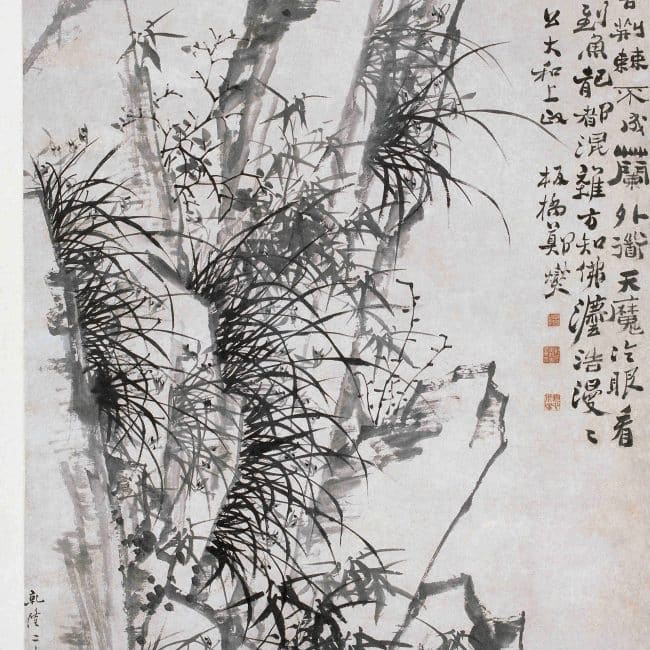
Zheng Xie (1693–1765)
Courtesy name Kerou and pseudonym Banqiao, Zheng Xie was born in Xinghua, Jiangsu. A celebrated scholar-official, he achieved the title of Jinshi in the first year of Emperor Qianlong’s reign (1736) and served as magistrate of Fan County and Wei County in Shandong Province. He is renowned as one of the "Eight Eccentrics of Yangzhou" and was admired for his mastery of poetry, calligraphy, and painting—earning the title “Three Perfections.”
Zheng Xie was particularly acclaimed for his paintings of bamboo and rocks, characterized by their simplicity and spontaneity. As a calligrapher, he developed a distinctive style that combined elements of Han dynasty clerical script with regular, running, and cursive scripts, a style he humorously described as “six and a half points of calligraphy.”
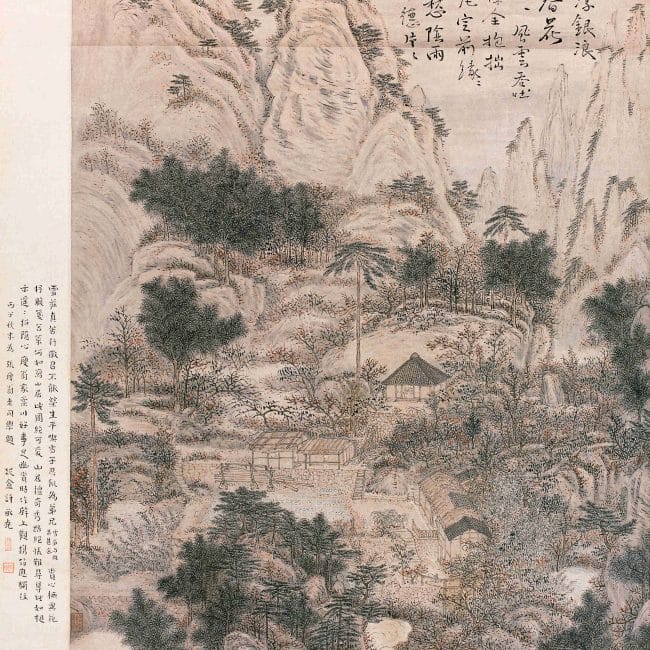
Zhang Hong (1577–1652)
Courtesy name Jundu and nickname Hejian, Zhang Hong was a prominent figure in the Wumen painting circles during the late Ming Dynasty. A native of Suzhou, Jiangsu, he was celebrated for his mastery of landscape painting, drawing inspiration from the styles of Shen Zhou and Wen Zhengming. His work traced the lineage of the Four Great Masters of the Yuan Dynasty and was influenced by earlier masters such as Mi Fu, Dong Yuan, and Ju Ran, as well as Li Cheng, Guo Xi, Li Tang, and Xia Gui. Zhang skillfully synthesized the strengths of these traditions while incorporating his own deep commitment to sketching from life.
His landscapes are characterized by steep, towering forms, with clear, moist ink washes that evoke an ancient and serene atmosphere, often depicting the grandeur of mountains and deep ravines.
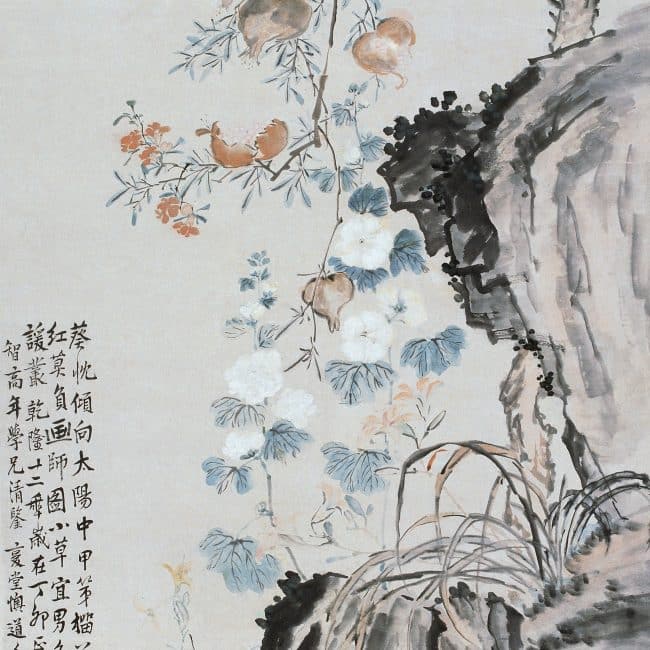
Zhang Hong (1577–1652)
Courtesy name Jundu and nickname Hejian, Zhang Hong was a prominent figure in the Wumen painting circles during the late Ming Dynasty. A native of Suzhou, Jiangsu, he was celebrated for his mastery of landscape painting, drawing inspiration from the styles of Shen Zhou and Wen Zhengming. His work traced the lineage of the Four Great Masters of the Yuan Dynasty and was influenced by earlier masters such as Mi Fu, Dong Yuan, and Ju Ran, as well as Li Cheng, Guo Xi, Li Tang, and Xia Gui. Zhang skillfully synthesized the strengths of these traditions while incorporating his own deep commitment to sketching from life.
His landscapes are characterized by steep, towering forms, with clear, moist ink washes that evoke an ancient and serene atmosphere, often depicting the grandeur of mountains and deep ravines.
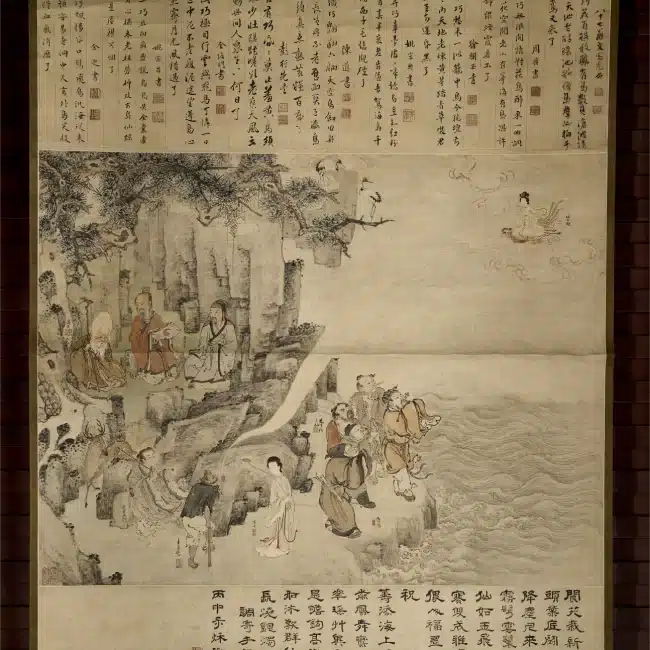
Photo Gallery
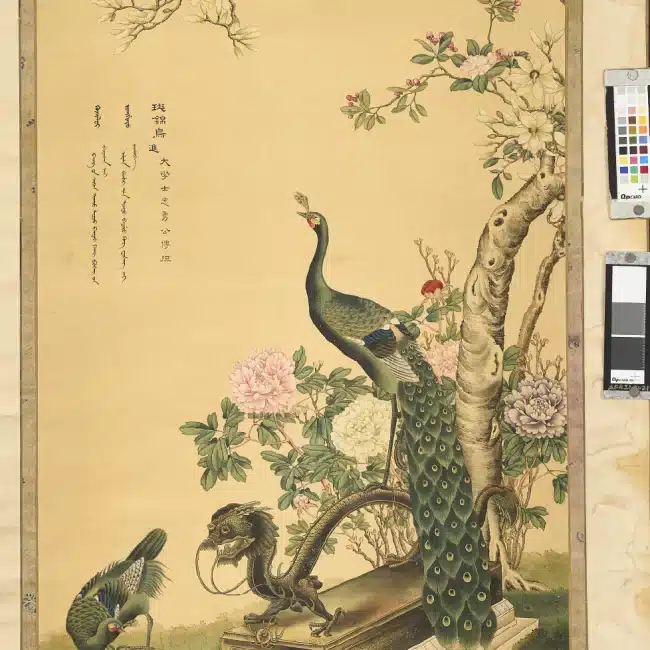
Lang Shining (郎世寧) Photo Gallery
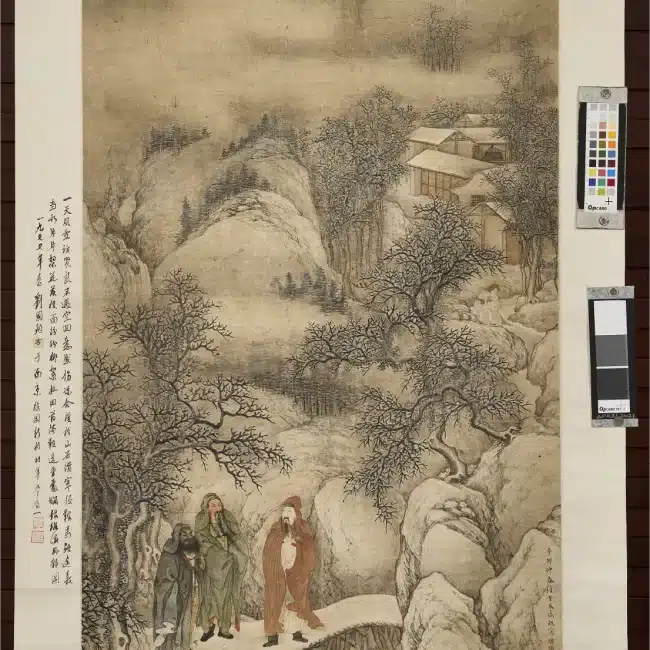
Zhu Ruining (朱瑞凝) Photo Gallery
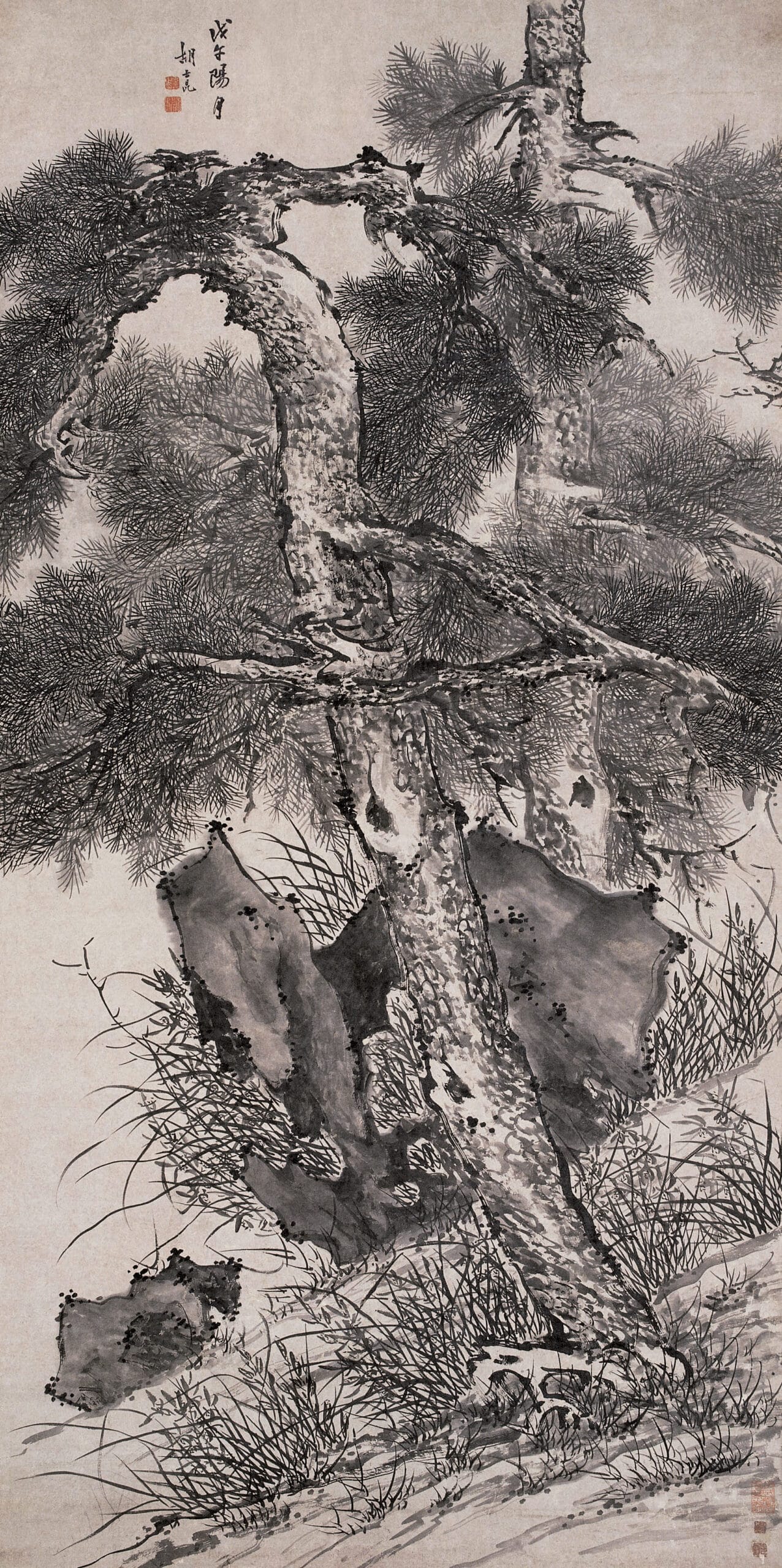
Hu Shikun, also known as Yuanqing, was a renowned painter of landscapes and orchids during the late Ming and early Qing dynasties. Although the details of his birth and death remain unknown, it is believed that he was born in Shangyuan, which is presently known as Nanjing, Jiangsu Province.