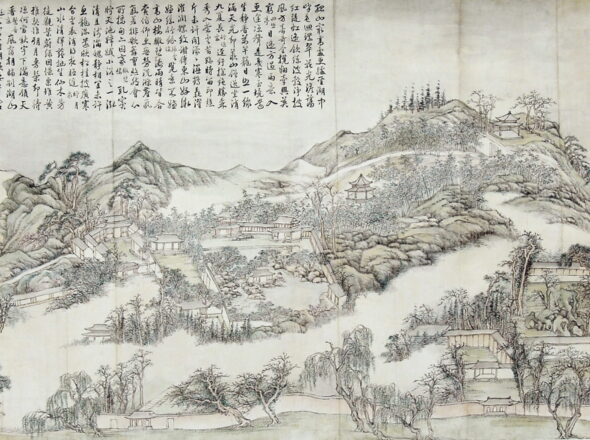
Zhang Zongcang, courtesy name Mocun, was a native of Wu County (modern-day Suzhou, Jiangsu). He initially served as a county registrar overseeing river works and later gained recognition for his exceptional talent in painting. His landscape artistry was influenced by Huang Ding. During the Qianlong Emperor’s first southern tour, Zhang presented the Album of Sixteen Views of Wu Prefecture, which greatly impressed the emperor. As a result, he was summoned to the imperial court and became a professional court painter.
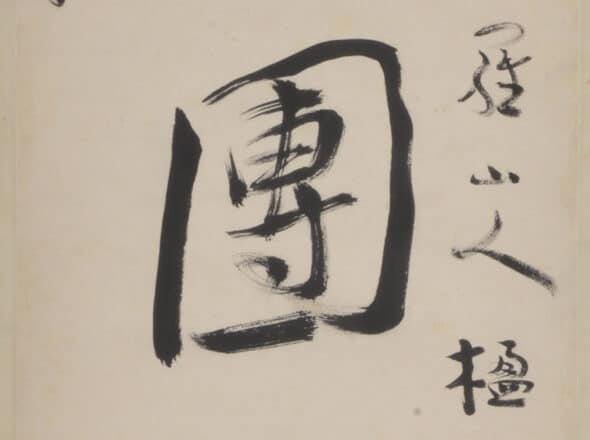
Zhang Daqian, born with the given name Zhengquan and later known as Yuan, was a native of Neijiang, Sichuan. From an early age, he studied painting under the guidance of his mother and elder brother, Zhang Shanzi. Later, he apprenticed under Zeng Xi and Li Ruiqing. Renowned for his expertise in art appraisal and extensive art collection, Zhang possessed a broad artistic vision. His studies encompassed a wide range of influences, from the Tang dynasty Dunhuang murals to masters such as Shitao and Bada Shanren. He was known for his diligent copying of these works, achieving such accuracy that they were often indistinguishable from the originals. Zhang’s creative process was marked by a desire to challenge the masters of the past, resulting in a profound legacy across various genres, including landscapes, figures, flowers, birds, calligraphy, and seal carving. He is celebrated as one of the most legendary Chinese artists of the 20th century.
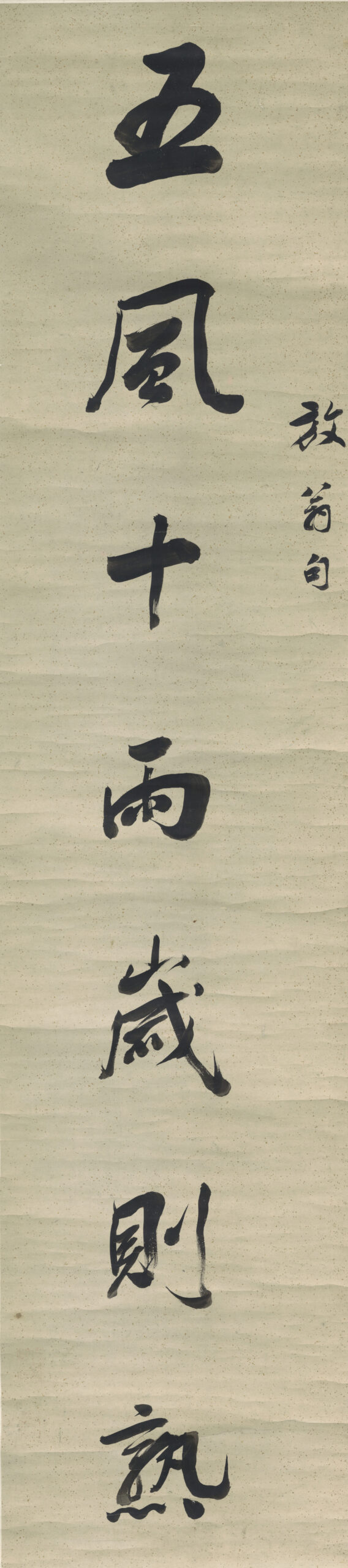
Liang Tongshu, courtesy name Yuanying and pseudonym Shanzhou, later adopted the signature Buweng, and after turning 90, referred to himself as Xinv Changweng. His studio name was Pinluo’an. Liang hailed from Qiantang, Zhejiang (modern-day Hangzhou), and was the son of Grand Academician Liang Shizheng. Gifted and steady in disposition, he became a Jinshi in the 17th year of the Qianlong reign (1752) by passing the imperial examination. Liang excelled in regular and running scripts, starting with studies of Yan Zhenqing and Liu Gongquan. Later in life, he integrated styles from Mi Fu and Tang-dynasty sutra scripts, developing a unique approach. Renowned alongside Liu Yong, Weng Fanggang, and Wang Wenzhi, Liang also stood out with Liang Yan and Liang Guozhi as the "Three Liangs."
Wu Wei (1459–1508)
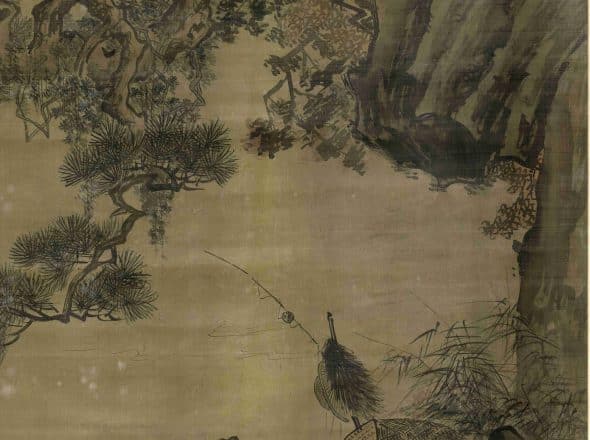
Wu Wei, courtesy names Shiying and Ciweng, and pseudonyms Lufu and Xiaoxian, was a native of Jiangxia (modern-day Wuhan, Hubei). He was a prominent figure of the Zhe School following Dai Jin, renowned for his mastery of figure and landscape painting. Wu’s early painting style was meticulous and refined, but in his middle years, it evolved into a more vigorous and unrestrained approach, characterized by bold and sweeping brushwork. He is revered as the founder of the "Jiangxia School," which gained significant recognition in later generations.
"Fishing Boats Moored at Dusk"
This painting depicts an elderly fisherman resting in a small boat under the pale light of the moon reflected in the water, evoking a serene and tranquil mood. The brushwork is bold and skillful, with vivid and lifelike rendering of the figure’s expression and posture. The piece bears Wu Wei's signature "Xiaoxian Hua" ("Painted by Xiaoxian") and is stamped with the white seal "Wu Wei."
Qian Weicheng (1720–1772)
Qian Weicheng, originally named Xinlai, with the courtesy name Zongpan and the alternate name Jiaxuan, later adopted the pseudonym Chashan. He was a native of Changzhou, Jiangsu. In 1745, during the 10th year of the Qianlong reign, he achieved the highest rank of zhuangyuan (top scholar) in the imperial examination. By 1748, he was appointed to the Southern Study, serving as a close aide to the emperor. A gifted poet, calligrapher, and painter, Qian's artistic style appealed to the emperor's tastes, earning him the title of "court painter-official." These scholar-officials not only excelled in administrative capabilities but also fulfilled the emperor’s cultural and artistic needs. Qian later held prominent positions such as Vice Minister of Works, Vice Minister of Justice, and various academic posts, where he achieved distinction in legal reforms and the handling of examination fraud cases. In 1772, during the 37th year of the Qianlong reign, Qian died at home at the age of 53 while mourning his father. He was posthumously honored with the title "Wenmin," a rare and prestigious recognition also granted to renowned masters Zhao Mengfu and Dong Qichang.
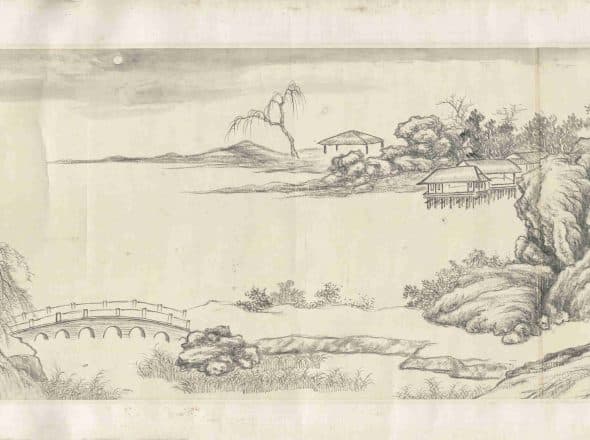
"Early Autumn in the Lake Mountains"
This painting portrays a tranquil and sparsely elegant landscape, embodying the poetic charm and spiritual resonance of Wang Yuanqi and Dong Bangda. The painting is noted for its refined composition and serene aesthetic. It bears the Qianlong Emperor's collection seal and inscriptions, indicating its inclusion in The Precious Collection of the Stone Moat Pavilion and its origins as an imperial collection. The inscription reads: "Respectfully painted by the subject Qian Weicheng," with two accompanying seals: a white seal "Subject Qian Weicheng" and a red seal "Respectful Service."
"Wang Qian (Dates Unknown, Possibly 1864–1935)
Wang Qian, courtesy name Yishou and pseudonym Tiannan Youzi, was a native of Xiaoshan, Zhejiang. Skilled in various artistic disciplines, he was particularly renowned for figure painting. In 1902, during the 28th year of the Guangxu reign, he published A Grand View of the Six Principles. After the Xinhai Revolution, Wang settled in Shanghai, becoming a prominent figure of the Shanghai School (Haipai). His figure paintings were inspired by Ren Xiong and influenced by the bold strokes of Min Zhen from the Eight Eccentrics of Yangzhou, forming his distinct personal style.
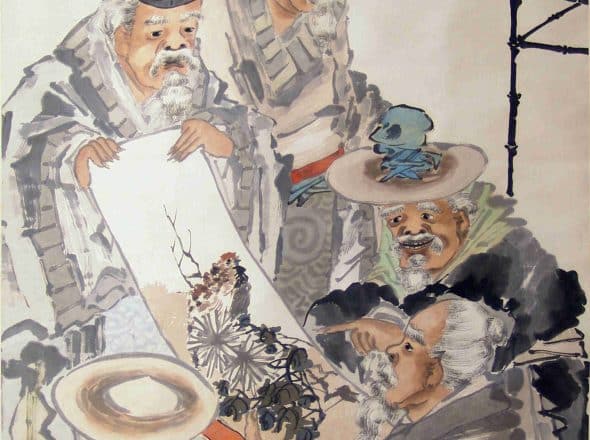
""The Five Elders Appreciating Paintings""
This painting depicts five elderly gentlemen engrossed in viewing a painting, showcasing characters of antiquity and eccentricity. Wang’s brushwork is bold and fluid, with a richness and vigor that fully embodies his artistic mastery. The faces incorporate Western chiaroscuro techniques, creating a sense of dimensionality. Each figure displays distinct expressions and postures, resulting in a lively and engaging composition. This work highlights Wang Qian's remarkable ability to blend Eastern and Western techniques seamlessly."