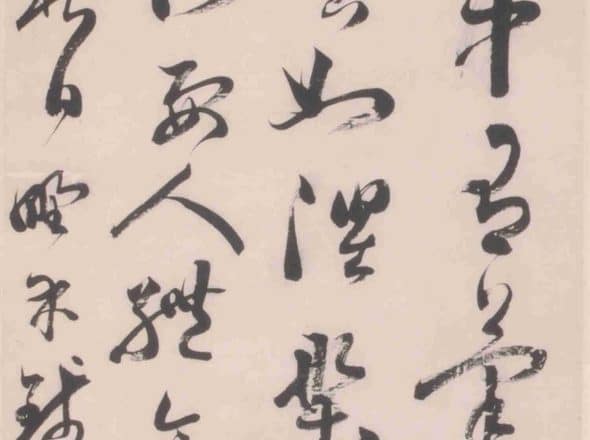
Qian Bokeng (1738–1812)
Qian Bokeng, courtesy name Lusi, was also known by his pseudonyms Yu Bei and Puxie Shanqiao. He was a student at the Imperial Academy and the nephew of Qian Weicheng, a top scholar and painter. Hailing from Yanghu (present-day Changzhou), Jiangsu, he was adept in calligraphy, following the styles of Dong Qichang and Huang Tingjian to emulate the works of Li Yong and Yan Zhenqing, gaining recognition in his time.
"Huang Tingjian's Calligraphy Discourse in Cursive Script"
This running script piece demonstrates fluid writing and a rigorous structure, transitioning seamlessly between strokes. It embodies the weightiness of Yan Zhenqing and the uniqueness of Huang Tingjian, marking it as an exceptional work from his later years.
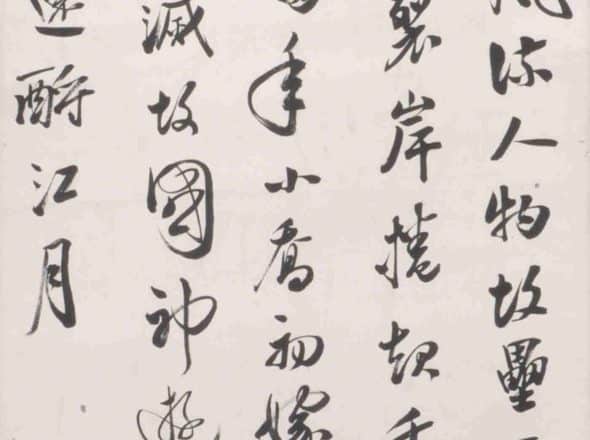
Sun Fuyuan (1894–1966)
Originally named Fuyuan, with the courtesy name Yangquan and pseudonyms such as Fulu, Baisheng, Tongbai, and Songnian, Sun Fuyuan was from Shaoxing, Zhejiang. He was a renowned essayist and journalist. In 1919, under the recommendation of Lu Xun, he entered Peking University, where he worked as a librarian and served as the secretary to Li Dazhao, actively participating in the May Fourth Movement. At the end of 1920, he co-founded the Literary Research Society with Mao Dun, Zheng Zhenduo, and others.
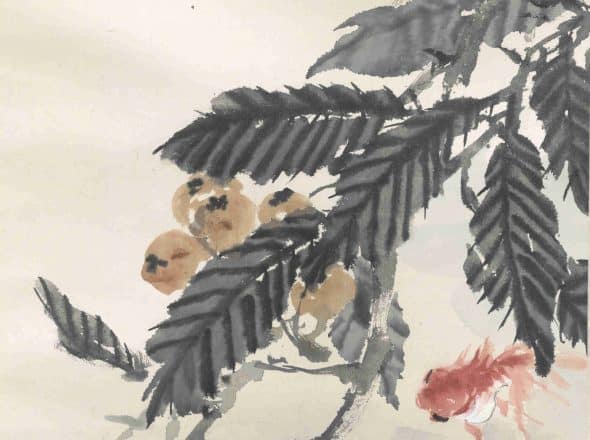
Wang Yachen (1894–1983)
Wang Yachen, a modern Chinese painter and art educator, hailed from Hangzhou, Zhejiang. He was known for his lively and vivid depictions of birds, flowers, and fish, with a particular reputation for painting goldfish. His works are celebrated both domestically and internationally for their elegance and vibrant colors.
Pan Boying (1900–1978)
Pan Boying was a Chinese music educator and painter from Jiangyin, Jiangsu. He was one of the founders of Shanghai Xinhua Academy of Fine Arts. Pan excelled in traditional Chinese painting, with a special fondness for portraying flowers and insects. He authored "Kaiming Music Tutorial."
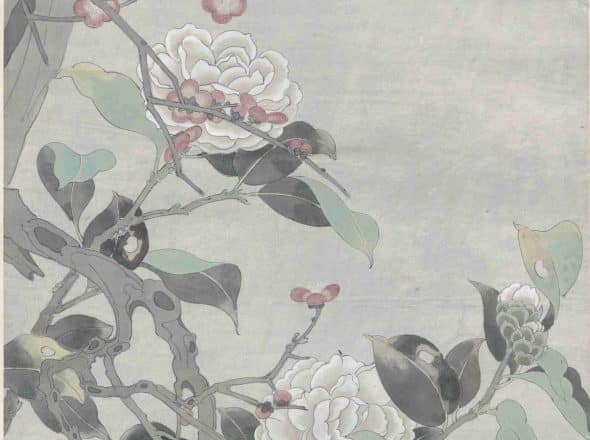
Chen Zhifo (1896–1962)
Chen Zhifo, also known by his pen name Xueweng, was a distinguished artist and educator from Hushan, Yuyao, Zhejiang (now part of Cixi). His early education was in the field of weaving; in 1913, he enrolled in the Weaving Department of Zhejiang Industrial School, where he studied weaving patterns. Upon graduation, he remained at the school as a teacher. In 1918, Chen received a government scholarship to study in Japan, becoming the first Chinese student to study craft design at the Tokyo School of Fine Arts.
After returning to China, Chen Zhifo contributed to the development of modern Chinese art education, teaching at numerous institutions, including Shanghai Oriental Art College, Shanghai Art University, Guangzhou Municipal Art School, and Shanghai Art College. Following the founding of the People’s Republic of China, he continued his academic work at Nanjing Normal University and Nanjing University of the Arts. Renowned as a modern art educator, he was instrumental in shaping the academic landscape for generations of artists.
In the 1930s, Chen turned his focus toward traditional Chinese painting, particularly detailed bird and flower painting. His works embody a fusion of the meticulous brushwork tradition that dates back to the Song and Yuan Dynasties, with influences from pattern design and Japanese painting, leading to a unique artistic style that distinguished him in the field.
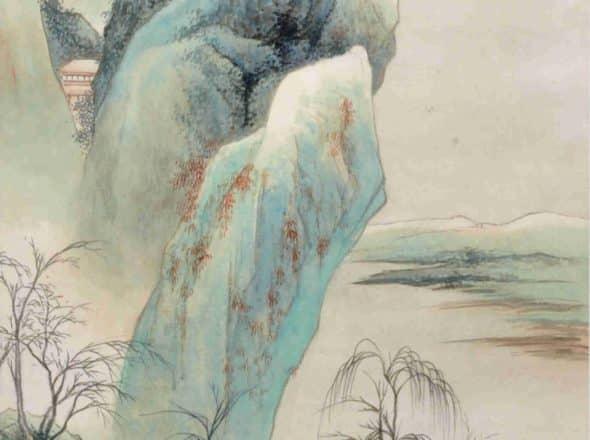
Jiang Zhan and Fellow Artists
This collaborative work was initiated by Jiang Zhan of Changzhou, with contributions from fellow calligraphers and painters Tao Zhu, Gu Kunbo (from Wuxi), and Fang Yi. The piece was created to commemorate the 60th birthday of Mr. Liu Guojun, reflecting both the artistic skills and the close relationship between the artists and the honoree. The work is a remarkable integration of poetry, calligraphy, and painting, embodying the collective creativity of its contributors and serving as a testament to their friendship with Mr. Liu. The historical significance of the work lies in its celebration of a milestone birthday, as well as in the interaction between the artists and their patron.
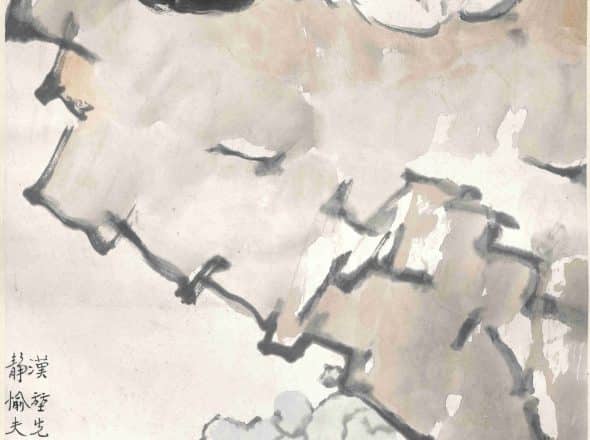
Xu Beihong (1895–1953)
Xu Beihong, originally named Shoukang, was a world-renowned calligrapher, painter, and art educator from Yixing, Jiangsu. He began his artistic education under the tutelage of his father and developed a deep passion for painting from an early age. In 1919, Xu traveled to France to further his studies, immersing himself in Western art traditions while traveling extensively throughout Western Europe. There, he gained a systematic understanding of Western painting techniques, which he later incorporated into his own works.
Upon returning to China, Xu Beihong became a professor at the Art Department of Central University and, after the founding of the People's Republic of China, served as the president of the Central Academy of Fine Arts. Known for his expertise in sketching, oil painting, and Chinese painting, Xu was instrumental in bridging the gap between Western artistic methods and traditional Chinese painting. He developed a distinctive style that integrated Western techniques with Chinese subject matter, leaving a lasting influence on modern Chinese art.
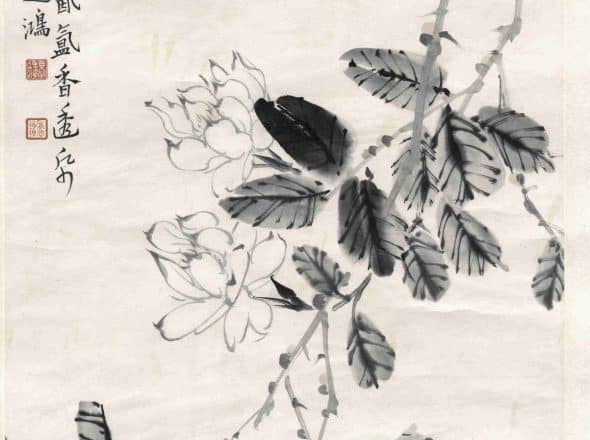
Gao Yihong (1908–1982)
Also known as the owner of Lanxiang Pavilion, Gao Yihong was a native of Hangzhou, Zhejiang. He studied poetry, calligraphy, and painting under his father from an early age and later received guidance from prominent artists Xu Beihong and Zhang Shuqi. Gao Yihong co-founded the "Tianfeng Calligraphy and Painting Society" alongside Lai Chusheng, Bai Jiao, and Tang Yun, fostering a community dedicated to artistic expression. Renowned for his depictions of flowers, feathers, and insects, Gao's work evolved over time. While his early pieces featured meticulous ink sketches, his later style leaned toward a freer, more expressive approach that integrated calligraphic elements into his paintings.
Following 1949, Gao relocated to Taiwan, where he continued his artistic pursuits. His ability to blend traditional techniques with a modern sensibility solidified his reputation as a master of both form and spirit in Chinese painting.
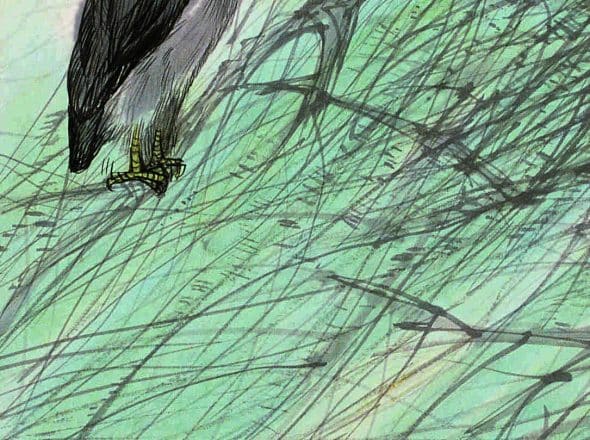
Lin Fengmian (1900–1991)
Originally named Fengming, Lin Fengmian was a distinguished painter and educator, recognized both in China and internationally. Born in Meixian, Guangdong, he embarked on his artistic journey in 1919, traveling to France to study alongside Xu Beihong and Zhang Daofan. During his time in Europe, Lin pursued his studies in Western painting, furthering his education in both France and Germany. His early works were primarily in oil painting, although he also explored traditional Chinese subjects such as landscapes, flowers, birds, and figures, using ink and wash techniques.
In the 1930s, Lin turned his focus toward the reform of traditional Chinese painting, seeking to merge Western techniques with Chinese artistic forms. His works, such as those depicting autumn ducks, white cranes, maple forests, water lilies, and ladies, are known for their uniqueness and have played a pivotal role in the evolution of modern Chinese art. His integration of Western and Chinese styles marked a milestone in the history of Chinese painting.
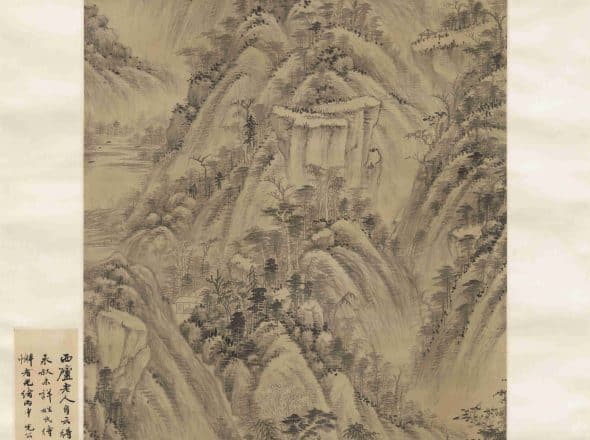
Wang Shimin (1592–1680)
Originally named Zanyu, with the courtesy name Xunzhi and pseudonyms Yanke and Xilu Laoren, Wang Shimin was born in Taicang, Jiangsu. He came from a distinguished family: his grandfather, Wang Xijue, served as chief minister of the Wanli Cabinet, and his father, Wang Hua, was an editor at the Hanlin Academy. Due to his family's prominence, Wang Shimin was appointed as Shaoqing at Taichang Temple, earning the title "Wang Fengchang."
Wang Shimin demonstrated extraordinary artistic talent from a young age, particularly in landscape painting. His well-off upbringing allowed him to study under renowned masters such as Dong Qichang, whose influence greatly shaped his artistic development. He was deeply committed to studying the great works of the Song and Yuan dynasties, dedicating himself to mastering their brushwork and ink techniques. Wang Shimin emerged as the leader of the "Four Wangs" of the early Qing dynasty and became the central figure of the orthodox school of landscape painting, establishing a lasting legacy in Chinese art history.
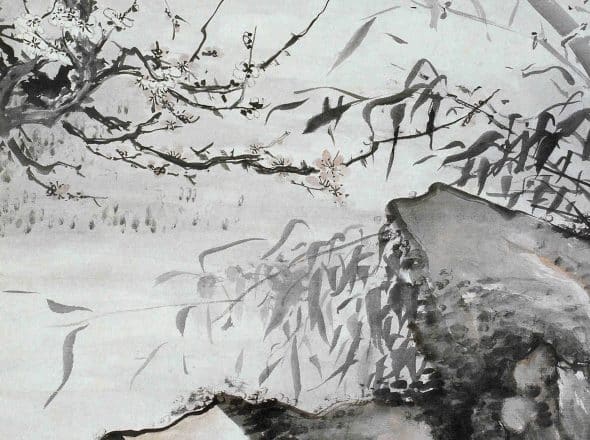
Gao Fenghan (1683–1749)
Gao Fenghan, courtesy name Xiyuan and pseudonym Nancun, also known as Nanfushanren, was a native of Jiaozhou, Shandong. He served as the magistrate of She County in Anhui Province and later retired to Yangzhou. At the age of 55, he suffered a debilitating illness that rendered his right hand unusable, leading him to begin painting and writing with his left hand. This pivotal moment marked a dramatic transformation in his artistic style, which became unrestrained, bold, and profoundly innovative. His left-handed works had a significant influence on later painters, many of whom sought to emulate his unique approach. Gao was especially skilled in landscapes and flower paintings, drawing inspiration from Song and Yuan traditions but infusing them with a distinctly personal and expressive style.
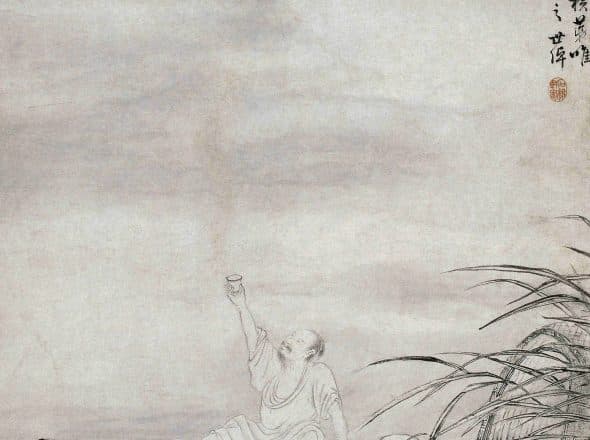
Li Shizhuo (1687–1770)
Li Shizhuo, courtesy names Tianzhang and Hanzhang, and nicknamed Guzhai and Xingya, was a native of Fengtian (modern-day Shenyang, Liaoning) and of Sanhan (now Harqin Banner, Inner Mongolia). A member of the Han Army's Zhenghuang Banner, he was the son of Li Rulong, the governor of Guangdong and Guangxi, and a nephew of the renowned painter Gao Qipei. Li held the title of Taichang and served as deputy censor of the capital, earning him the moniker "Li Taichang." He was highly skilled in painting landscapes, figures, flowers, birds, and fruits, with a refined and elegant style.
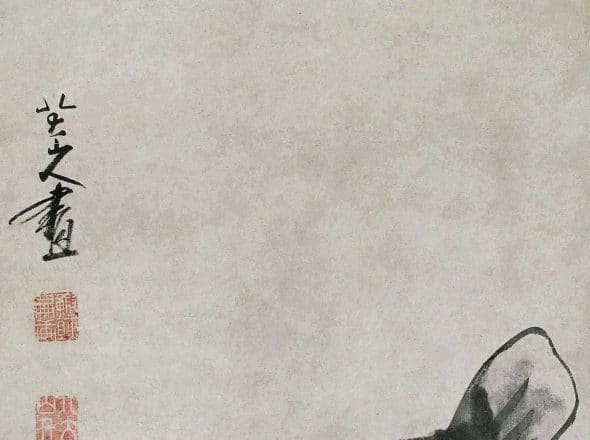
Zhu Da (1626–c.1705)
Zhu Da, originally named Ben’an, was a descendant of Zhu Quan, the Prince of Ning from the Ming Dynasty. Born in Nanchang, Jiangxi Province, he became a monk after the fall of the Ming Dynasty, taking the monastic name Chuanxi. Later, he transitioned to Taoism and adopted various pseudonyms, the most famous being Bada Shanren. One of the "Four Monks" of the early Qing Dynasty, Zhu Da was a master of calligraphy and painting. His bold and austere brushwork conveyed a sense of desolation and isolation, while his unique bald-pen technique in cursive calligraphy set him apart. Zhu Da is widely regarded as the most elegant freehand flower-and-bird painter after Chen Chun and Xu Wei, influencing countless artists in later generations.